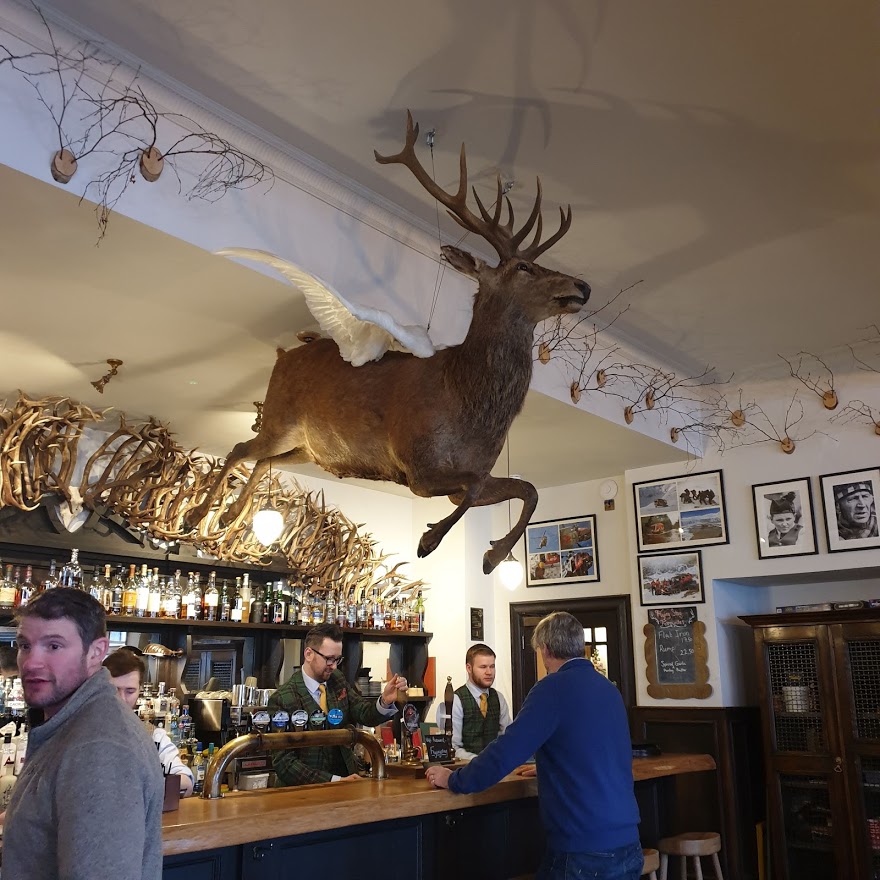
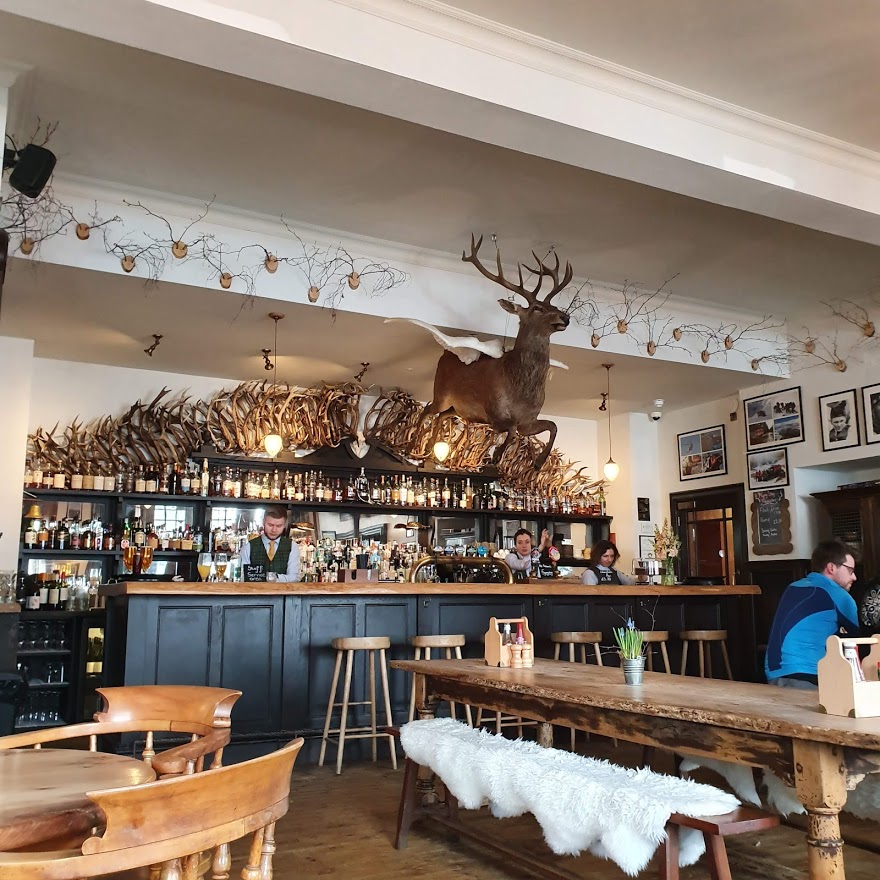
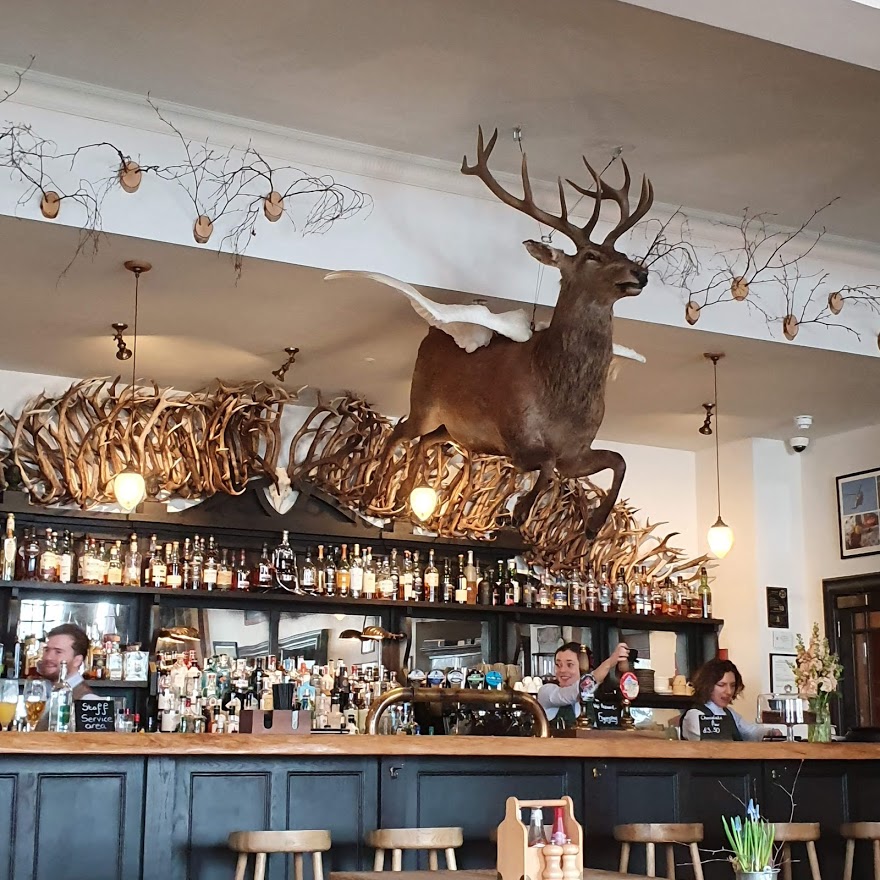
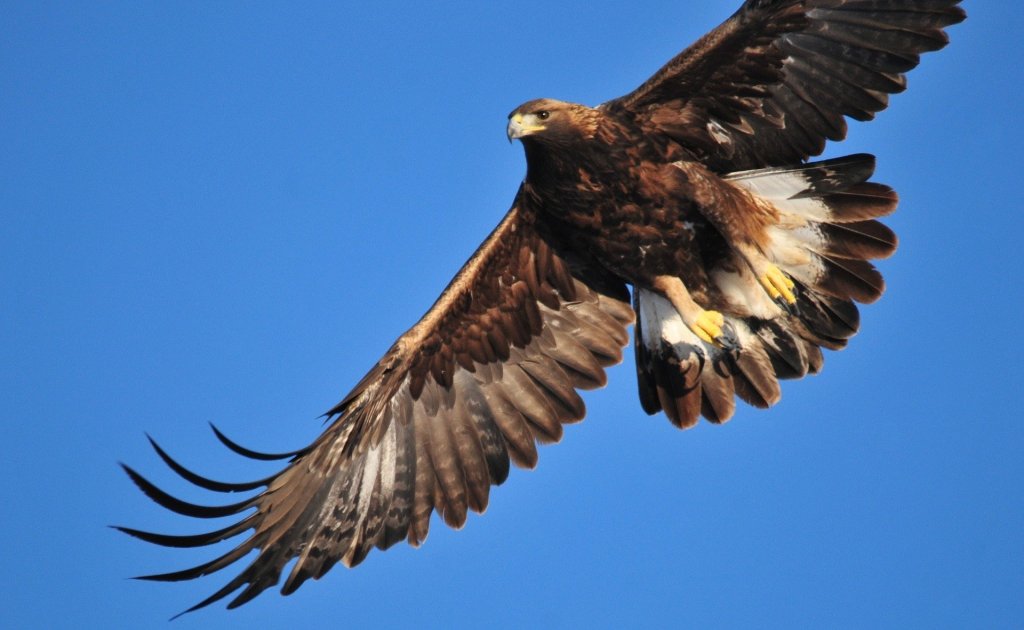
As the whole world struggles to come to terms with a new way of life, I reflect on our quest to find the elusive flying stag
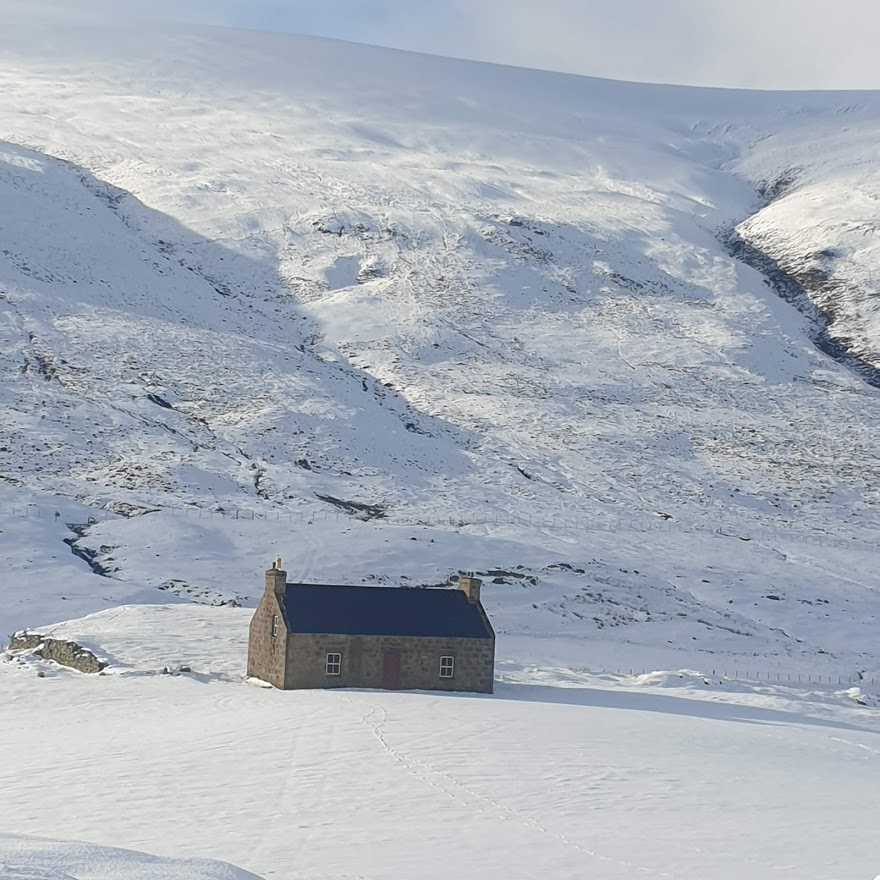
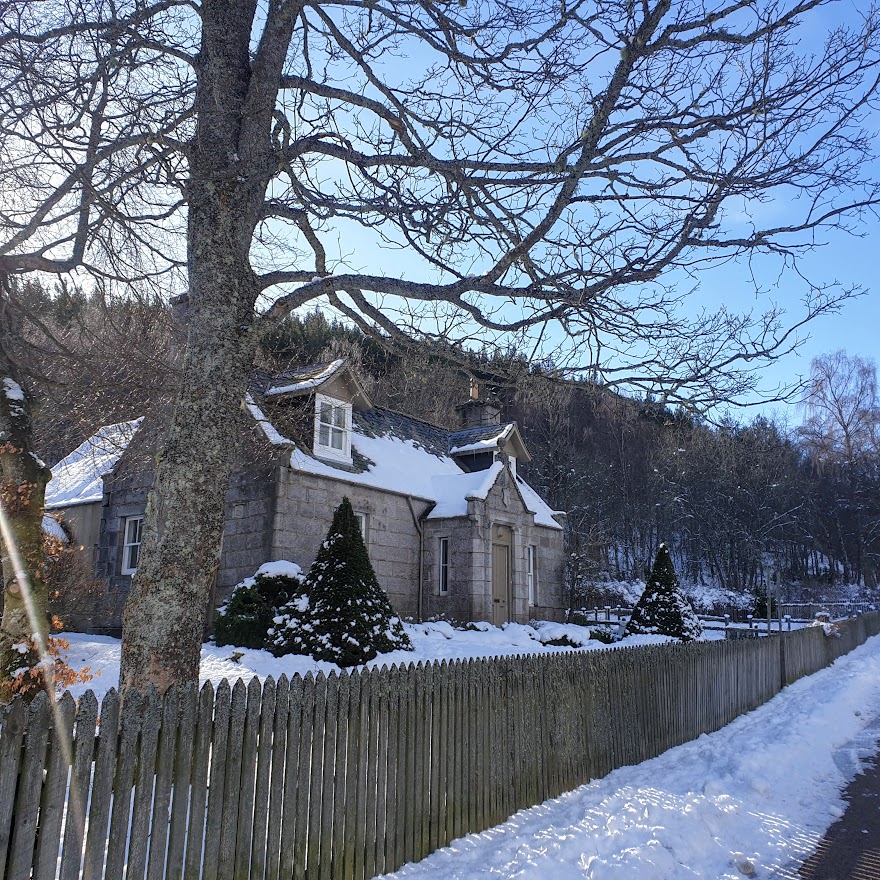
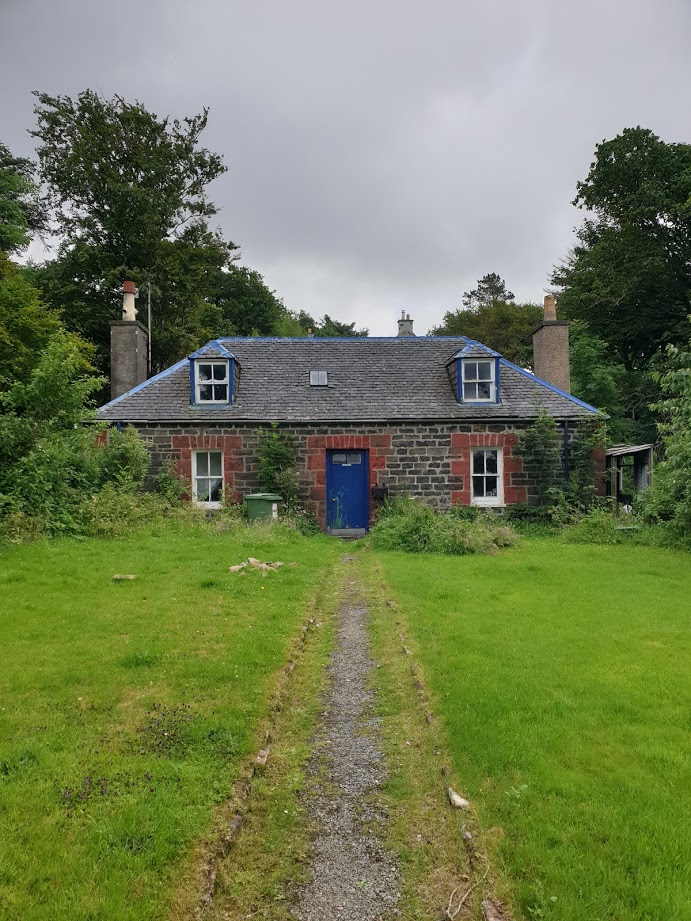
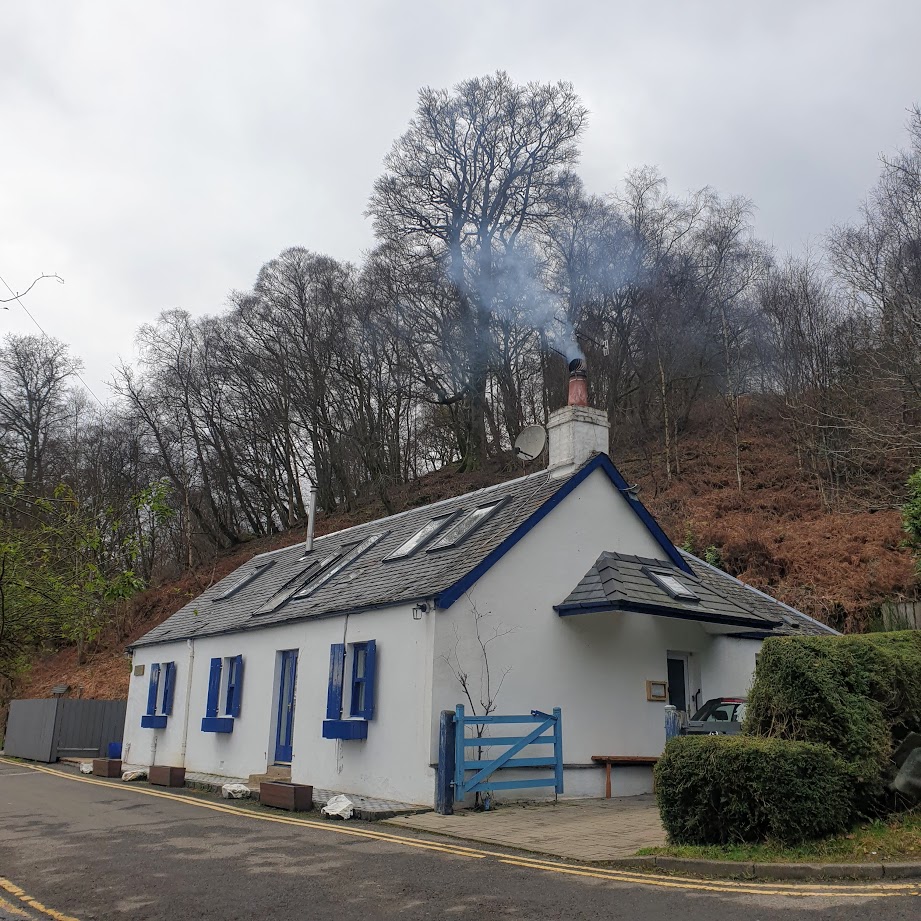
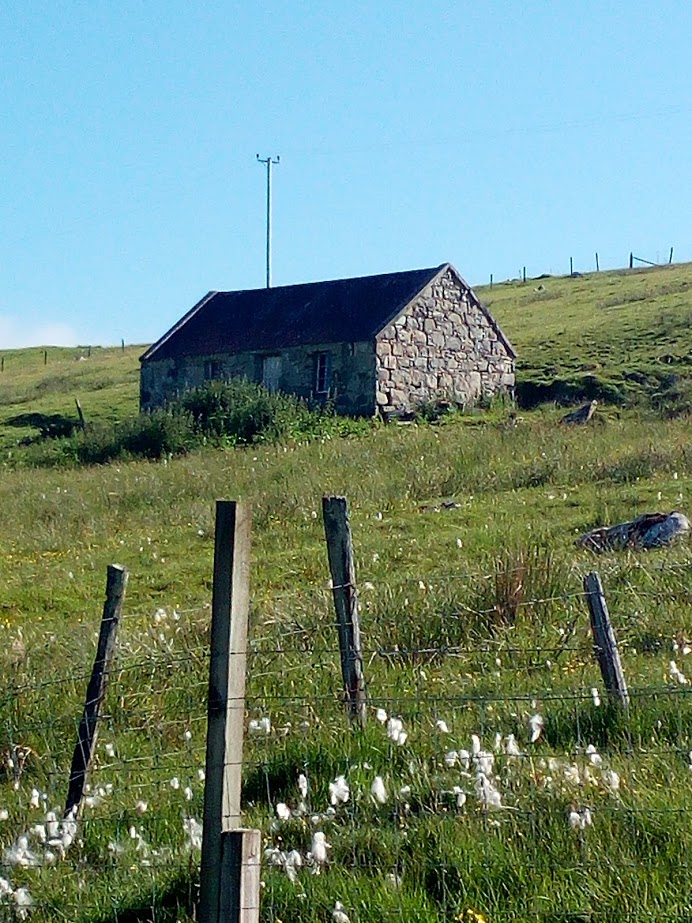
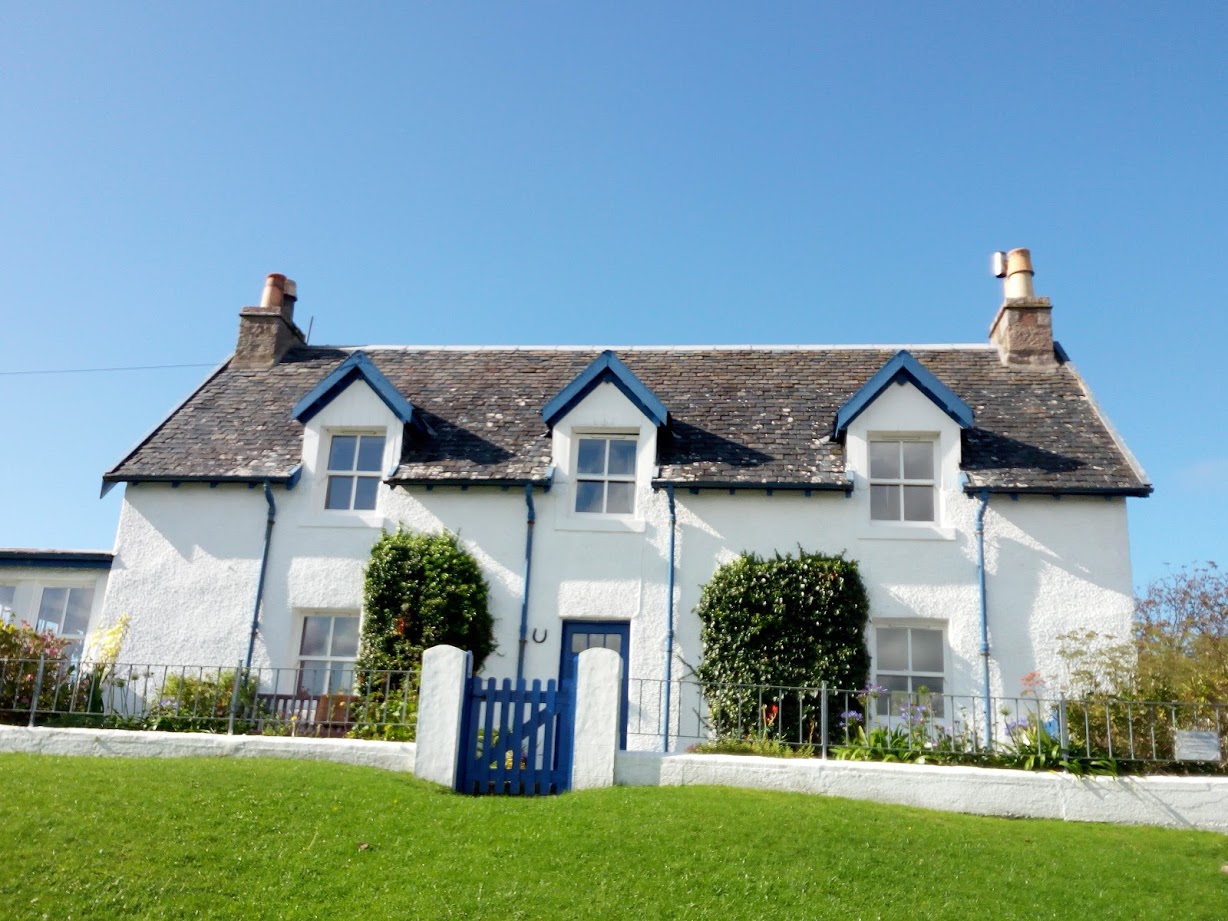
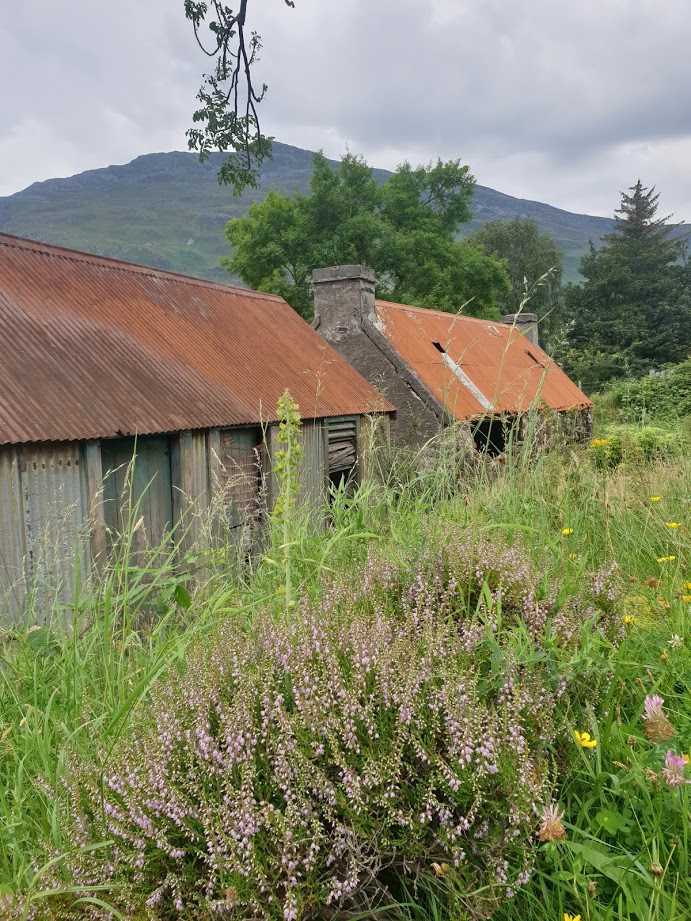
Picture perfect cottage on the A93
First of all, my apologies, this post has taken me weeks to write. It’s just been a little tricky to motivate myself to be perfectly frank. I swing like a pendulum from, “come on Anna, let’s get this **** done”, to “what is the point?”. Today though, we’re getting **** done!
Whilst there is no doubt we are fortunate to live in Scotland’s capital, we are countryside creatures at heart and our heart’s really do belong in the Highlands.
Before all the craziness that is now going on in the world, we had some free time on our hands, so we decided to head north for a few days.
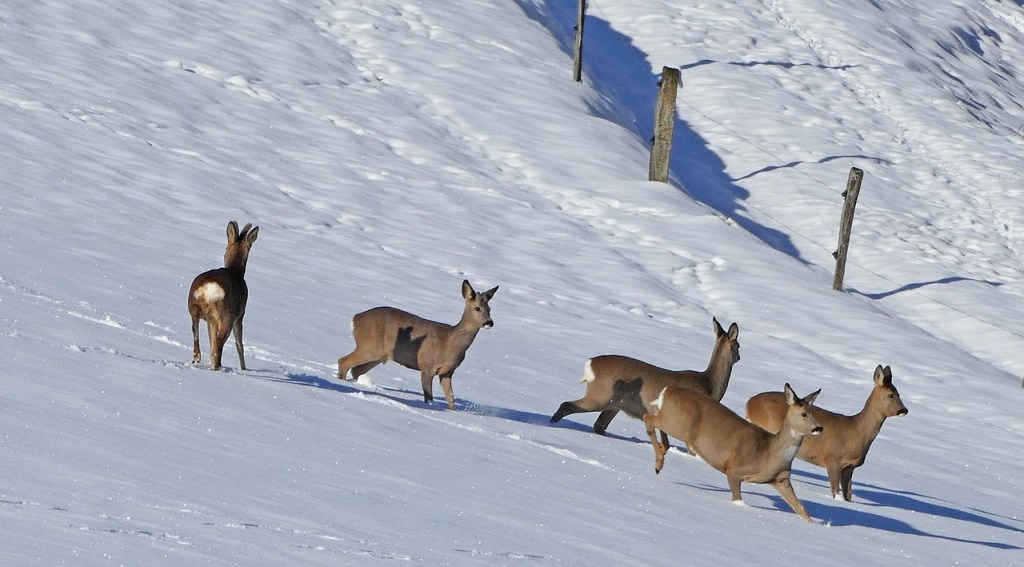
We had heard tales of a flying stag, whose habitat was somewhere in The Cairngorms National Park. Flying stags are by nature elusive creatures and sightings are rare indeed. There is no official data on numbers and no photographic evidence exists as proof of their existence, that I know of.
The last reported sighting of this shy creature was somewhere around the Highland village of Braemar. So that was where we went.
It has been the wettest February since records began, our waterproofs have been tested to their limits, along with our senses of humour. We were both finding it a challenge to drag ourselves from our winter torpor. But, the promise of crisp snow, mountains and fresh air was doing wonders for our motivation and simply the thought of that was already lifting our soggy spirit’s from the depths.
Only 73 miles from Edinburgh, with our caravan in tow, we set off with not one backward glance at Midlothian’s brown, muddy, rain sodden countryside. Pretty much dead north, the journey took us via Perth and then onto Blairgowrie.
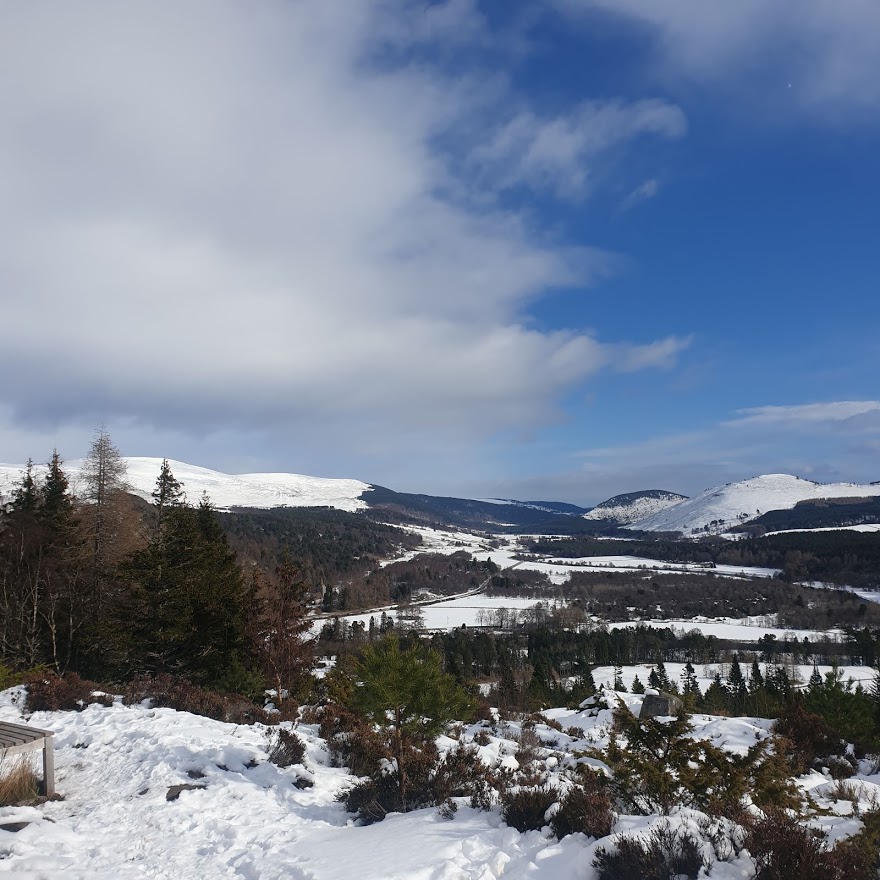
The minute that you enter The Cairngorms National Park, the countryside turns from rather lovely to breathtakingly, wow, heart stopping, staggeringly beautiful and any other such adjective that you can think of.
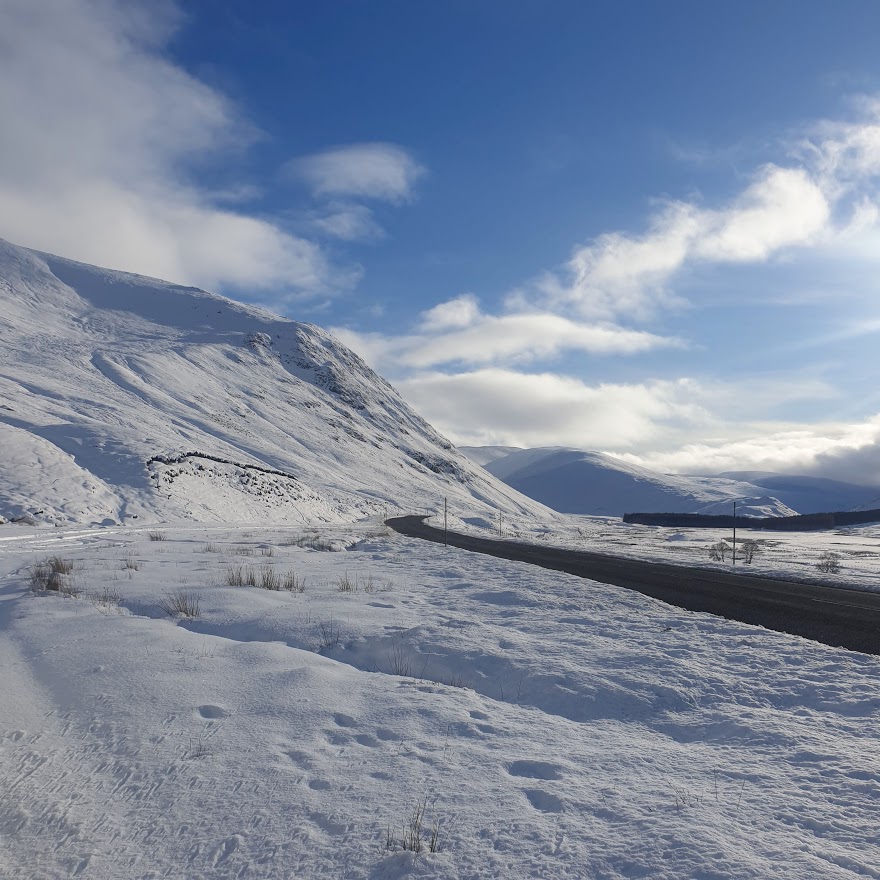
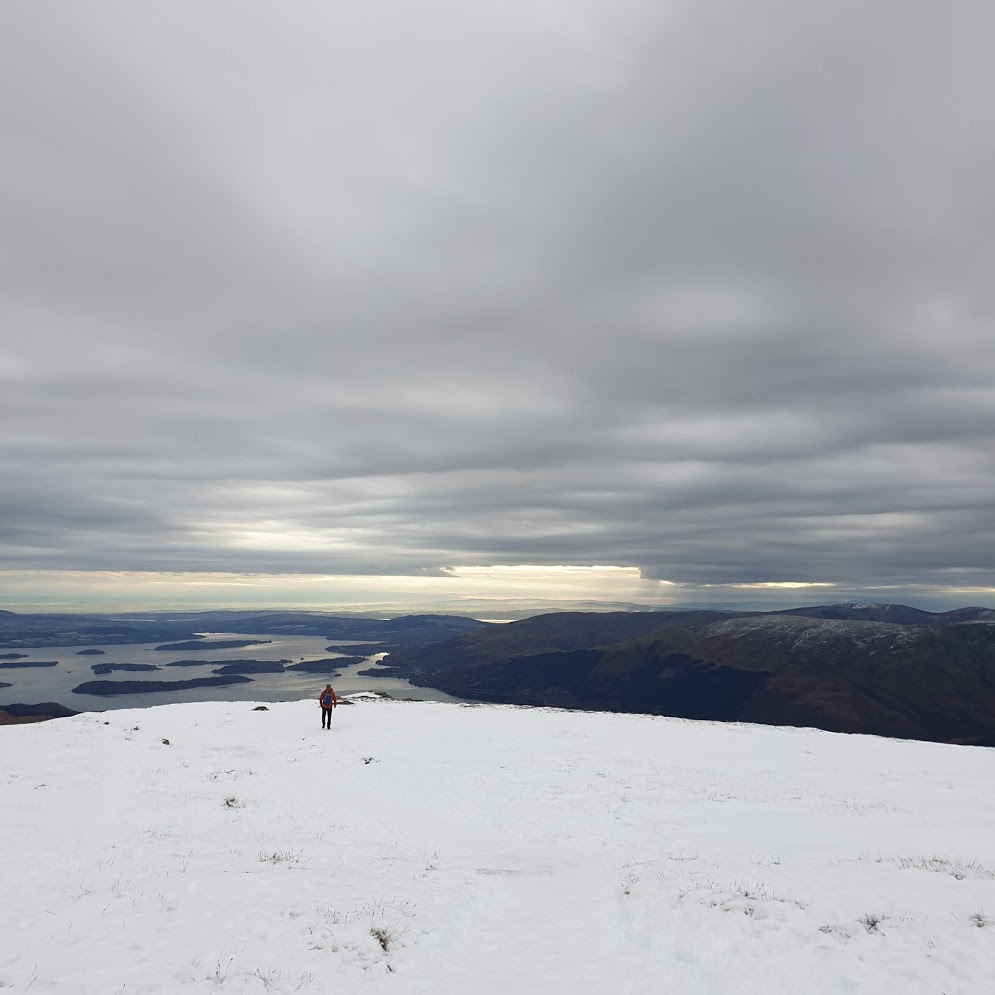
The sun was putting on a show especially for us it felt,and as we drove, the mountains lay before us, rising from the frozen earth, stretching ahead as far as the eye could see. Veiled in a mantle of fresh, pristine snow. Christmas card perfect, the sunshine making it look as though it had been sprinkled with silver glitter.
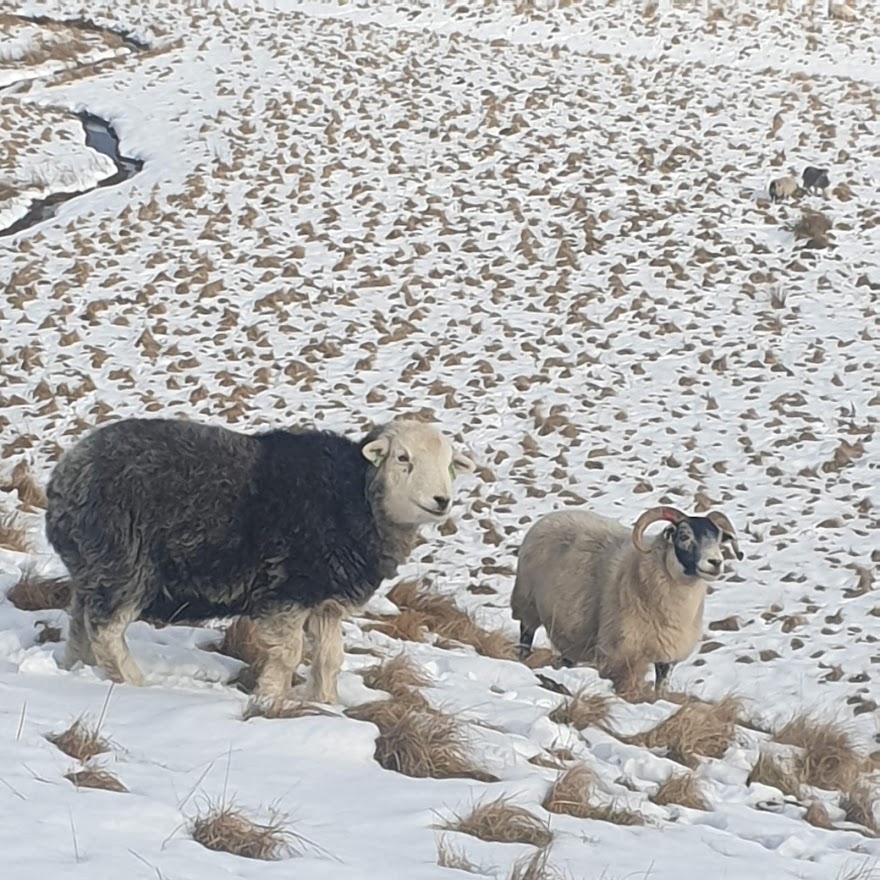
Herds of red deer were low off the hill, mighty stags, monarchs of the glen with their harems, and groups of young bachelor boys. All in search of sustenance.
The journey took us along The Snow Roads, a 90 mile scenic route. It begins in Blairgowrie, travels through Glen Shee, Braemar, then follows the River Dee onto Ballater, Tomintoul and finishing at Grantown-on-Spey. We would be going as far as Braemar.
Traversing the highest public road in Britain, at 670 metres (2199 feet) high, it is little wonder that the climate in this region falls in the sub-Arctic category, rare in the UK.
Snow roads are slow roads. With such beauty you don’t feel the need to rush. It’s like one of those meals that you just don’t want to come to an end because it is so delicious.
As we passed through The Glen Shee Ski Centre, the car parks were choca block. So many people enjoying their winter sport, skiing, snowboarding or simply having fun with their sledges and toboggans. Enjoying the snow and the sunshine.
Rain now a distant memory, we arrived at the caravan site, shovelled the snow off our pitch and got organised for the evening.
So far, no sightings of a flying stag.
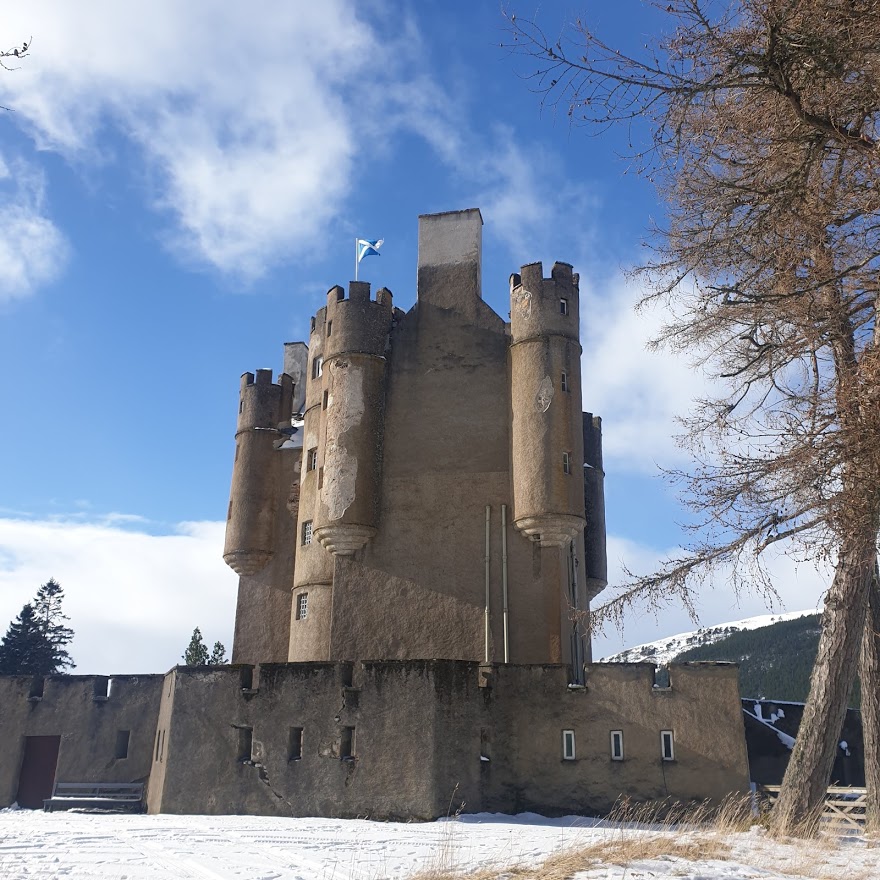
The next day we made tracks for the Balmoral Estate, to enjoy a circular walk in the snow. Stopping off at Braemar Castle en route.
Braemar Castle
We parked the car in the village of Crathie, and following instructions for the walk on the walkhighlands website. Here you will find a detailed description of the route. There was the odd moment of head scratching but we did manage to find all but one cairn, probably because the snow was covering the track as opposed to unclear instructions.
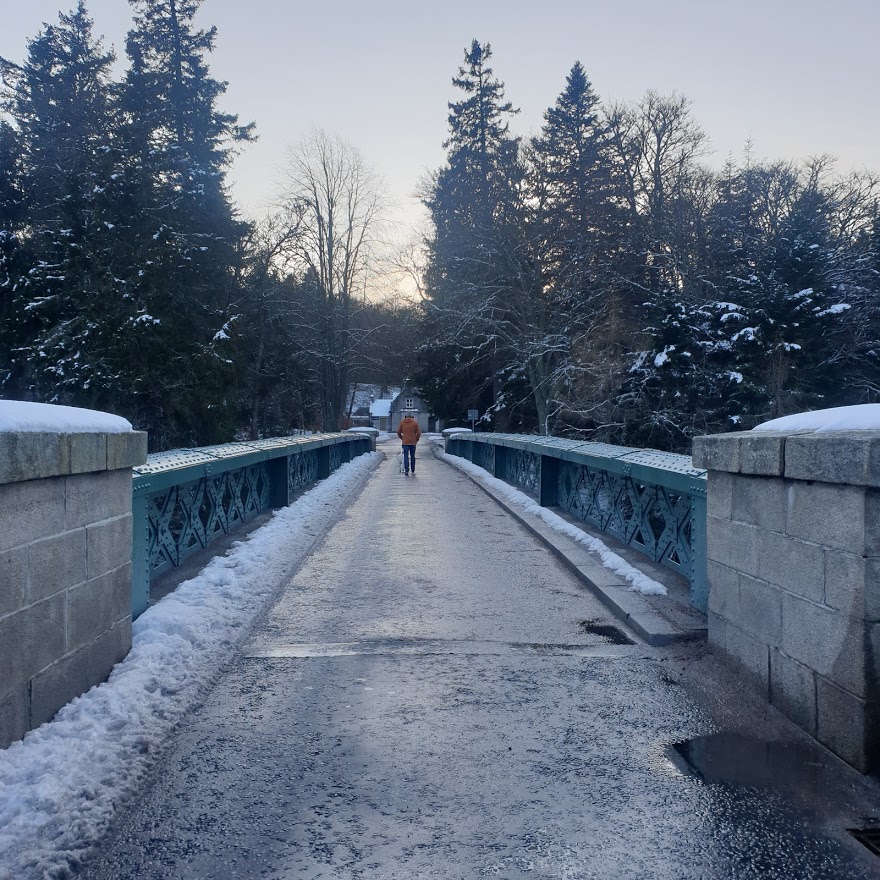
We crossed over The Balmoral Bridge, commissioned by HRH Prince Albert, designed by Isambard Kingdom Brunel and erected in 1856-1857.
The Balmoral Bridge
It was bitterly cold, so we set off at a brisk pace, hands thrust in pockets, keen to generate some warmth.
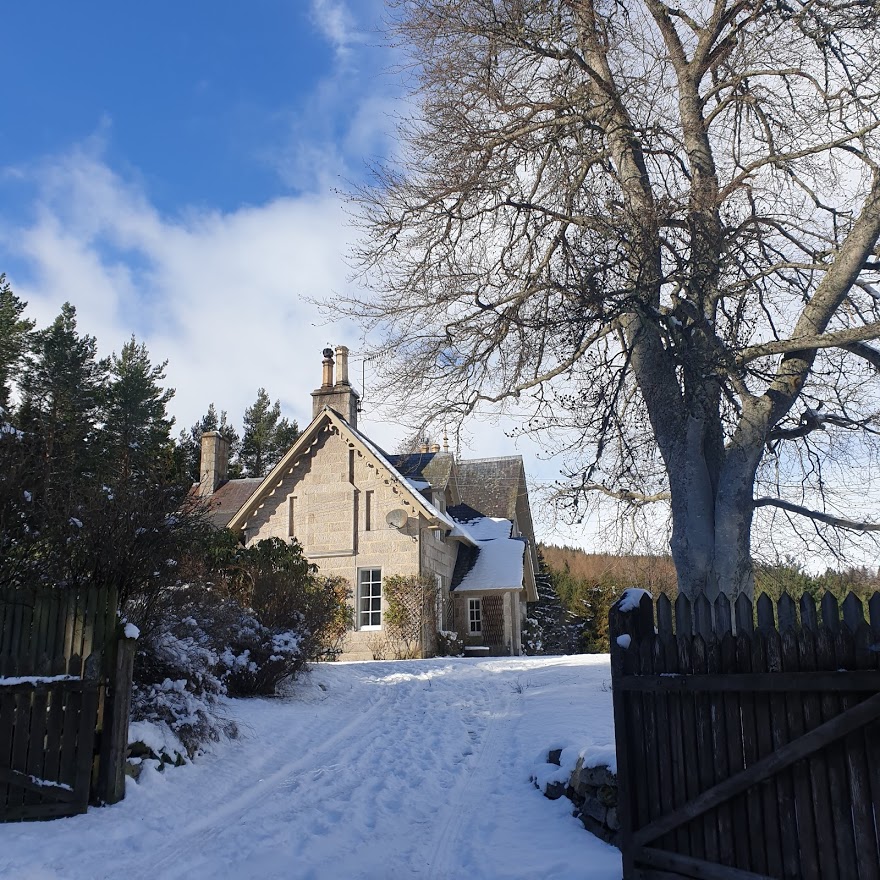
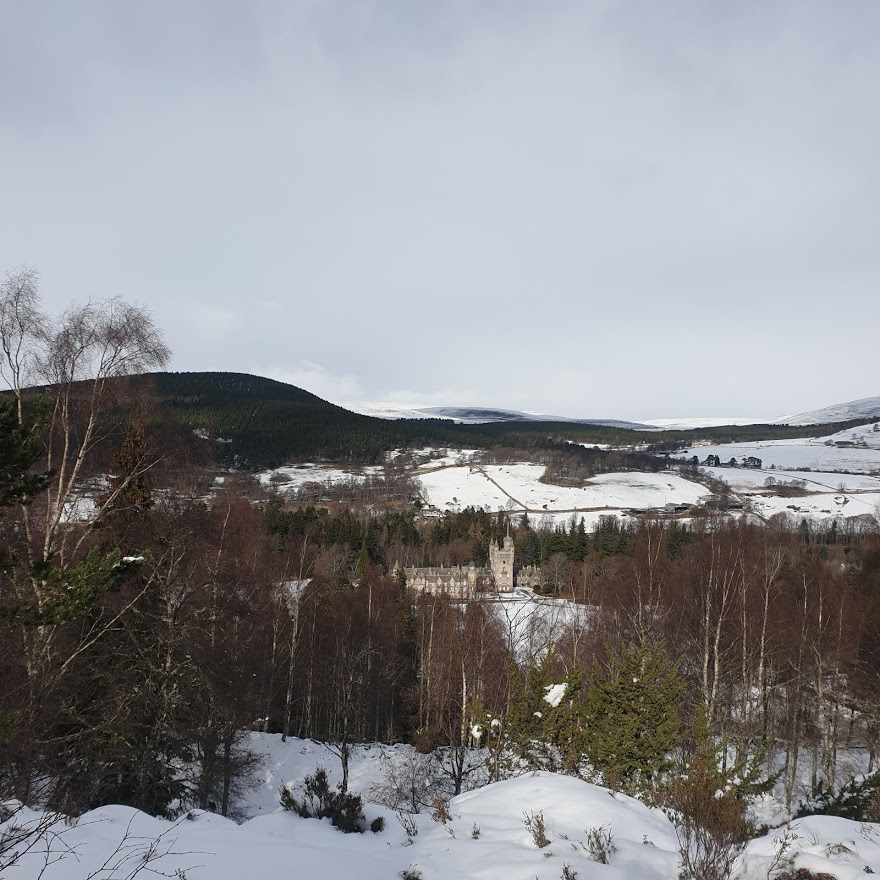
Balmoral Castle itself, is built of local granite from the nearby Glen Gelder Quarry. I’m assuming that the really pretty estate cottages that we walked past are built of the same stone.
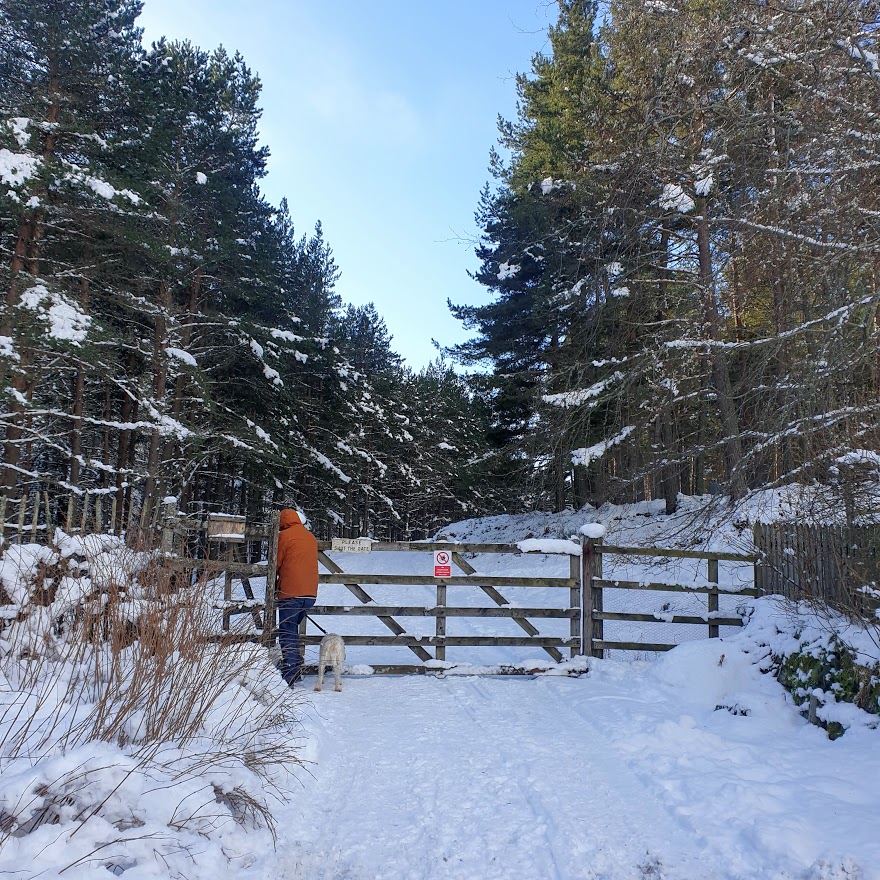
This cottage marked the beginning of the walk, we passed through a gate and into a magical snowy wonderland. I felt that we might be in with a chance of at least a fleeting glance of our flying stag. It was so peaceful and not another soul was in sight.
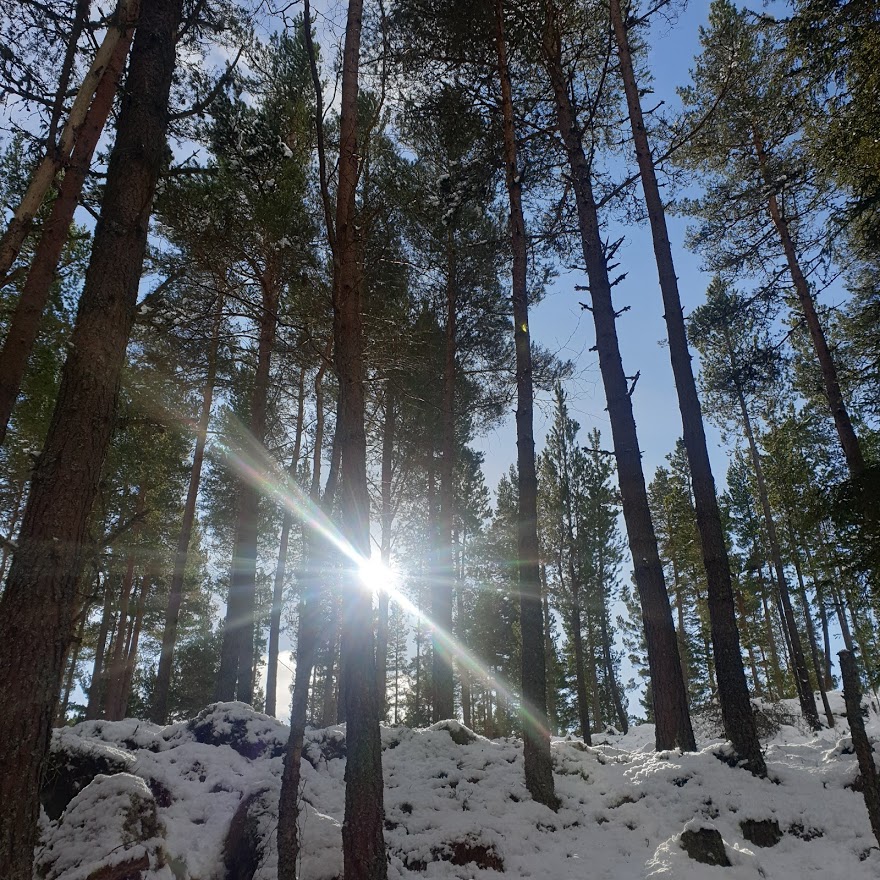
I felt as though I had stepped into Narnia. The snow crunching beneath our feet. Rays of sunshine finding its way through the dense trees.
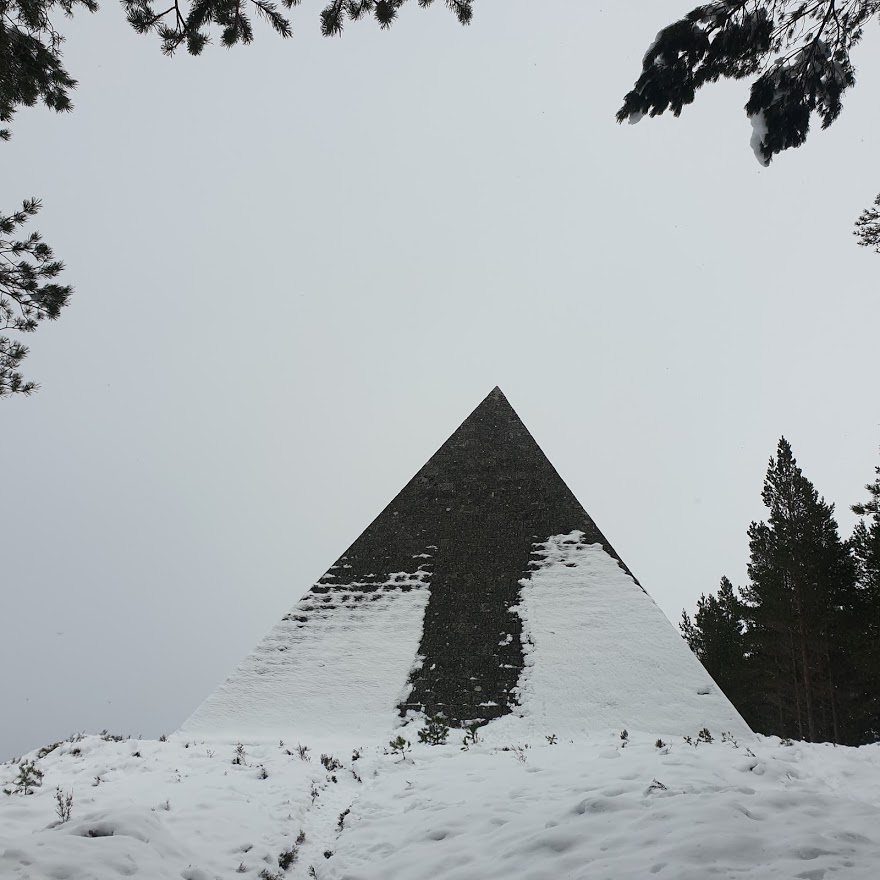
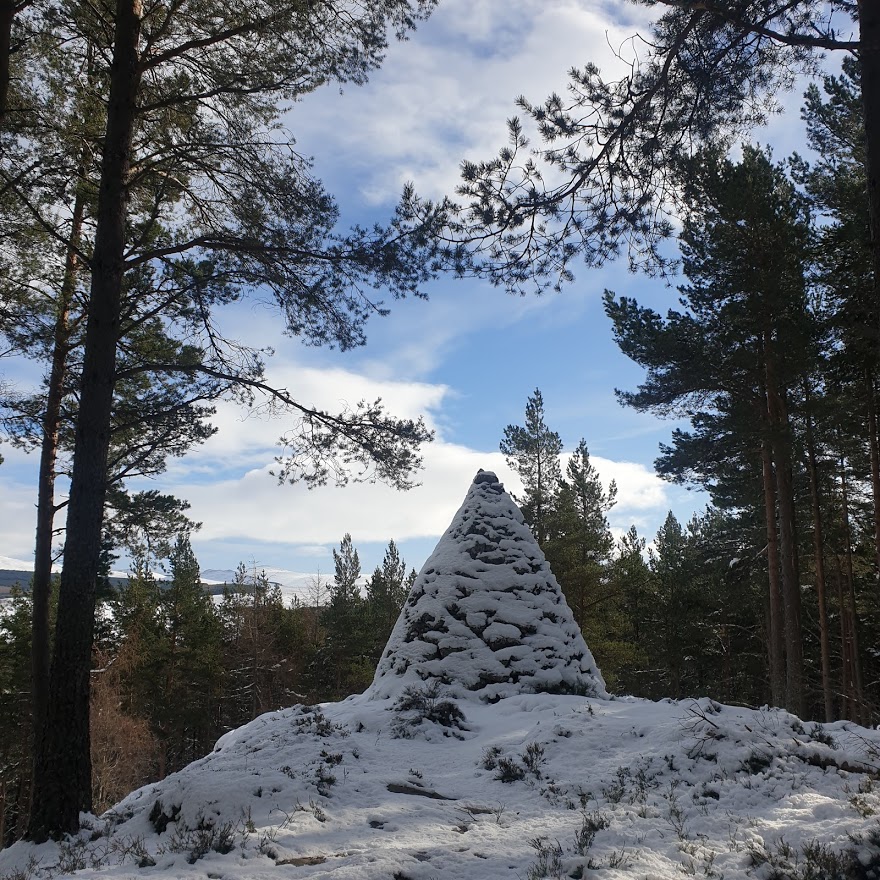
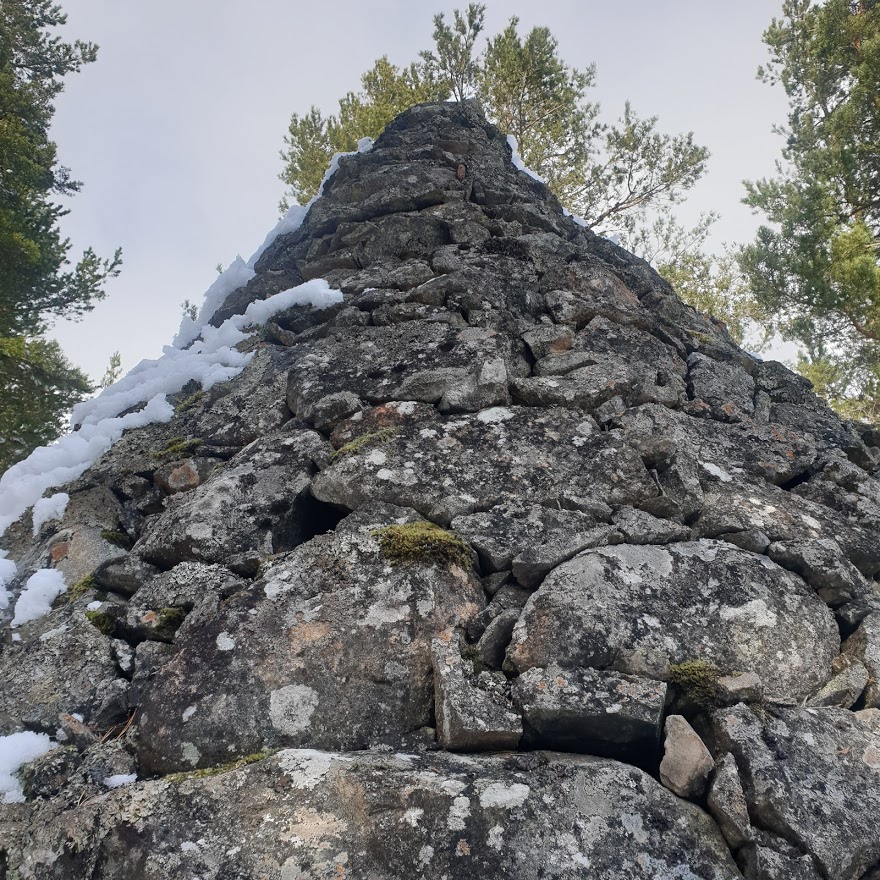
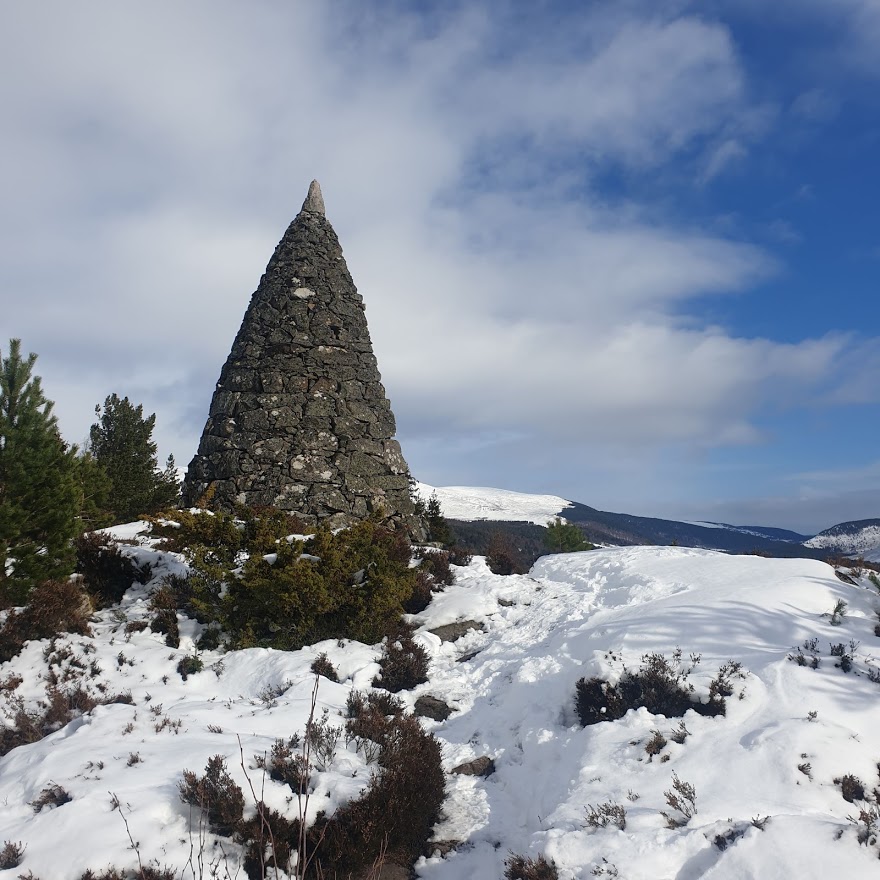
As I said, we found all but one of the eleven stone cairns, which were built to commemorate members of the British Royal family and events in their lives. The majority were erected by Queen Victoria. The broken hearted Queen commissioned the largest, a pyramid in shape, in memory of her beloved husband Albert, after his death in 1861.
Prince Alberts Pyramid, just before a big dump of snow!Here comes the snow!
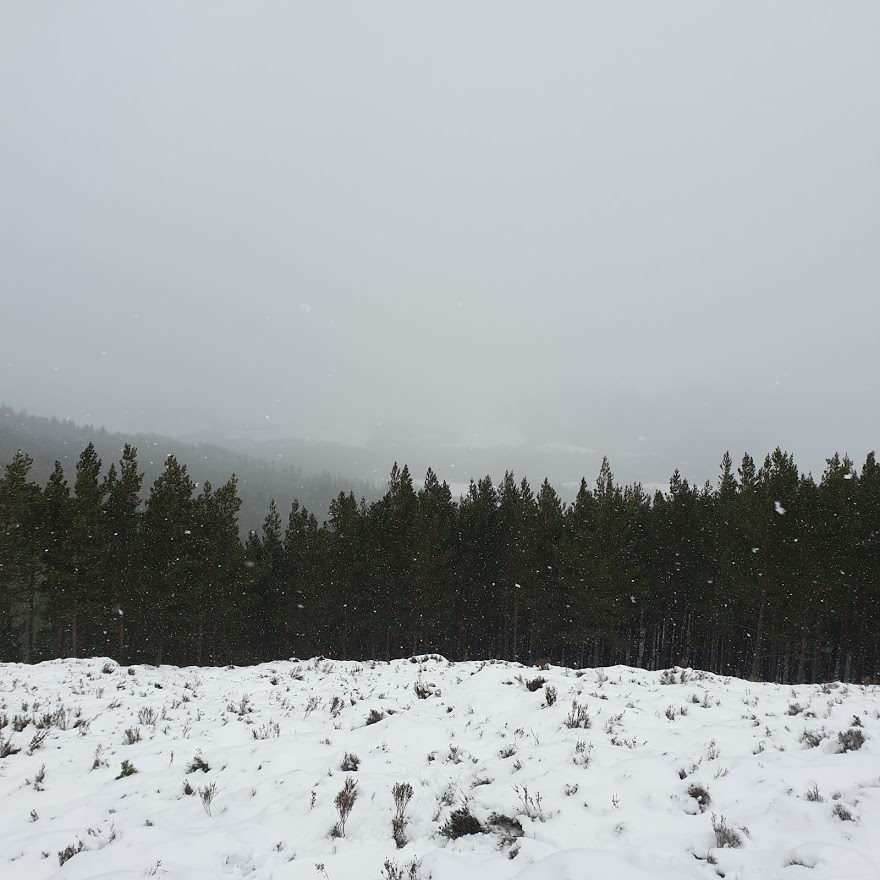
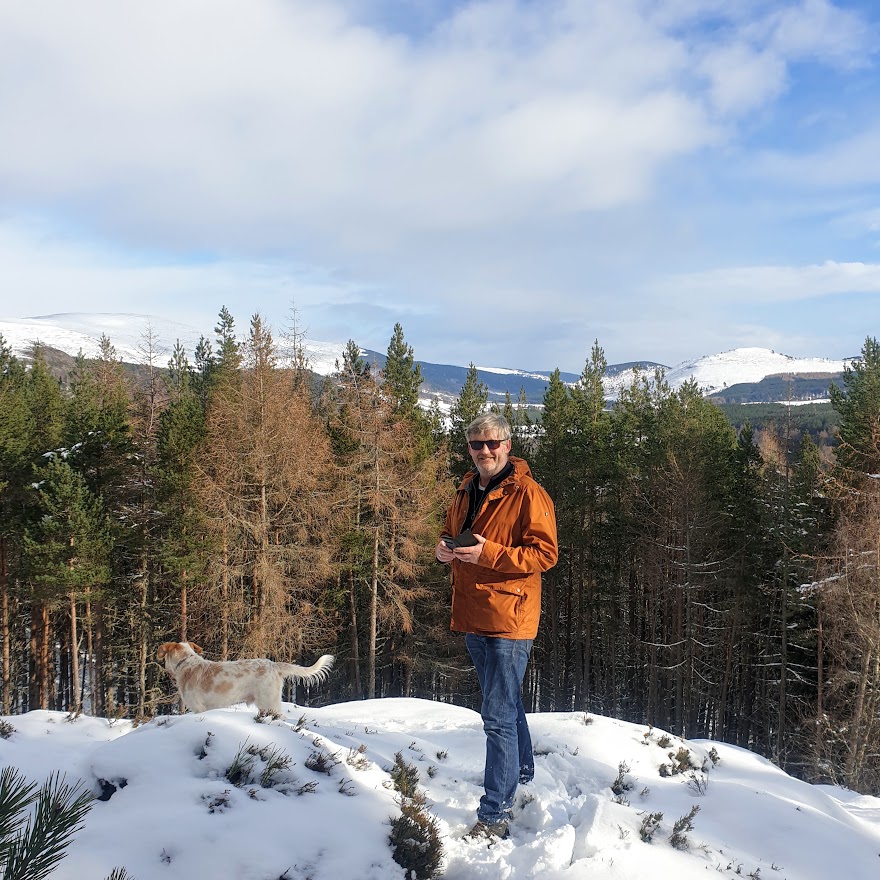
It was tough going walking through thick snow, but the task of ticking off all the cairns, along with the prospect of glimpsing a flying stag, was akin to a treasure hunt and kept us excited. We bounced along like Bambi.
Now at the end of our walk, we had to concede that we probably weren’t going to spot our flying stag today. But, there was always tomorrow.
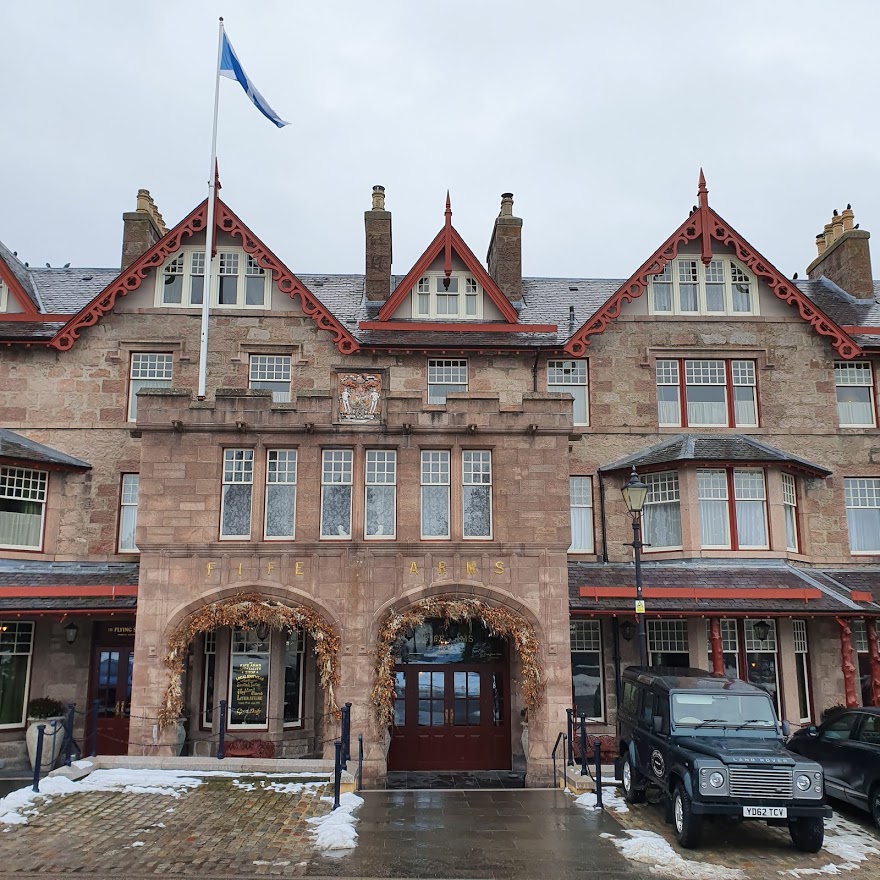
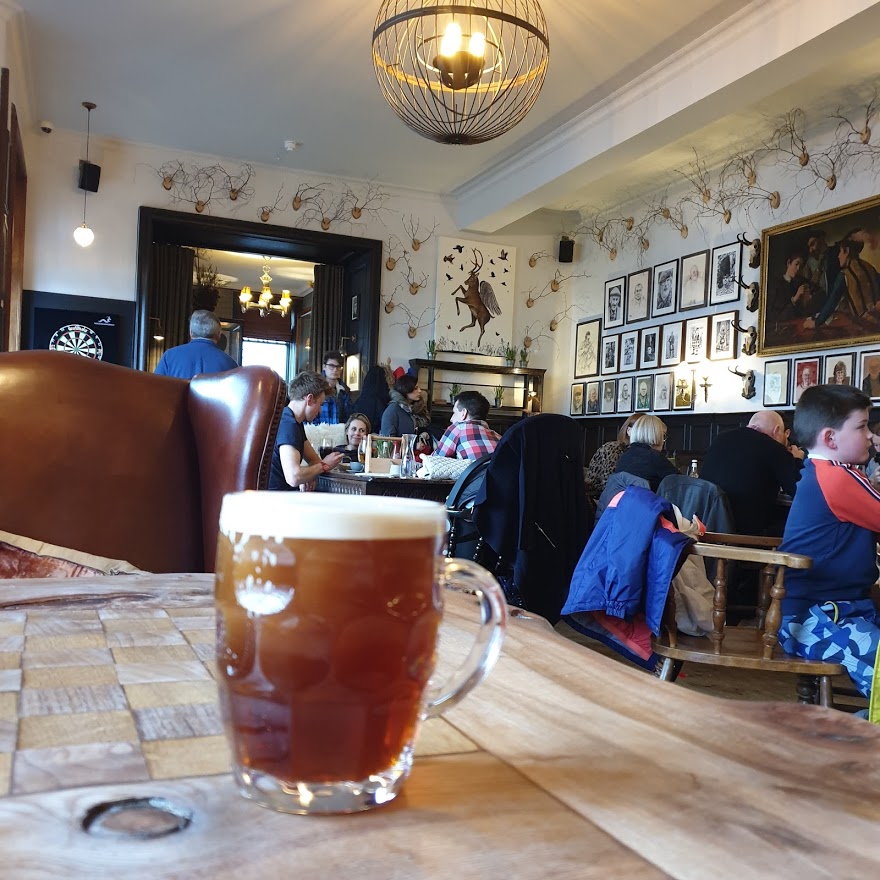
We decided that a little pit stop on the way back to the caravan was in order. We had worked up a thirst. The Fife Arms in Braemar would be the perfect rest place.
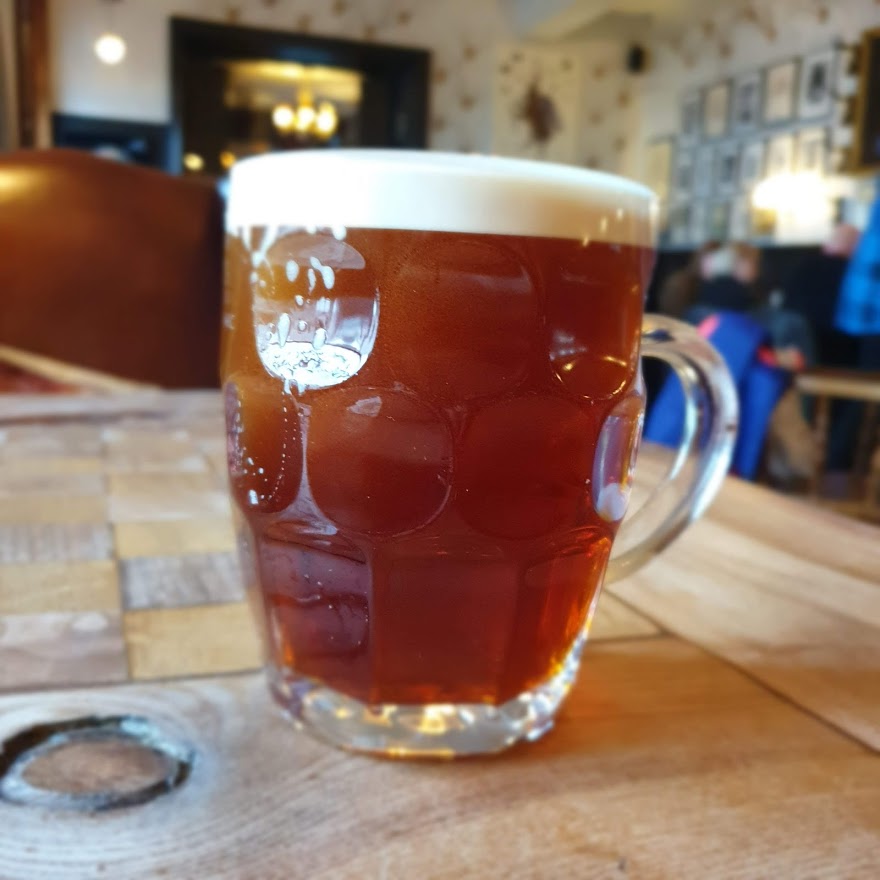
We made a bee line straight for the bar and ordered a couple of real ales, which, owing to our thirst went down a little too well!
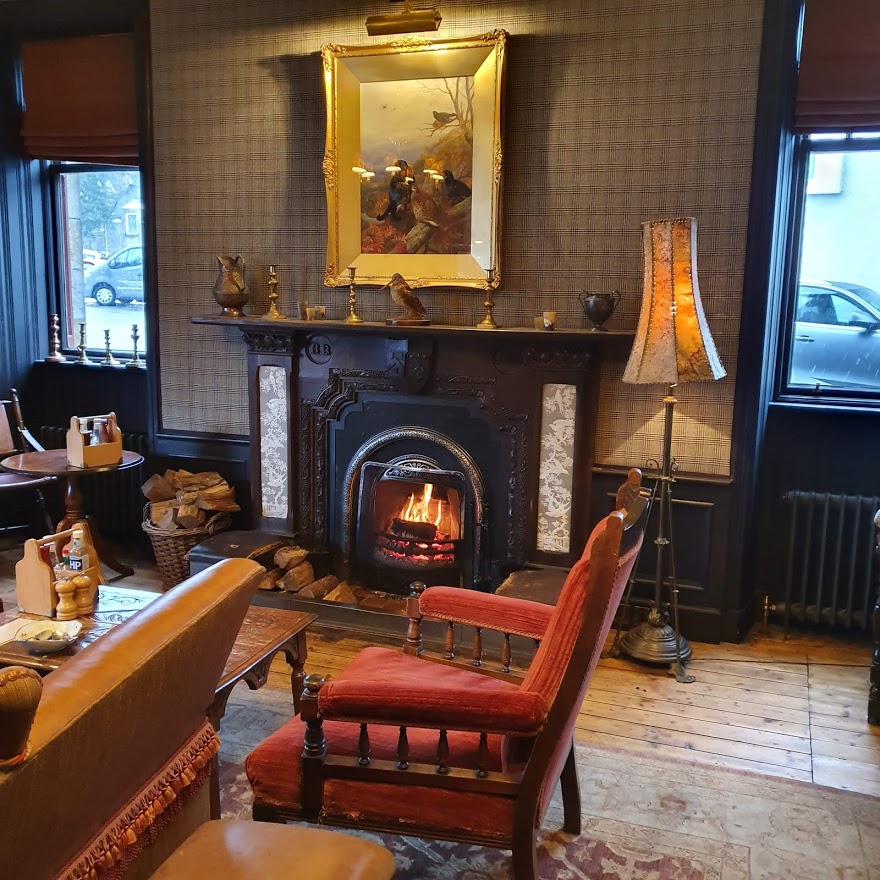
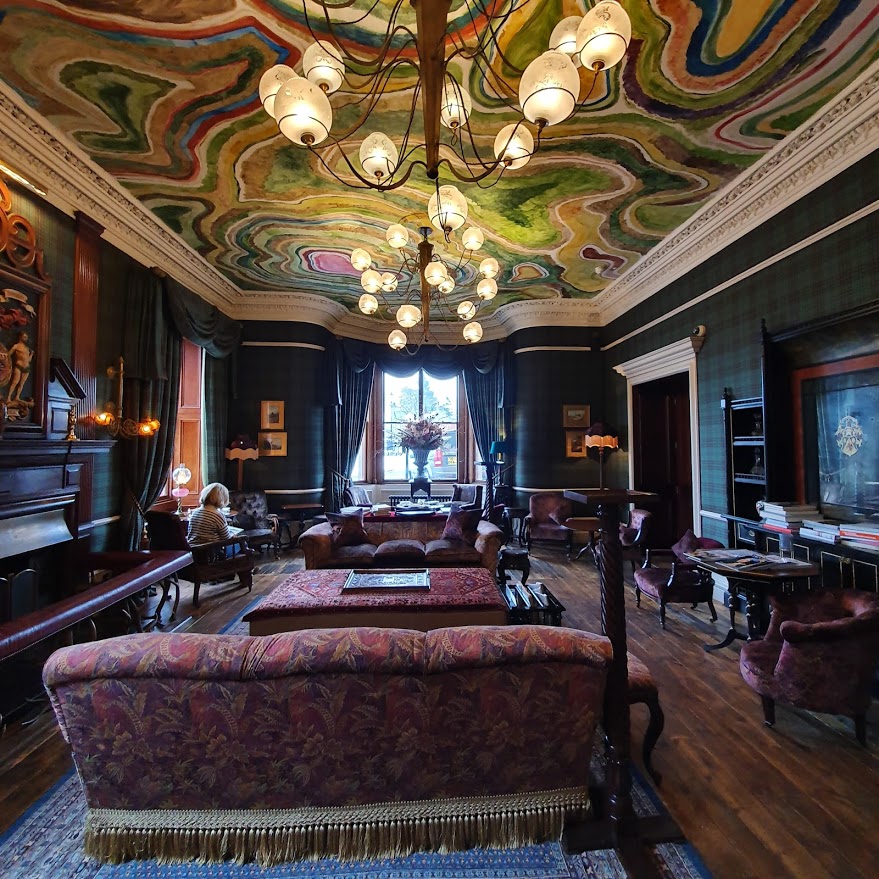
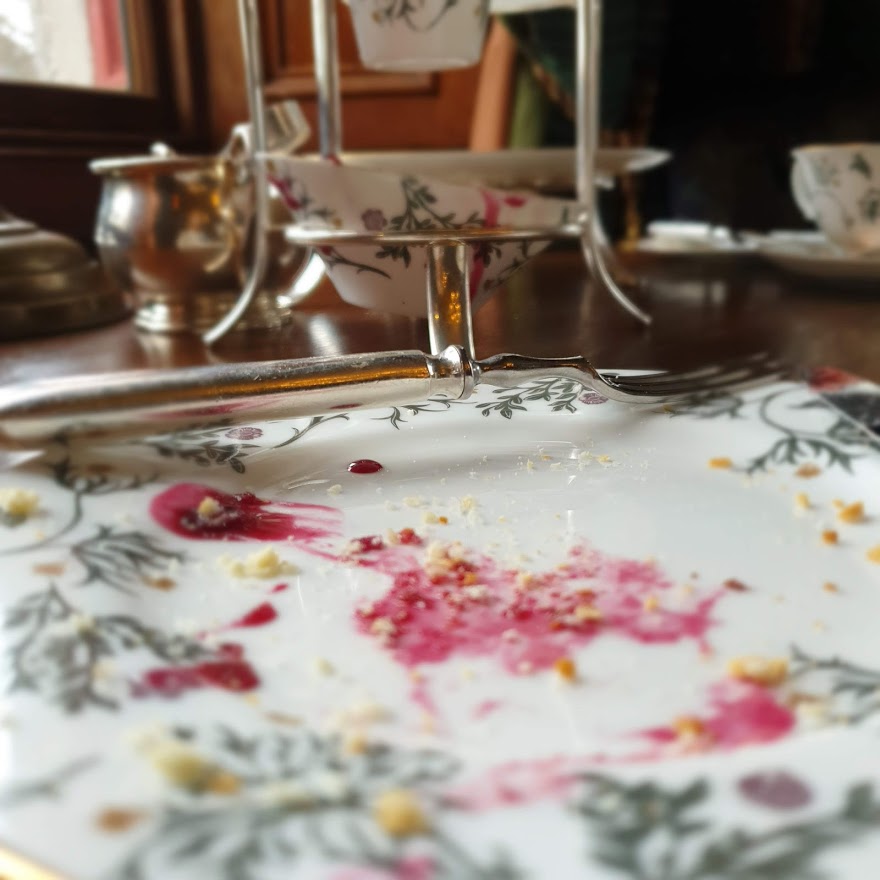
We had a sneaky peak at the more opulent side of this charming Highland retreat, with its amazing collection of art work and decided to enjoy afternoon tea, not today, but before we head south again.
The Library
I will tell you all about our afternoon tea experience another time. What a treat it was.
….for what they are worth. A time to take stock and think about what is really important in our lives & to pull together.
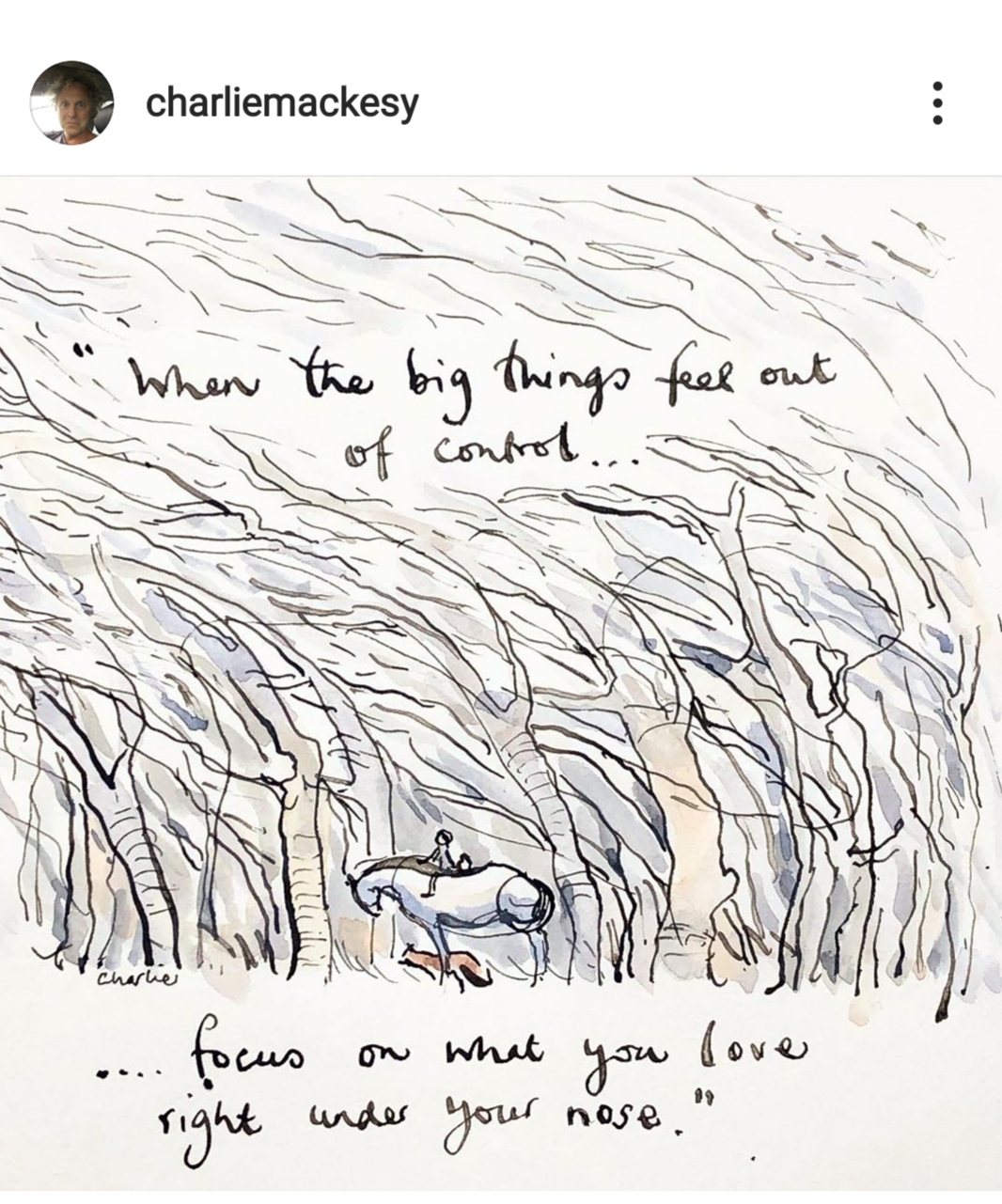
I can always rely on Charlie Mackesy when I need a little pep talk
British Airways, ‘fighting for survival’, ‘London Marathon postponed’, ‘Prince Charles avoids handshakes’, President Trump declares ‘national emergency’, ‘could cost global economy $2.7 TRILLION, Boris Johnson declares it to be the ‘worst public health crisis for a generation’………….
We’re doomed!
Private James Frazer
For those of you unfamiliar with Private Frazer, a brief introduction before I get back onto the subject in hand. He was a character in the BBC sitcom, Dad’s Army, which was about the British Home Guard during the second world war. It was broadcast between 1968 and 1977. Frazer is described as ‘a dour, trouble-stirring, exaggerating, wild-eyed Scottish undertaker’. The fictional character hailed from the Isle of Barra in the Outer Hebrides, and he was much loved for his pessimistic, dark outlook on life. Prone to gossiping and sowing the seeds of unease. His catch phrase, ‘we’re doomed’, is one that I use from time to time, with the humour that is meant. Now would be one of those times.
As I pen notes for this, on Friday the 13th of March, we (The United Kingdom), have upgraded from the contain phase to the delay phase. It all feels a little scary. I imagine that by the time there is light at the end of the coronavirus tunnel, there will be few of us the world over, who have not been touched by this in some way or another.
It’s alarming how empty the supermarket shelves are. I admit that today, is the first time that I have felt particularly anxious on a level other than from a business point of view. Being in the tourist industry, this was never not going to have a negative impact. If that is the only way in which we suffer, then I shall thank my lucky stars.
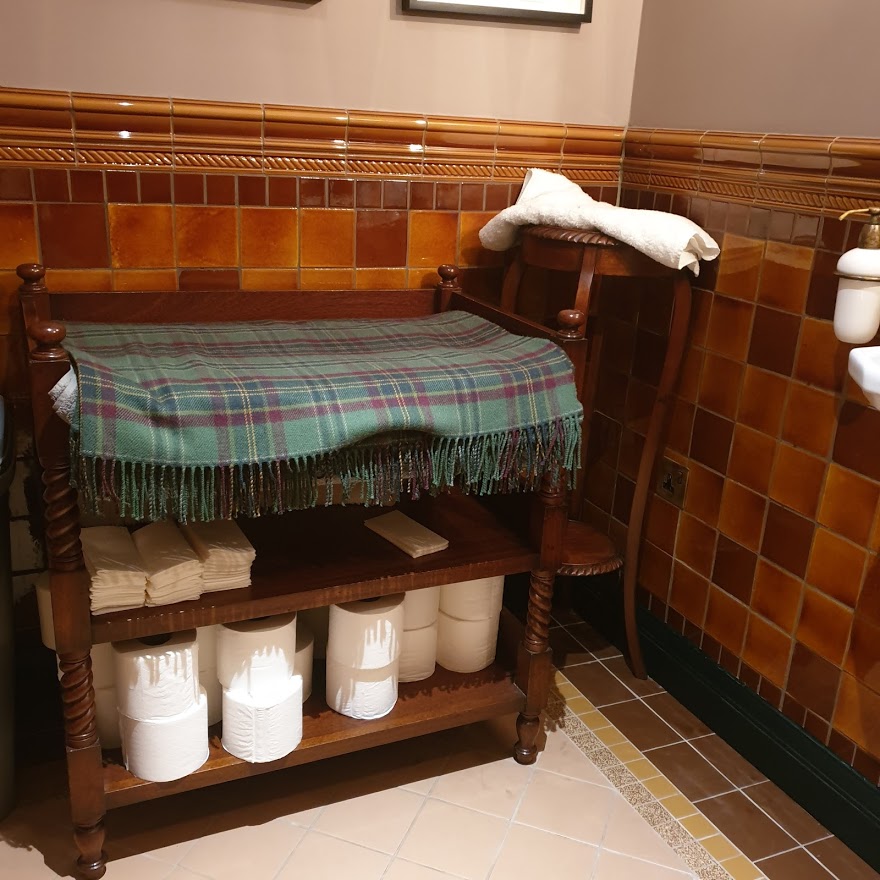
I haven’t stock piled any food or consumables, not because we’ve been advised not to, but I tend to take a more lackadaisical approach when it comes to such matters. Loo roll! It tickles me how that is the top of so many peoples list of priorities. I bought a four pack of coconut scented loo roll today (it was literally the last remaining pack on the shelf). I bought it because we only had three rolls left in the whole house. I tend to wait until I am required to hop from one bathroom to another, trousers round ankles, before I think I must get some more! So, we were potentially one roll away from that stage. I got to the check out and almost felt as though I had to justify my purchase. I felt guilty, like I was being judged and I wondered if I was at risk of being mugged on my way home!
I phoned my parents, just to check in and to make sure that they weren’t thinking of booking a cruise. The subject of stock piling came up. They haven’t bought any more than is the norm for them either. We joked that we could descend upon my sister, like a plague of locusts, if the proverbial shit hits the fan, or rather when it hits the fan. Her kitchen cupboards always look as though she is planning for an apocalypse. Mine are always on the scant side, because I like to see whats at the back with ease, rather than wondering what may be lurking there, as one might wonder what lurks inside a black hole! Any way, they were both in fine fettle, and not planning a cruise anytime soon. Phew.
There is no doubt in my mind, that this pandemic is going to cause an enormous amount of stress and anxiety, loneliness and isolation, misery and heart ache for many. On the flip side, I think that there may be a silver lining to this ominous black cloud if we look hard enough. How many of us don’t really know our neighbors? Maybe the ones directly either side of us, but the sense of community seems to be a rare find these days. Maybe now, people will make more of an effort to seek out their neighbors, to either ask for, or to offer help. Maybe it will help to unite us, on a community and a world wide level.
Already there are some great stories being shared. From Italy, currently in heavy lock down, there are tales of folk in quarantine, coming together on their respective balconies, to sing and play instruments, bringing joy to everyone within ear shot. The resilience of the human spirit is incredible.
Around 250 community groups have been set up across the UK, to help those in self-isloation. Carrying out tasks such as shopping, dog walking and picking up prescriptions.
Vietnam is to end its trade in wild animals killed for meat and parts, after Covid-19 was linked to the transmission from bats to humans via a wildlife host.
Dozens of celebrities are devoting their time, money and attention to support food banks and charities.
I love this one. Distilleries across the United States are making their own hand sanitizer to give away for free. It turns out that that is happening here in Scotland too.
Air pollution has plummeted in cities with high rates of quarantine.
In the Netherlands, 175 Dutch churches rang their bells for 15 minutes as a sign of hope against corvid-19.
Times of hardship really does bring out the best in people. That’s what I’m trying to focus on anyway.
I am sure that there will be many such ‘warm fuzzy feeling stories’ being told, as we travel along the Coronavirus road
We have no idea what the future holds for us, with or without coronavirus. We sure as heck won’t have a full diary of booked tours as we would have hoped. During this lean period, we shall put on our tin hats as Dad would say and continue to explore as much as possible. If you can’t come to Scotland, we will bring Scotland to you.
I would love to hear any feel good stories that you have to tell. Also, if you suddenly have time on your hands, how are you using that gift? Time is a gift right? We don’t often have a lot to spare. I think I might blow the dust off my easel and oil paints, write more and do some baking…if I can get hold of eggs!!!
So, in the mean time, chins up and we’ll see you on the other side of this, raring to go again.
In this second part of a trip to Skye, we will concentrate on the Trotternish Peninsula which makes up the north east of the island. We will visit the Old Man of Storr, Kilt Rock, the Quiraing, the Skye Museum of Island Life & a secret waterfall.
So, it has to be said, this is probably one of the classic Skye tours. The old Man of Storr and the Quiraing are probably a couple of the busiest attractions on this incredible island, bringing a huge number of visitors each year, and understandably so. They truly are astonishingly beautiful, with their breath taking views and weird and wonderful geology, enchanting history and intriguing legends and myths.
I have said it before, my aim is not to preach about where you should visit on your highly anticipated vacation, but know this, some of these tourist spots can be rather busy. So, if it’s tranquility and to enjoy solitude that you wish for, then you may want to consider visiting the above mentioned places out of the main tourist season or look for the path less traveled. I will write about this in a future blog.
I will also be perfectly honest, these places are well worth considering as stops on your itinerary, but for me, they are too busy. I prefer to be far from the madding crowd, where I can escape life for a while and enjoy the beauty of nature, embrace loneliness for a short space of time and reset my mind. But that is just me.
Having said all of that, we have lived and worked in America and Italy. We visited New York, Washington DC, Chicago, Niagra Falls Florida, New England, Pompei, Amalfi, Rome. You get the picture. We did all of this first, in a frenzy of list ticking, photo snapping and FaceBook bragging. We got all of that out of our systems. Then we slowed down, we breathed and, when we had the time to travel and explore, we really began to experience the hidden gems and get to the roots of the local culture. I wouldn’t have missed the ‘tourist’ destinations for the world though. That’s what we were after all, tourists, having fun, meeting people and enjoying life.
So, without further ado, lets go.
The Old Man of Storr
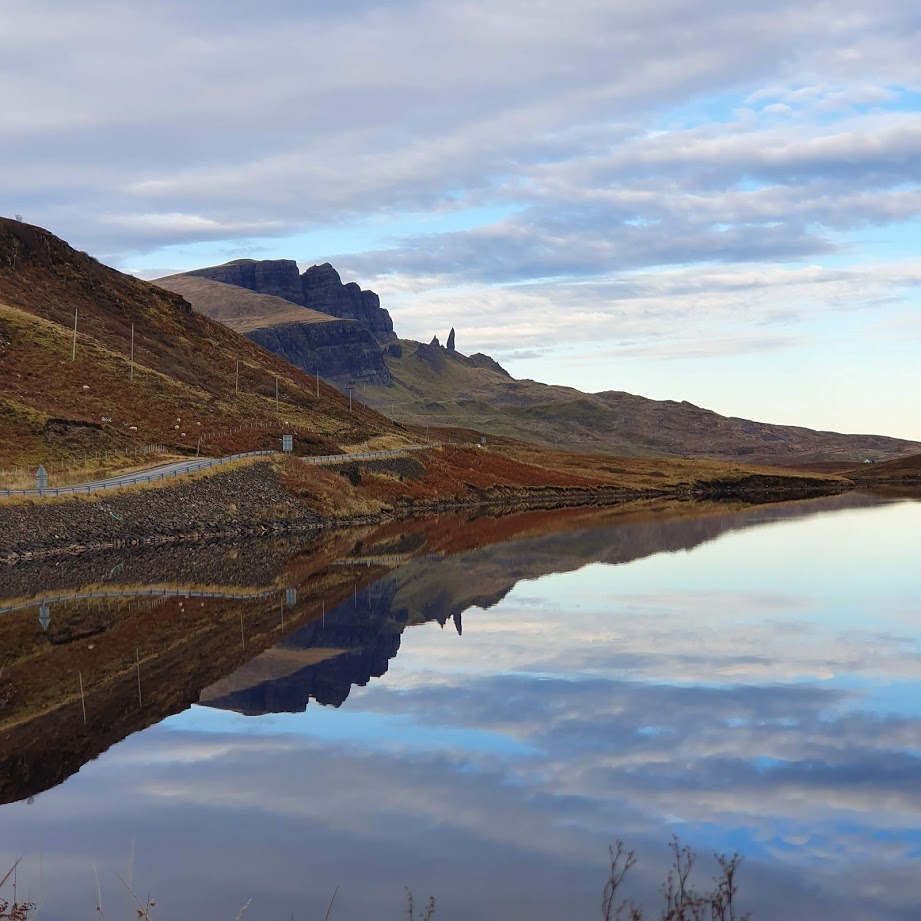
The Old Mans’ reflection in Loch Leathan
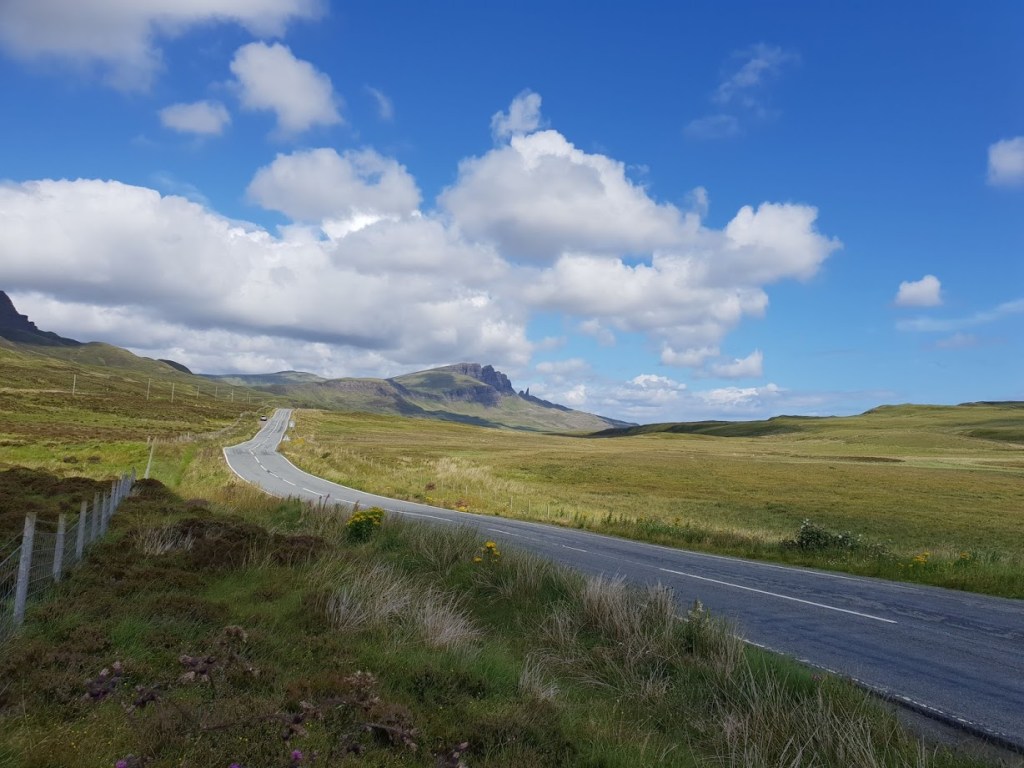
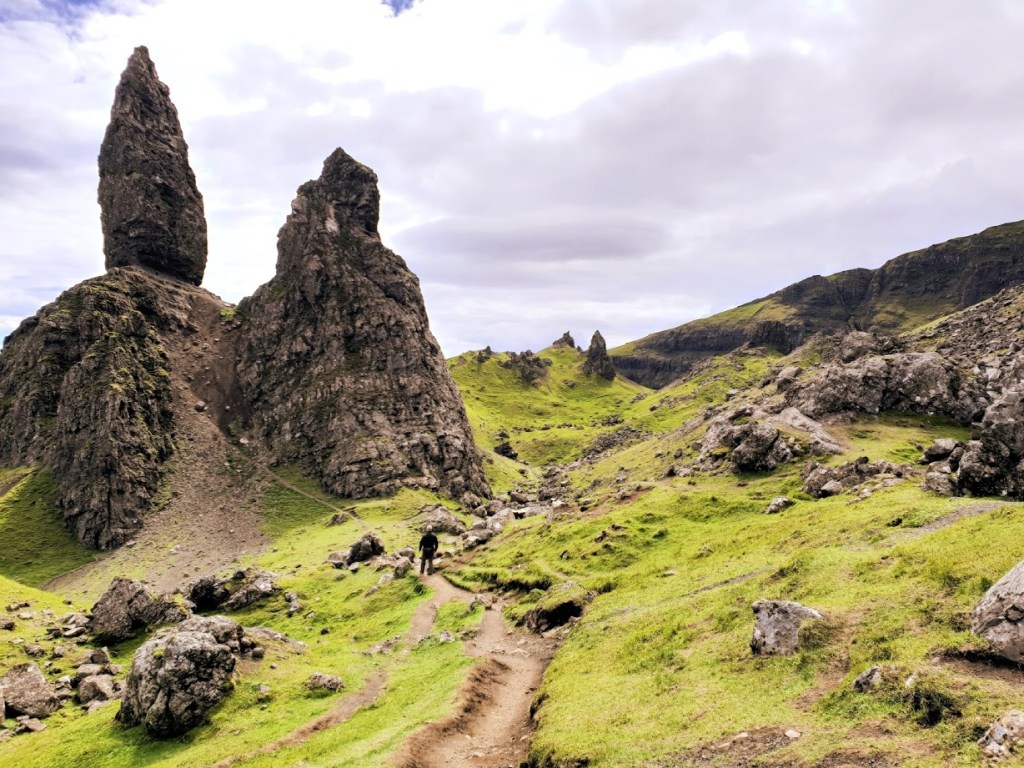
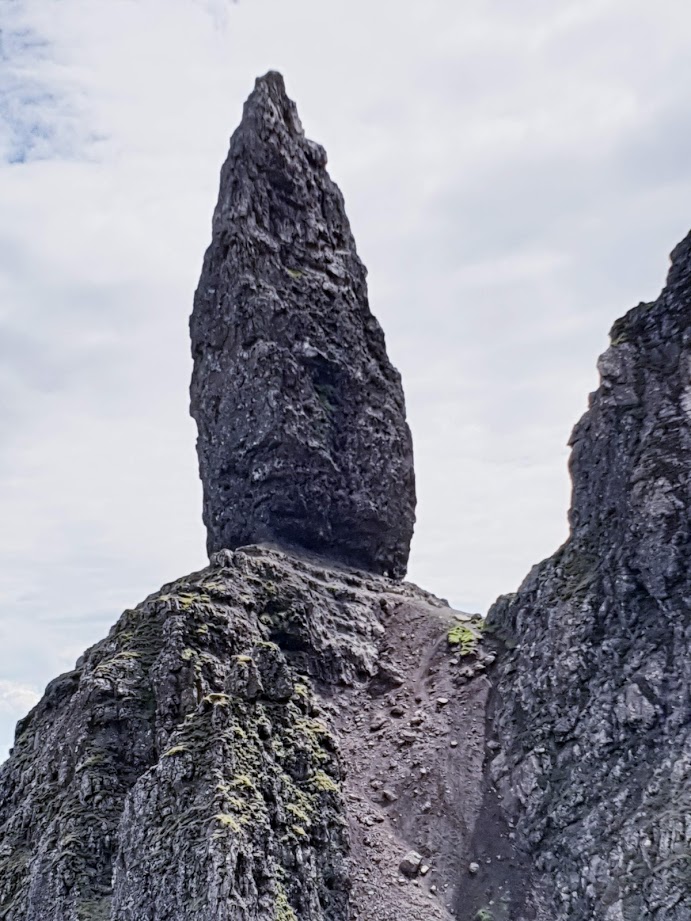
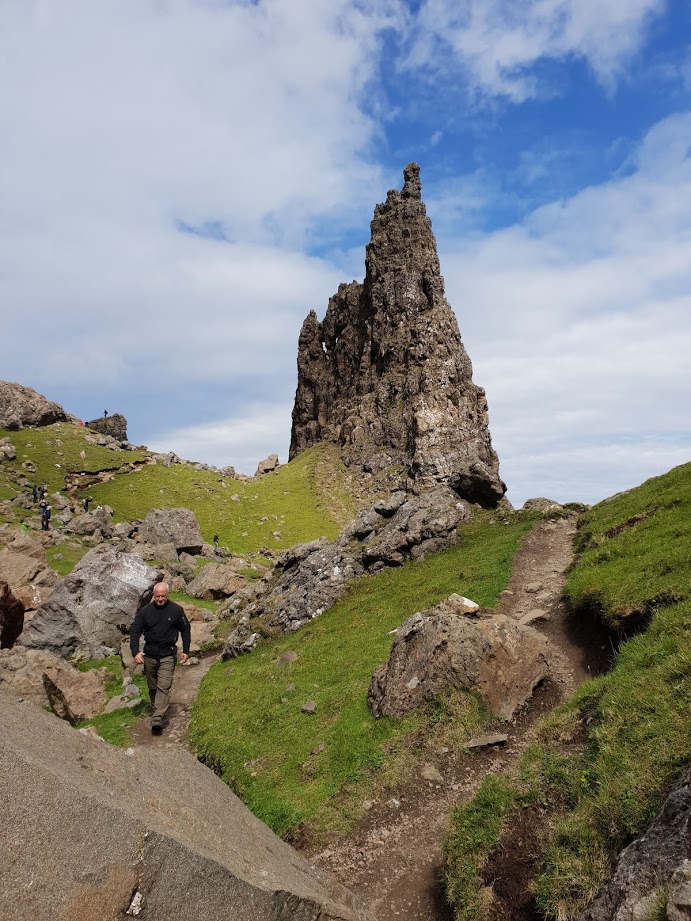
Our first stop today is the Old Man of Storr. Less than fifteen minutes drive from Portree along the A855. The pinnacle of rock that is the Old Man is visible for most of the drive, drawing you closer. Parking is at the edge of the road and is now paid parking and at the height of summer it fills up quickly, so best to get there early.
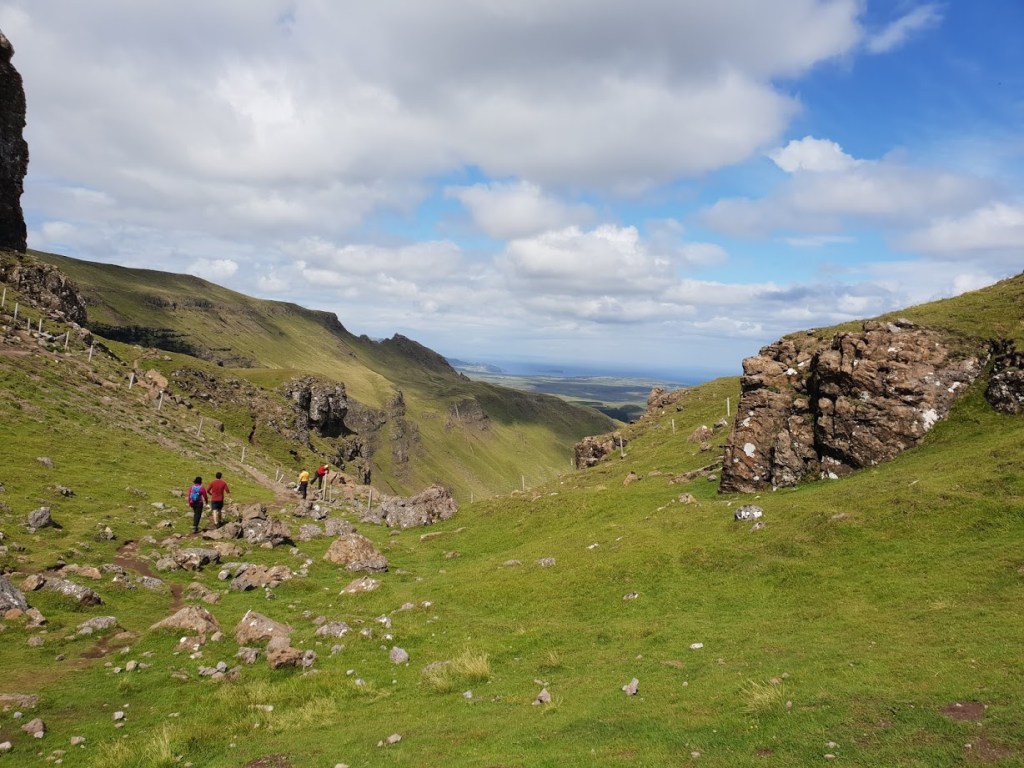
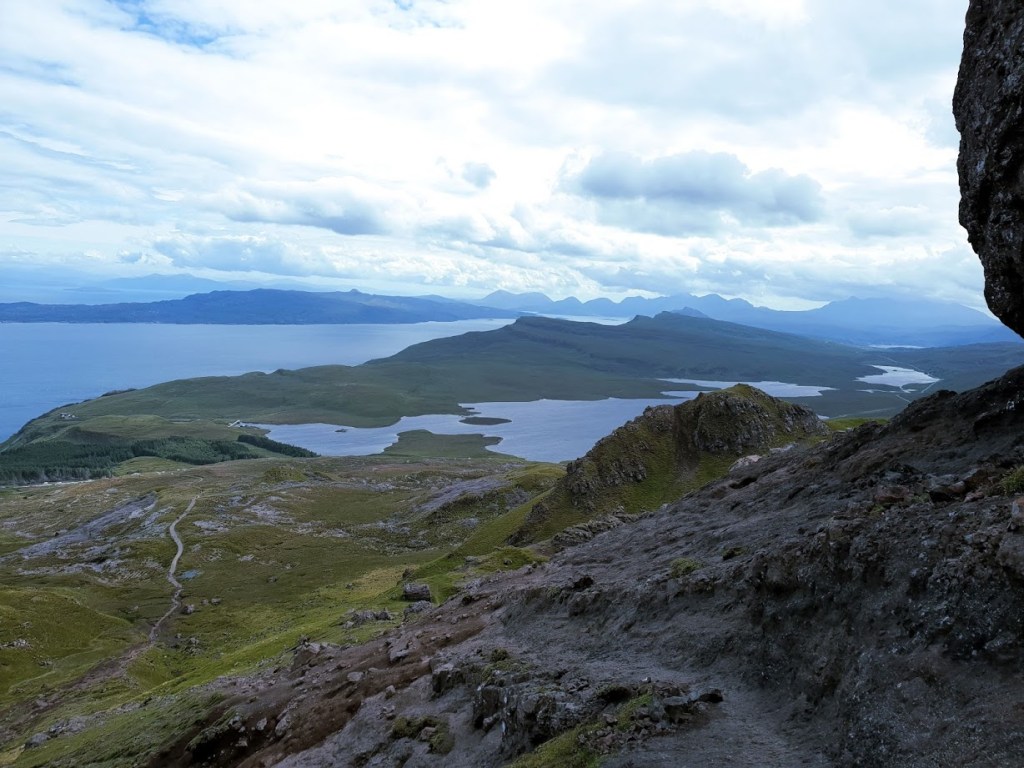
The walk to the Storr takes around 45 minutes each way, depending on how many stops you make to admire the stunning views.
The view from the Storr, looking across the Sound of Raasay
For a detailed description of the walk click here.
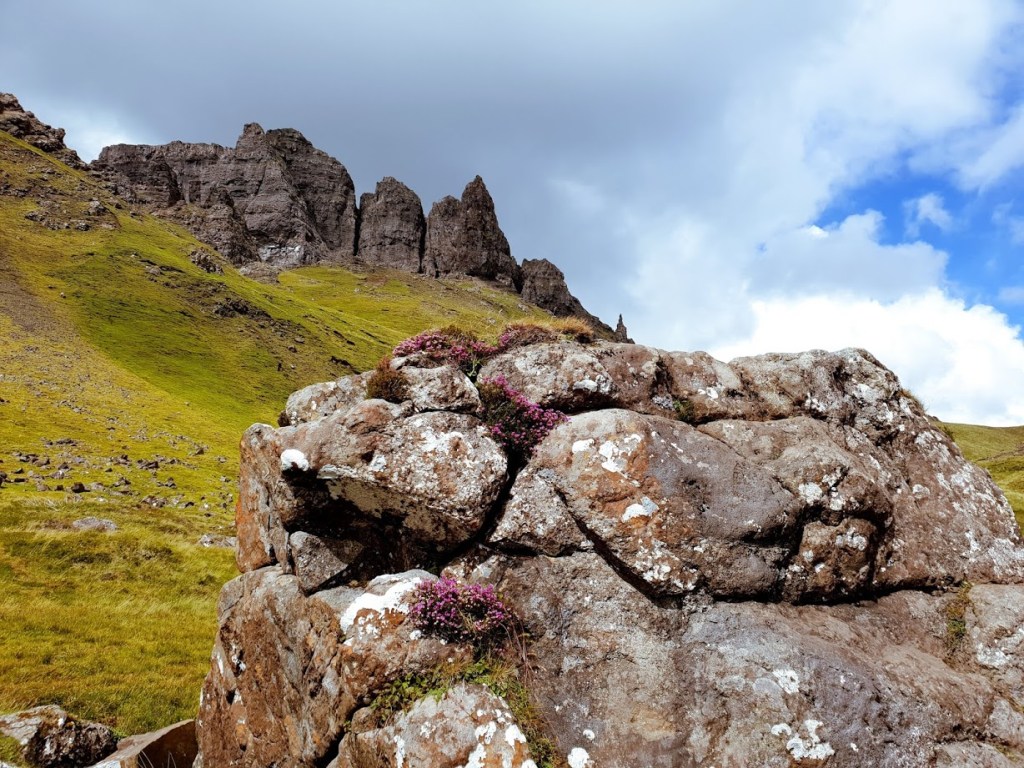
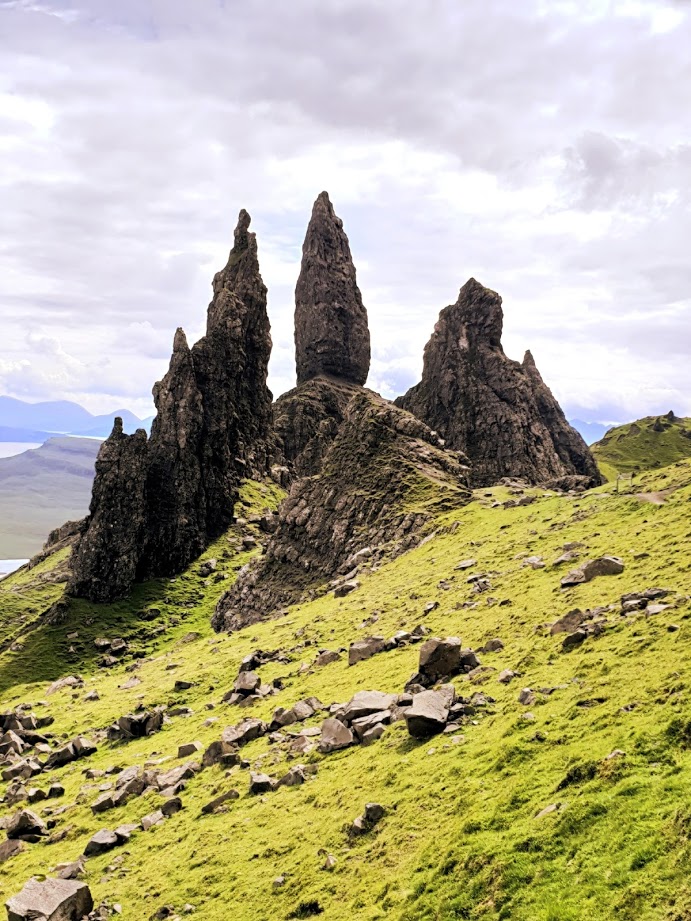
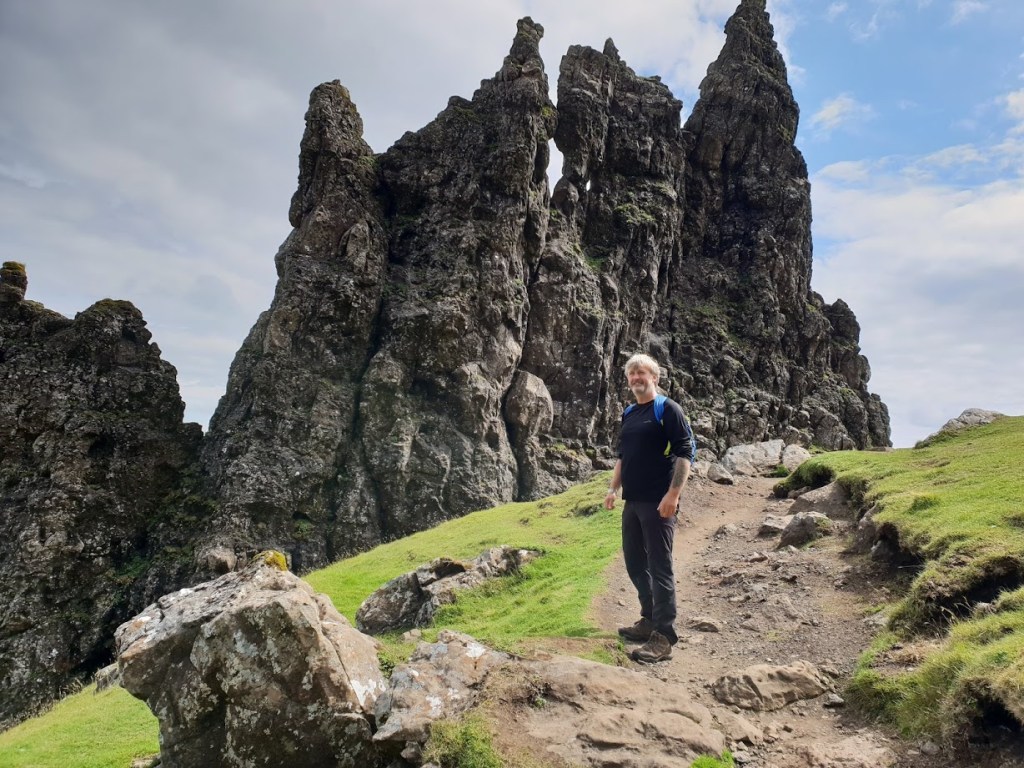
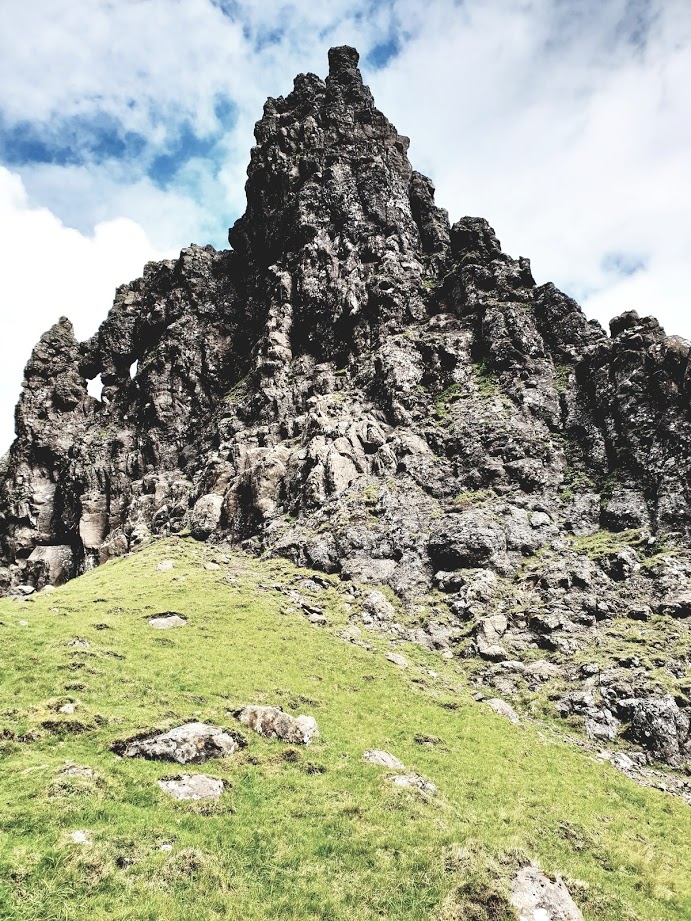
The Old Man is a part of a massive landslip that forms the Trotternish Peninsula. Or was it a landslip? Myth and legend surrounds it’s formation. Priests and devils, giants, brownies, broken hearts and wicked fairies, could all have been how the Storr was formed!
Kilt Rock
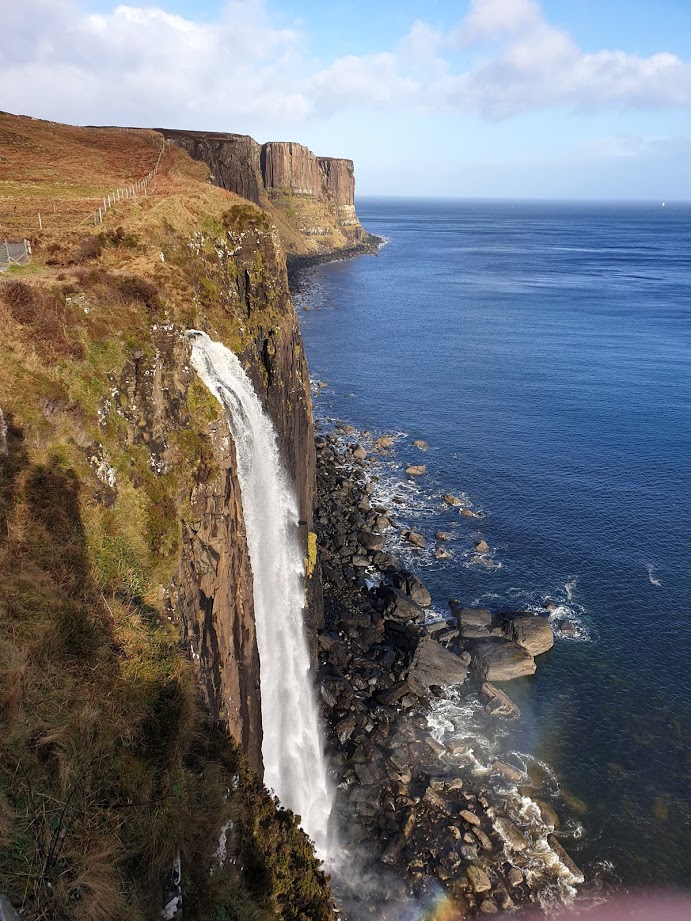
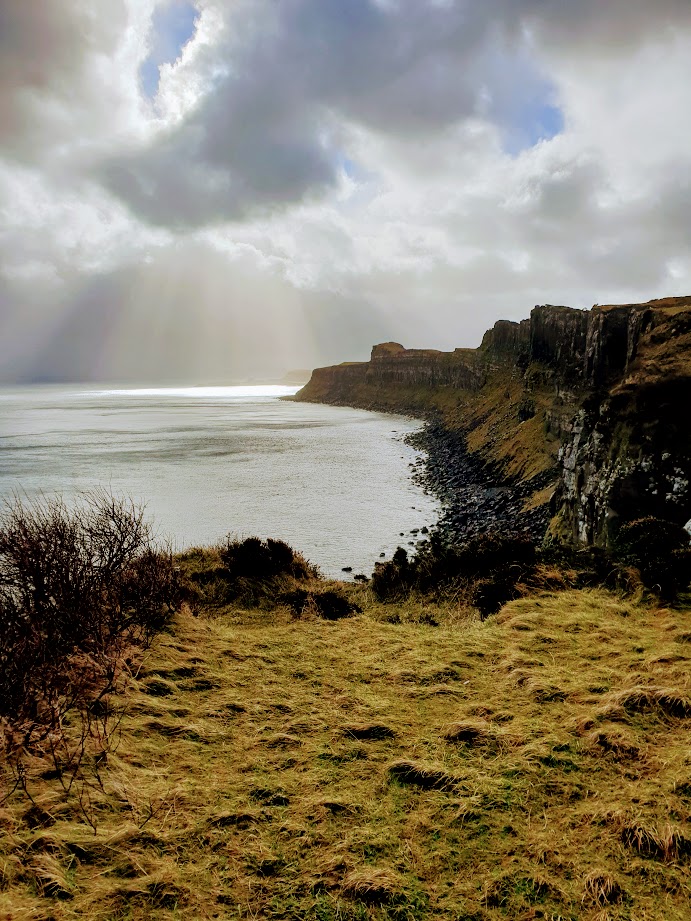
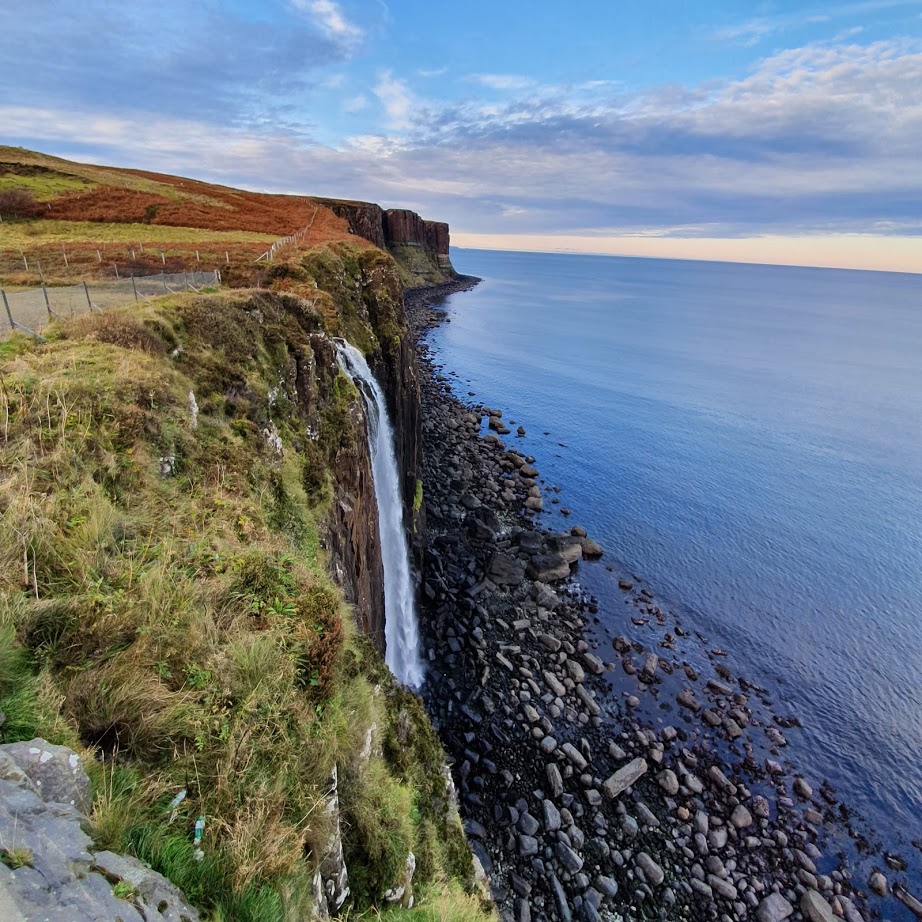
Next stop is Kilt Rock. Only a fifteen minute drive from the Old Man, this itinerary really does minimise your time spent in the car and maximizes time enjoying the landscape.
There is a large car park and a safely fenced off viewing area. At 90 meters high, with dashing rocks at it’s base, the fence literally saves lives. The sight and sound of Mealt Waterfall, fed by nearby Mealt Loch, is a wonder to behold. Admittedly not quite Niagra Falls, but spectacular non the less, and you don’t need to wear a yellow poncho to keep dry, unless of course it’s raining, which it may well be!
To drone or not to drone? That is the question. Well, the answer is, locals would respectfully request not. They disturb wildlife and when you’ve got half a dozen buzzing around at the same time, they are noisy and quite frankly spoil the experience for others. Witnesses have seen drones being flown directly above the heads of dolphins and peering into the nests of golden eagles to film precious chicks. Lets respectfully give wildlife the space it deserves.
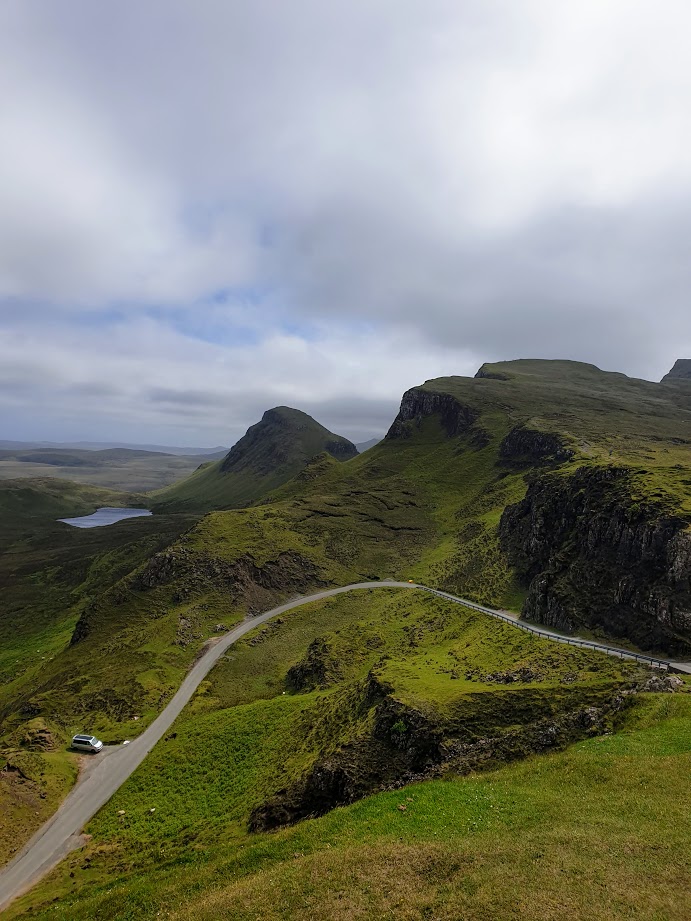
It is but a ten minute drive from Elishader, Kilt Rock, to the parking for the Quiraing. Having said that, the road does become incredibly twisty, turny and narrow. So depending on how busy it is, how many times you have to back up to passing places, it may take more time than that. It is a braver individual than I, who attempts to drive a camper van up here!
Again, I have to be honest, if you are visiting at the height of the tourist season and especially if the weather is good, the chances are it’s going to be busy. The last time I was there, some six months ago, a lot of work was going on to build a larger car park, so that should help to ease road blockages caused by folk parking in passing places, and generally keep things moving along much smoother.
Pronounced ‘cwurang’, the Gaelic word A’Chuith-Raing, translates as the pillared enclosure. Similarly, the Norse translation means round fold, and hints of Skye’s Viking history. Stories tell of islanders hiding their cattle from viking raiders within the Quiraings many nooks and crannies, or pillared enclosures.
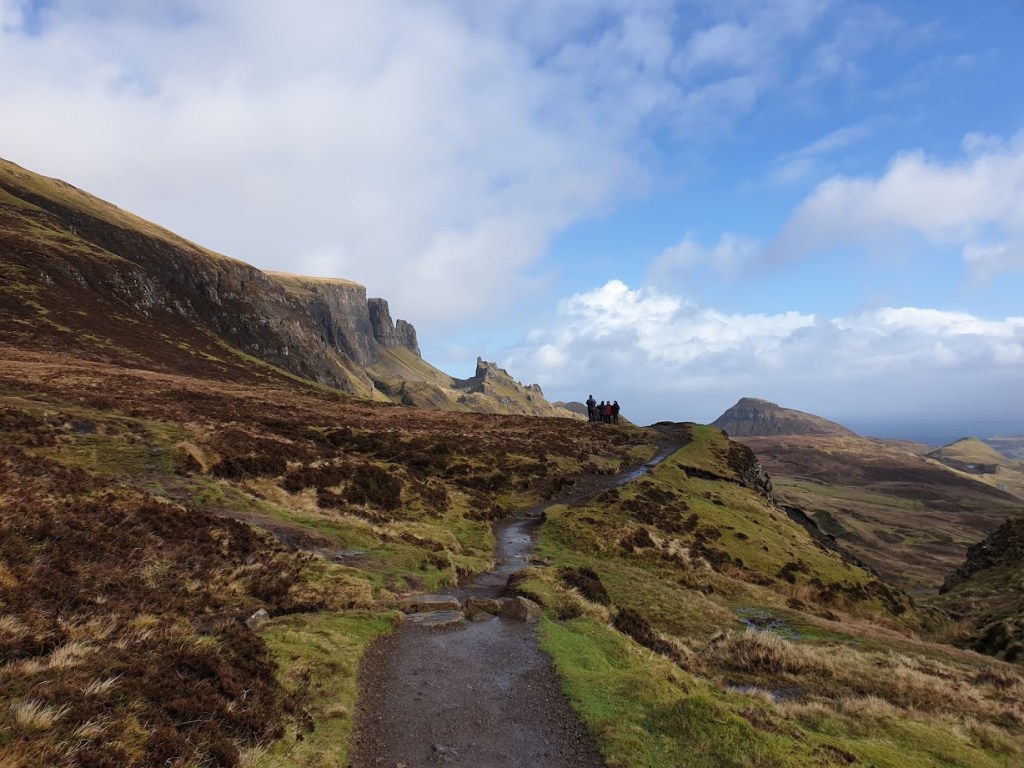
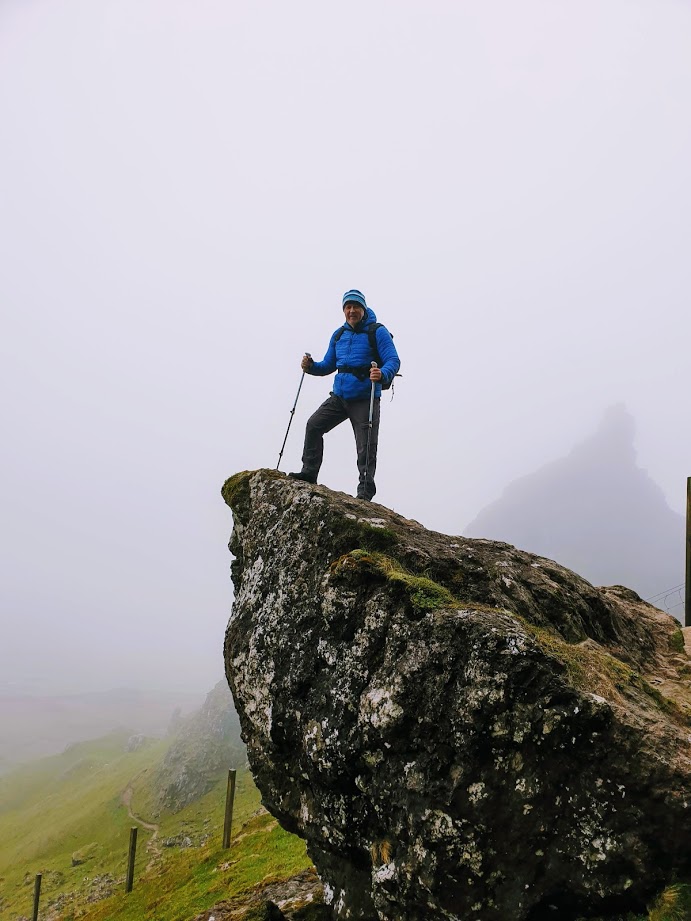
If you wish to complete the whole circular walk, which is approximately four miles, I think that you do need to have a reasonable level of fitness. Although the initial part of the path is good, it deteriorates as the hike goes on and becomes merely a well trodden track, rough and rocky in parts and muddy in others. There are also some steeper sections that are more of a scramble than an amble. The top section of the walk is quite marshy and boggy too, so fore warned is fore armed. You will need to wear decent hiking shoes or boots and carry waterproof jacket and maybe a small back pack so that you can carry water and perhaps a spot of lunch. You will be spoilt for choice when it comes to picnic spots with heart stopping vistas.
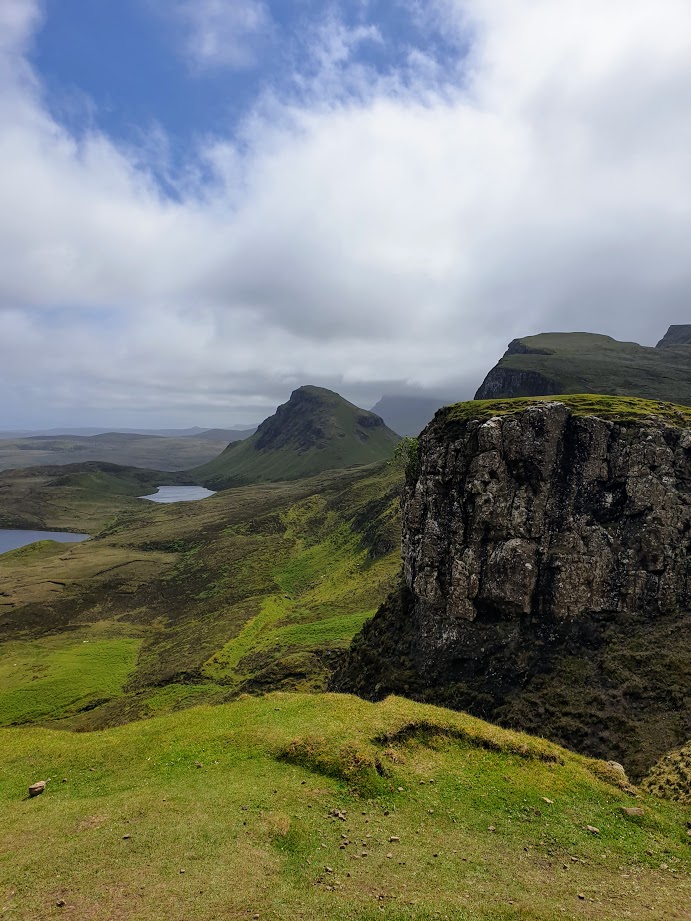
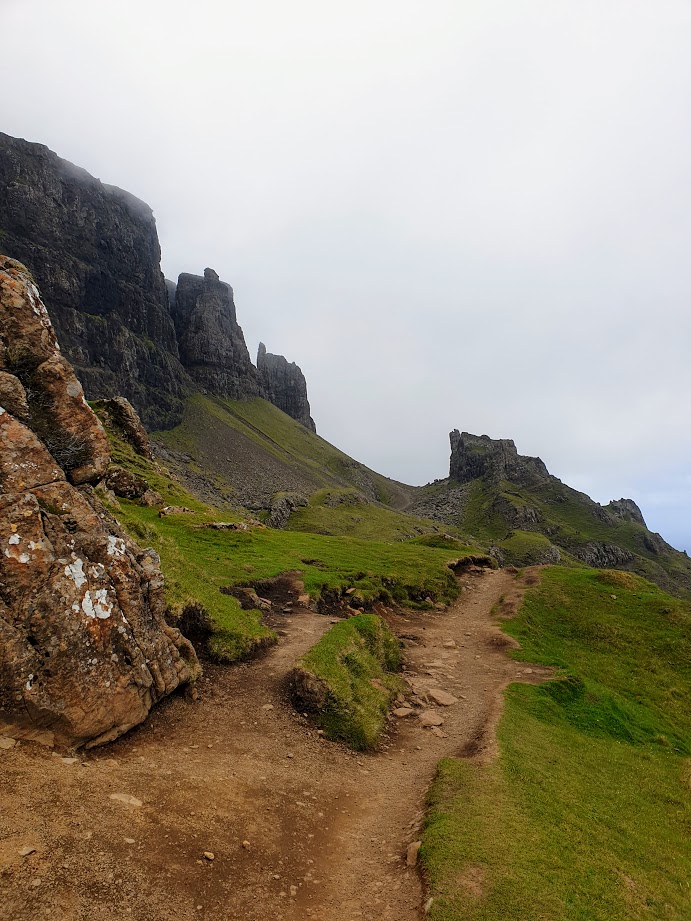
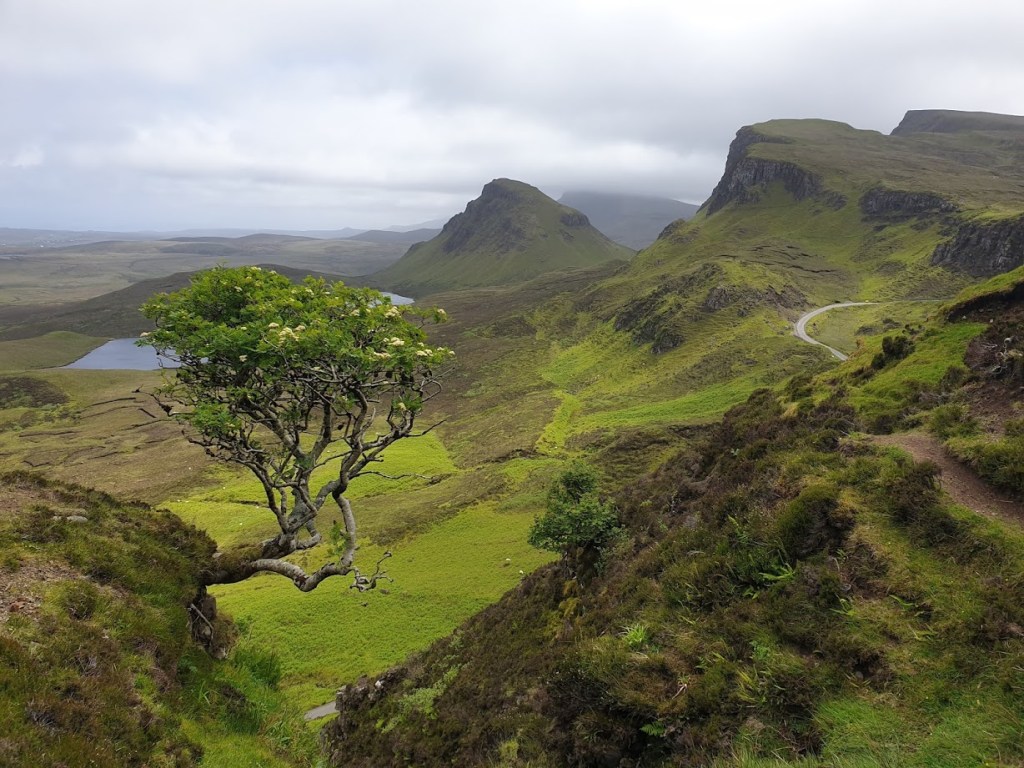
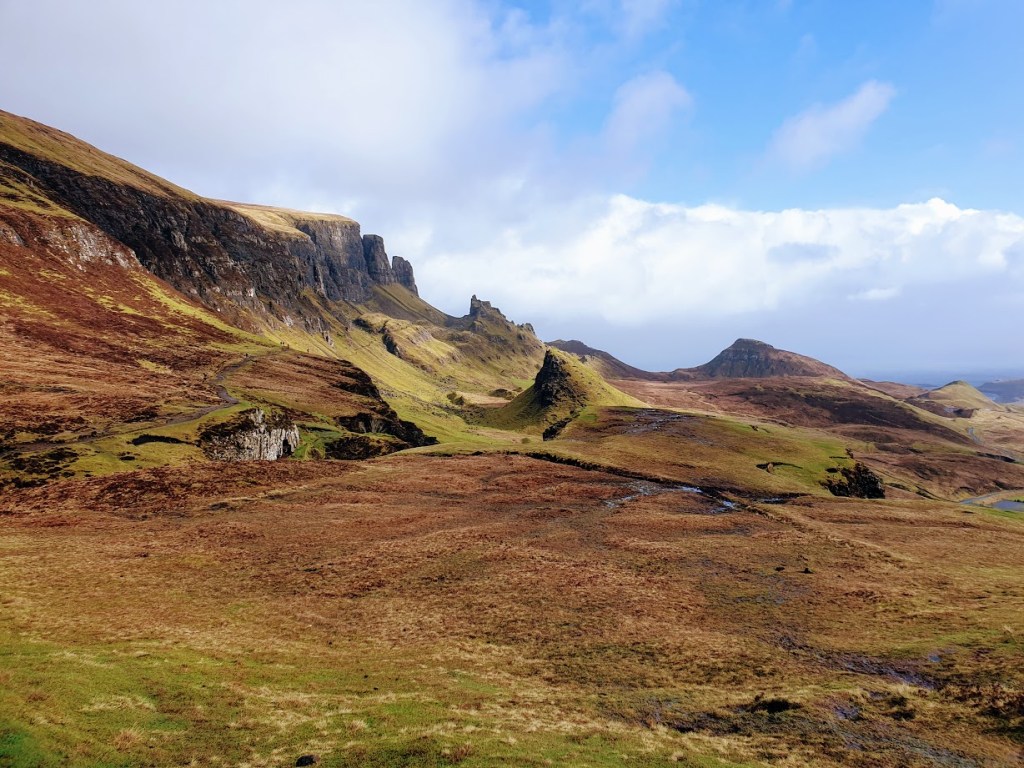
There are three key features of the Quiraing. The Needle, a jagged 37 meter high pinnacle. The Table, a grassy, flat area that has slipped down from the main plateau. The third is The Prison, which really does give you the sense of impenetrable fortress walls.
The landscape here is awe-inspiring. It feels as though it has dropped onto Earth from another planet, or that you are part of a magical realm in another life.
It is part of the Trotternish landslip, the same that created The Old Man of Storr. Astonishingly, the land here is still on the move. It shifts a few centimeters every year. Subsequently, the road at the base requires annual reapir.
If you do complete the whole circular walk, it will take from two hours to complete, depending on how many stops you make, and trust me, with views to die for, you will want to pause often. If you have an appetite when you return to the car park, there is a small catering van which offers not a particularly foody experience, but sustenance if required.
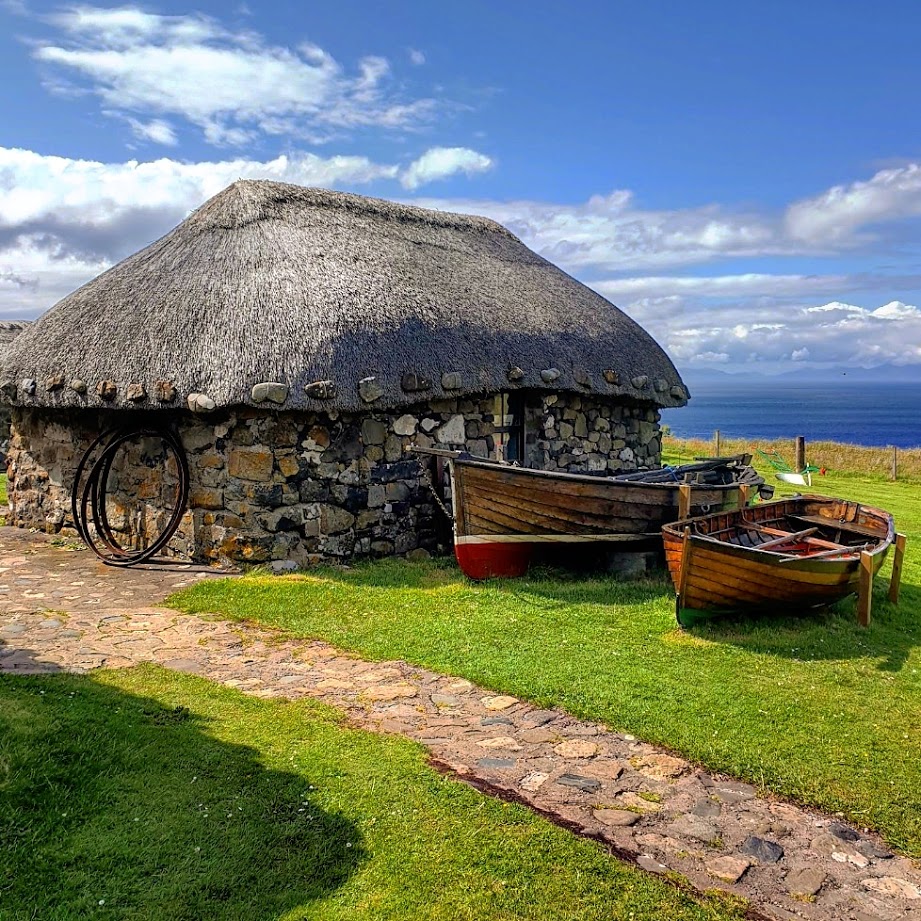
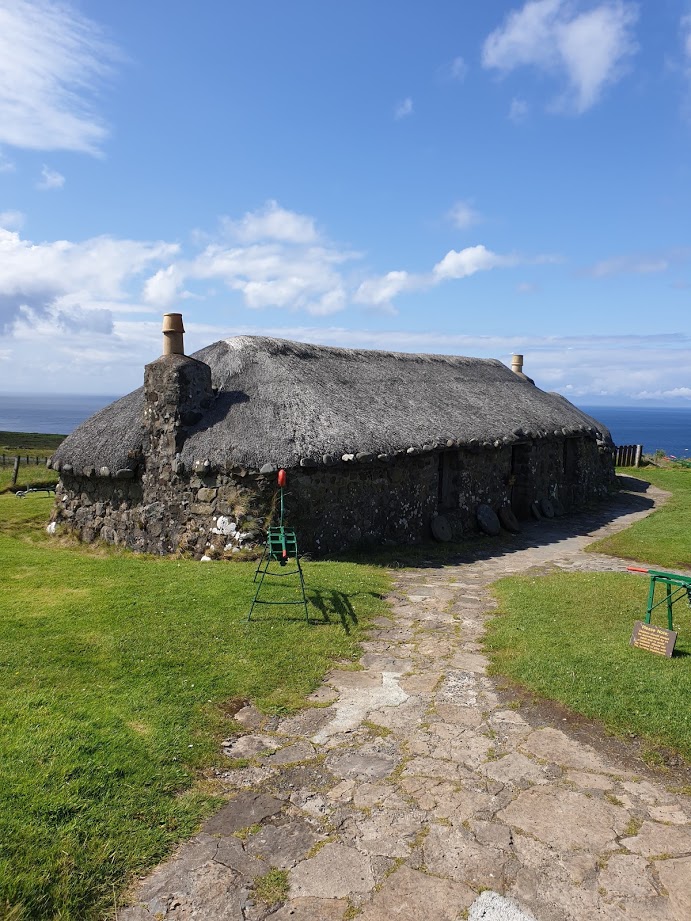
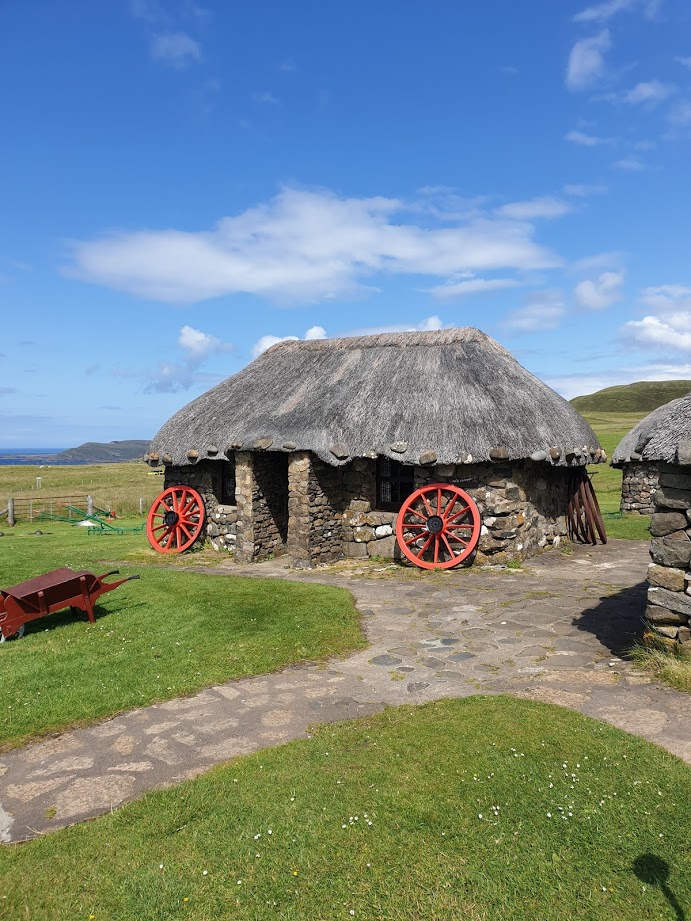
The Skye Museum of Island Life
Continuing the journey along the A855, which circumnavigates the Trotternish peninsula, we are heading for the preserved Highland village In the township of Kilmuir. Incidentally, we pass through Duntulm which is where Donald’s paternal Grandfather hails from.
The museum was opened in 1965. There are few examples remaining of such dwellings, due to their destruction during the Highland clearances and to people emigrating and their homes falling into sad decay. The main aim at Kilmuir was to preserve the township of thatched cottages and to illustrate how islanders lived 100 years ago. Each cottage allows you the opportunity to step back in time to the close of the 19th century.
The sturdy cottages, built low to the ground, stood staunch and resolute, taking all that the weather could throw at them. They offered warmth and protection from the harsh elements, a place to cook, sleep and to gather together to play instruments, sing and regale stories, to while away long, dark winter nights.
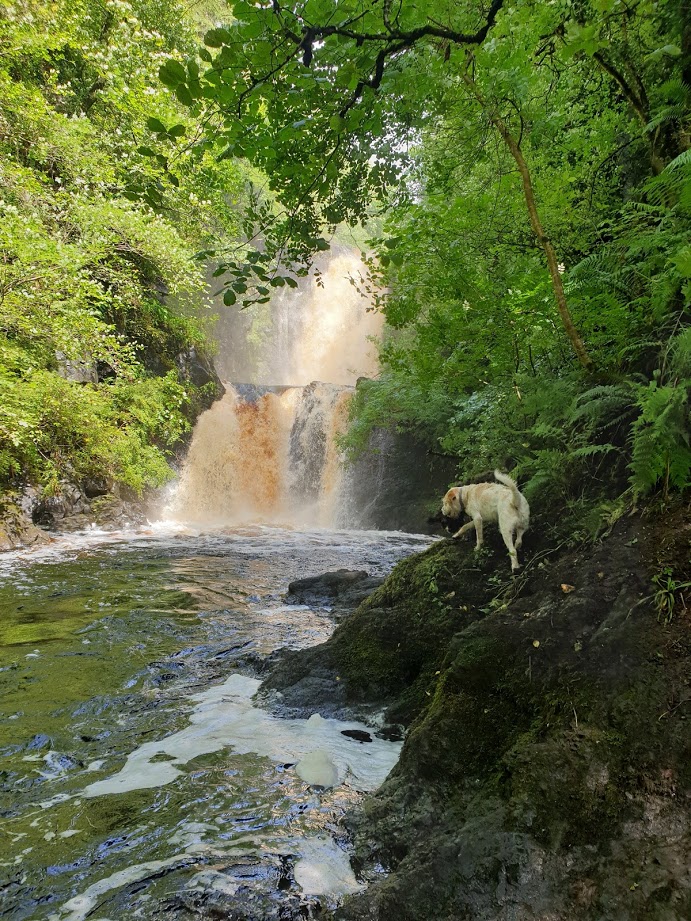
Our Secret Waterfalls
Well, they are not a total secret to be fair, and they are not really ours. However, each time we have visited, we were the only souls there. Rha Waterfall, as it is named, is a double waterfall on the river Rha. It’s easy to park just on the lane and a well marked path takes you on the short walk to the falls. Click here for a street map. Especially after heavy rain, the sound of the water is thunderous and you may well need your waterproofs to prevent the spray from drenching you. Our dogs don’t mind getting wet though, and enjoy a little paddle in the shallow pools.
Well worth a visit, if you enjoy craft beer and gin is Skye Ale, a small brewery down on the pier in Uig.
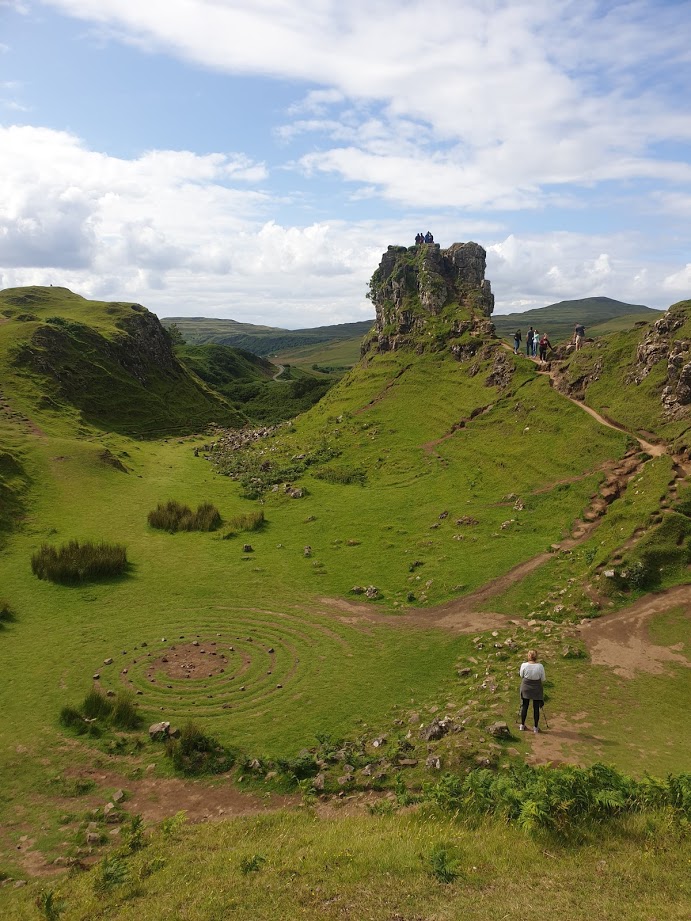
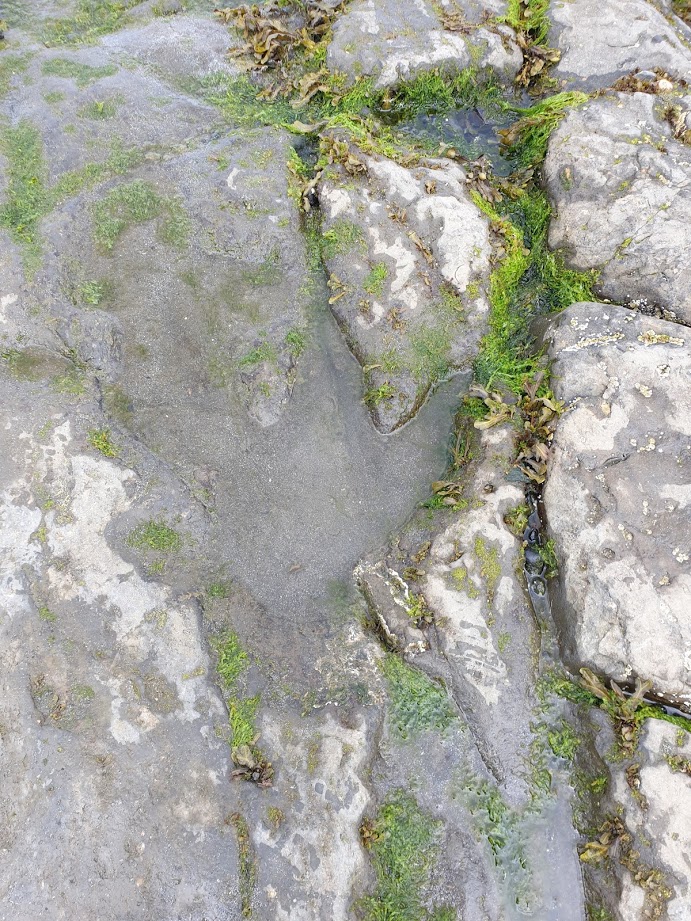
There is much more to do in this part of Skye, not least of all Staffin Beach with it’s dinosaur footprints and of course The Fairy Glen which, depending on how long you spent at the fore mentioned locations, you may like to visit, it’s not far from Rha Falls. Also possibly of interest to you, might be Flora MacDonald’s grave and memorial. Flora was of course, Bonny Prince Charlies protector and The Skye Boat Song tells of her heroism and of saving the future king.
Speed bonny boat, like a bird on the wing
Onward the sailors cry
Carry the lad that was born to be king
Over the sea to Skye
First verse, The Skye Boat Song
So, that’s the Trotternish Peninsula in a nutshell. Of course, if you are following this route, you are likely to spy sign posts for many other little gems that may interest you. Just follow your nose and see where you end up.
I would love to hear about your experiences on our beautiful Isle of Skye. did you find it too busy? How did you find negotiating the roads? What hidden gems did you discover? Share them with us, or maybe you would prefer to keep them just that. Hidden gems.
Concentrating on the north west of the island for a full but sensibly paced day. We will visit Dunvegan Village & the Castle & Gardens , Coral Beach, Talisker Distillery, the Fairy Pools and Sligachan Bridge.
I think that it is probably fair to say that few visitors truly appreciate the size of the Isle of Skye, nor how much time you will need to truly experience it in a any great depth.
It’s understandable, especially if it is your first visit to Scotland and/or the Misty Isle, that you want to see as much as possible. It is not my business, nor my intention to lecture anybody on the pace at which they should spend their vacation. What I would suggest however is that you allow space for a degree of flexibility. A much coveted tourist destination may leave you somewhat underwhelmed and equally you may see a sign post for somewhere you have never even heard of and end up whiling away an afternoon quite happily.
So in this post we shall concentrate on the north west corner of Skye for what I think is a very full day. Again, you may wish to omit places and there are always spur of the moment stops that you can’t plan for. I’ve suggested a number of walks, I’m not for one minute imagining you doing them all, just one or two that appeal most. Flexibility is key.
In a nutshell we will be visiting the village of Dunvegan, Dunvegan Castle, Coral Beach, Neist Point, Talisker Distillery, a seafood shack, The Fairy Pools and Sligachan Old Bridge. Personally, I think that that is enough for one day, especially if you enjoy a walk and a wander a coffee here or a pint there. You can always do more or less, depending on your pace and the weather.
Dunvegan (Dun Bheagain)
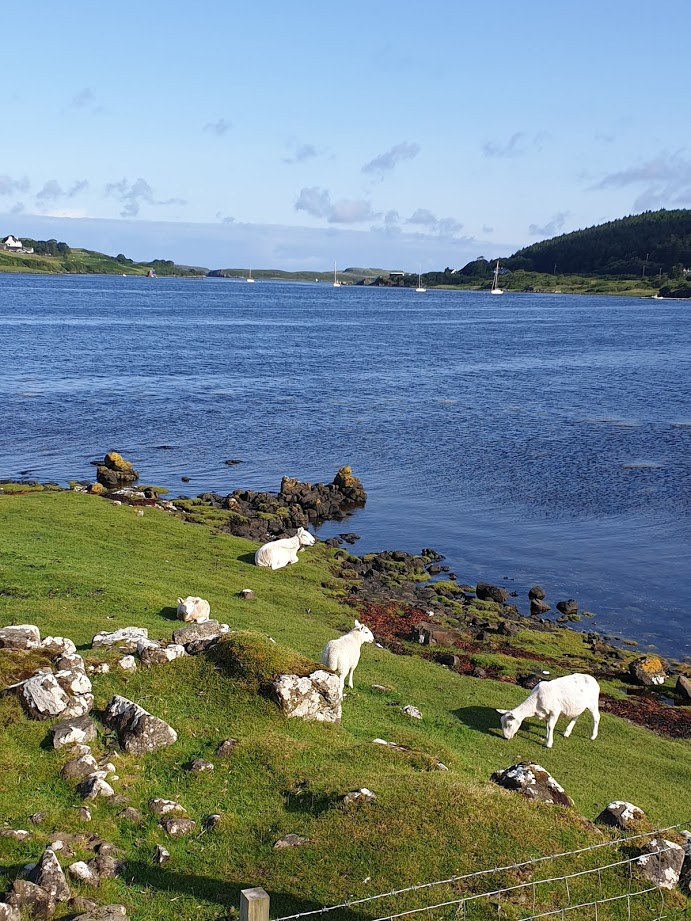
Dunvegan is probably my favourite village on Skye. We once spent a whole month based there living in our caravan, so we got to know it quite well. We stayed at the Kinloch Campsite, with wonderful views looking straight down Loch Dunvegan. Such a stunning location, sitting, drink in hand watching the sun go down, sheep pottering about on the pebbly shore. The smell of seaweed and the sound of oystercatchers. It wasn’t all rosy sunsets though let me tell you. When the wind blew up that loch, bringing with it driving rain, being in the caravan felt, at times, more like being in a boat at sea!
It only takes about half an hour to drive the twenty two miles from Portree via the A850. The village of Dunvegan has plenty to offer. For meals I highly recommend The Old School Restaurant. We’ve enjoyed quite a number of meals there and have never been disapointed. The welcome is always warm, the service has never failed to be friendly and timely and the beautiful, unpretentious food leaves you with that warm glow of satisfaction. Local seafood, Scottish beef and game, craft beers, log fires is the gist of it.
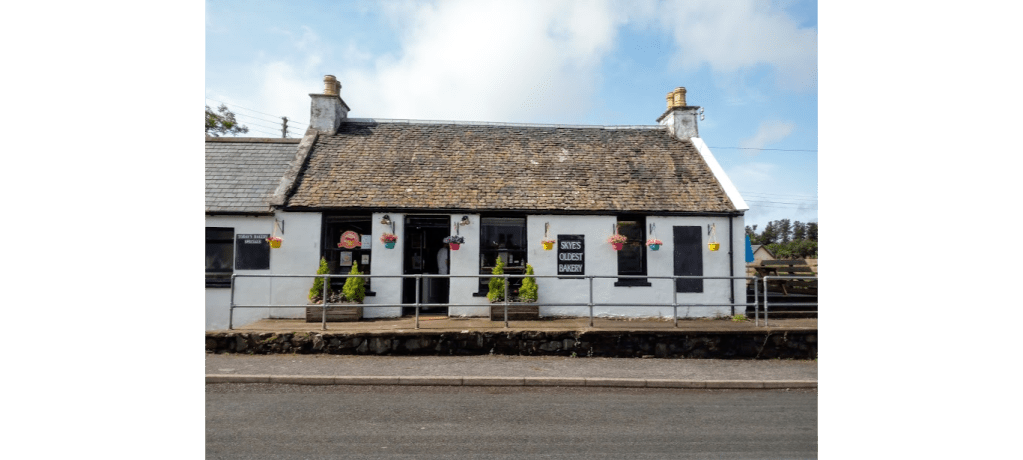
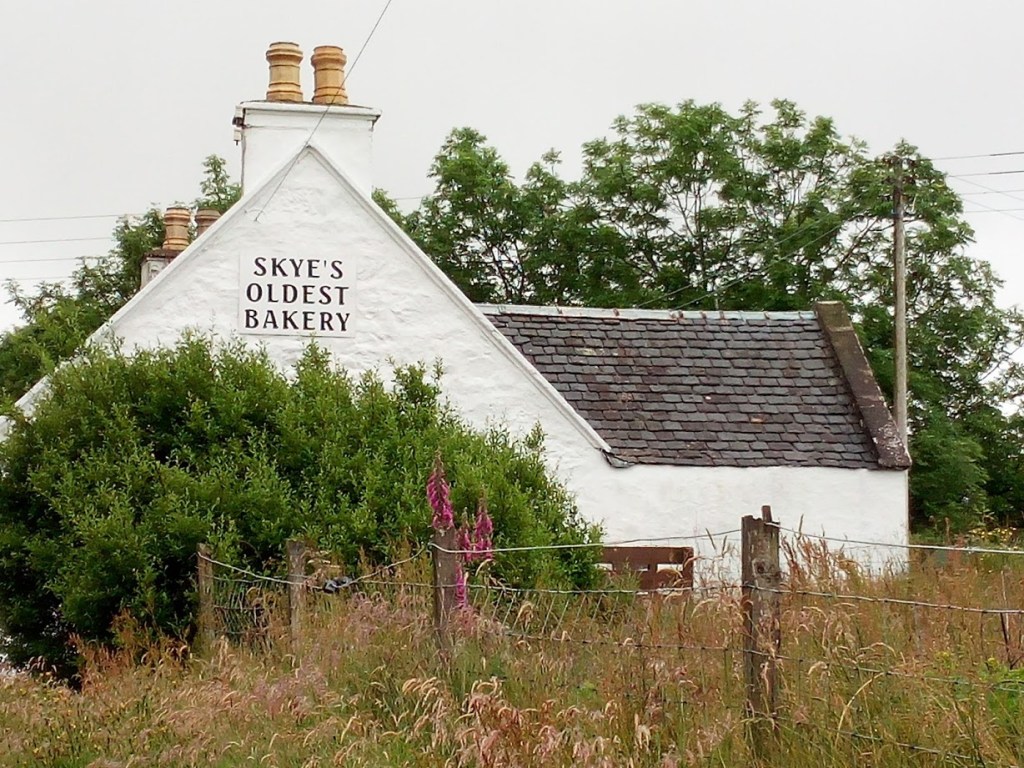
Just opposite the School House is Skye’s Oldest Bakery. Baking since 1870, today everything for sale in the shop is baked on the premises.
Skye’s Oldest Bakery
You can buy delicious loaves of bread, rolls, pastries, scones that would be on my list of the best scones in Scotland, if I had such a list. They also make bacon rolls, soft floury morning rolls stuffed to the gunnels with bacon. Eat in or take away. Why not pop in and buy a picnic and head straight for Coral Beach?
can you just smell the bread baking?
Just be warned, once they have sold out of goodies, the shop closes and it’s hugely and deservedly popular, so don’t leave it until too late to call in.
There is a great general store, Fasgadh Stores. Again, the staff in there are always friendly and the shop is well stocked with basic provisions. Maps, toiletries, local beers, wine, proper butchers meat, fresh fish, news papers etc.
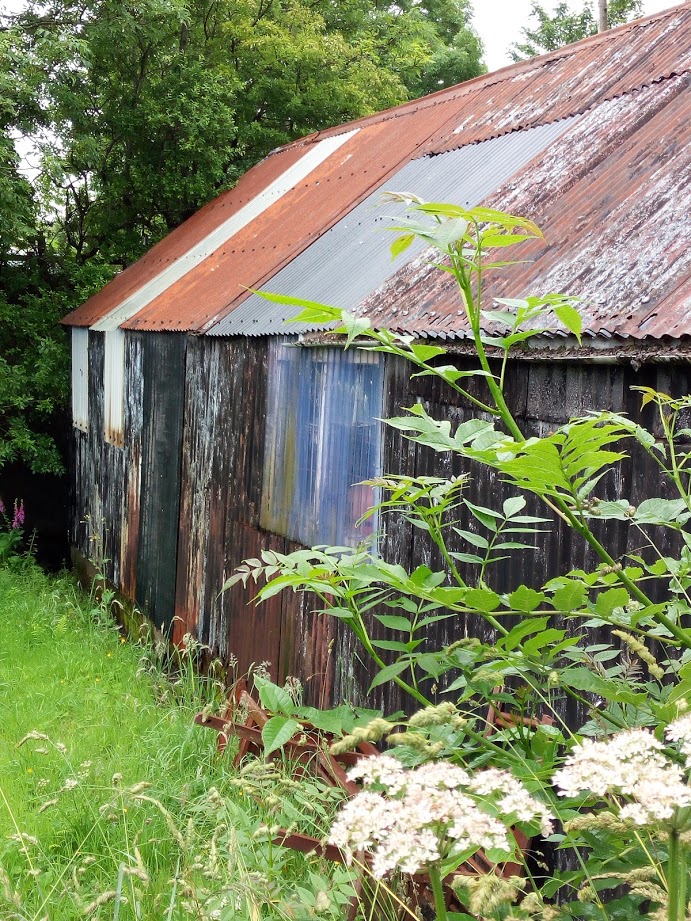
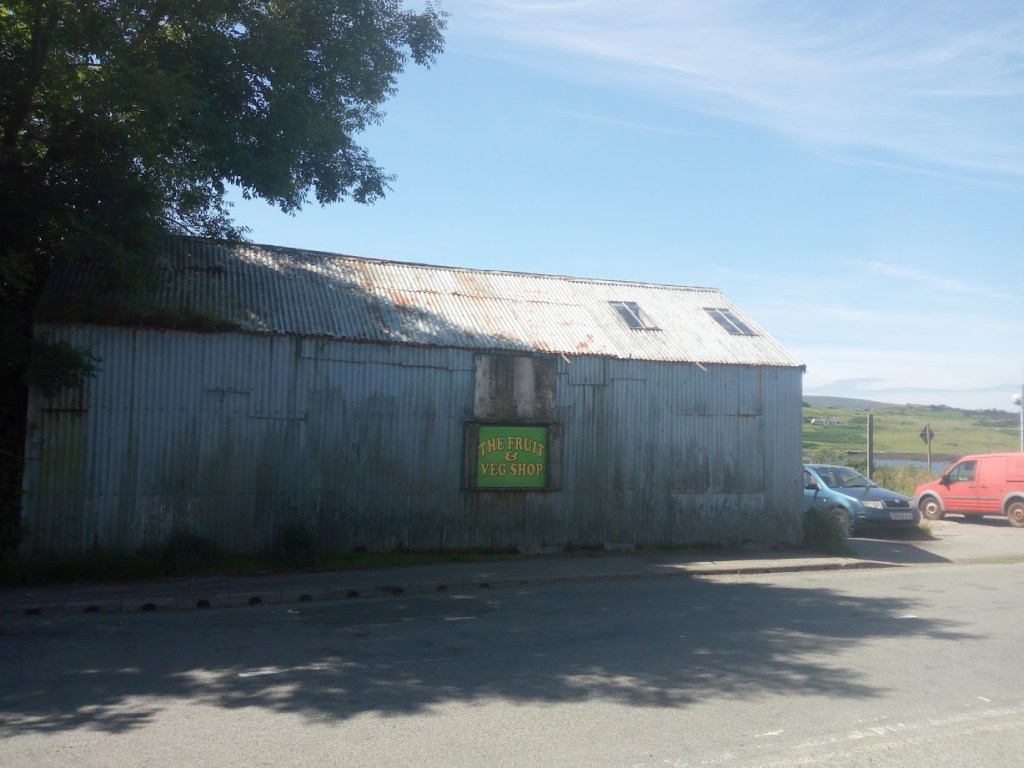
I don’t know how many times I walked past this tin shed……
……before realising that it is indeed a fruit and veg shop. I popped in and couldn’t believe what I’d been missing. Lovely fresh veg, as much as possible grown locally, fruit, and also vegan friendly products such as dairy alternatives, cosmetics and toiletries, pulses, nuts seeds and baking ingredients.
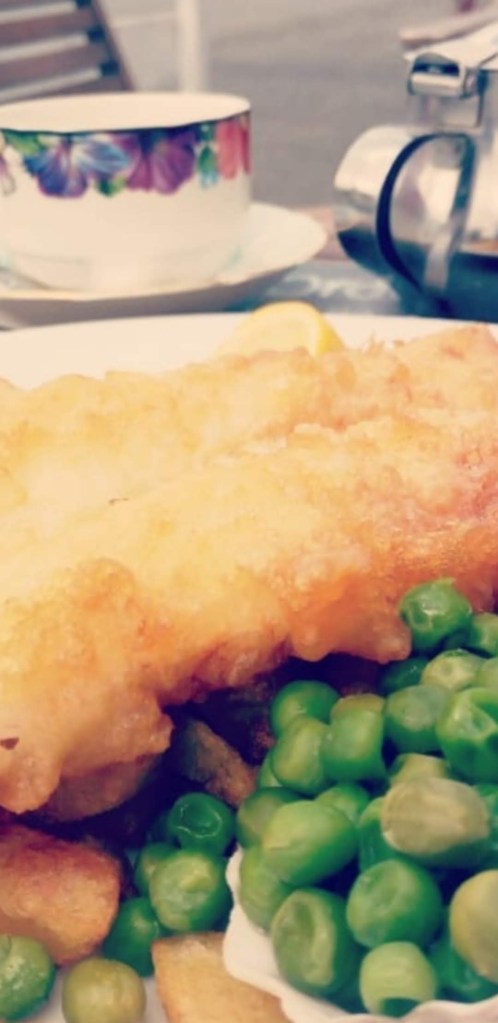
There are plenty of little cafes too. Blas Cafe and Takeaway does great fish and chips.
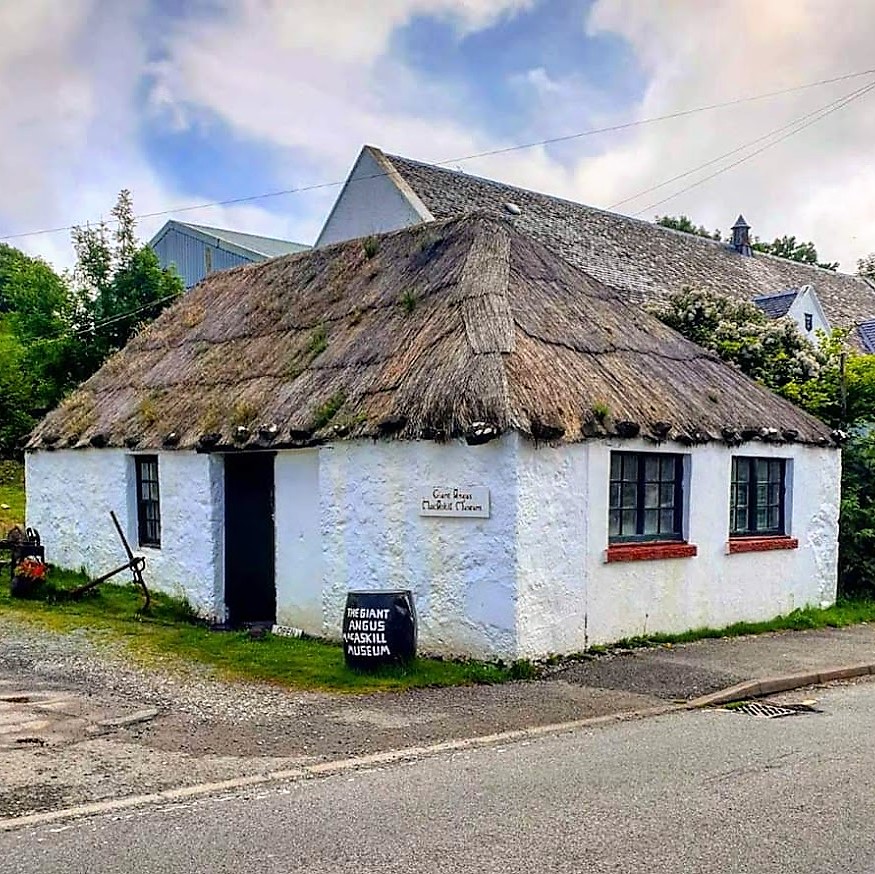
Also worth visiting is the Giant MacAskill Museum. Set in a tiny thatched cottage right on the high street. This was not actually where Angus MacAskill lived, he was born on the isle of Berneray in the Sound of Harris in 1825. He was so small when he was born that it was feared he would not survive. Well, I don’t know what his mother fed him on, but he went onto become the tallest Scotsman in history. at a lofty 7 foot and 8 inches.
not much head space in this tiny cottage!
Sadly the MacAskill family were victims of the clearances, and so at the age of six, Angus, his parents and siblings emigrated to Canada where Angus lived, and indeed prospered until his death in 1863.
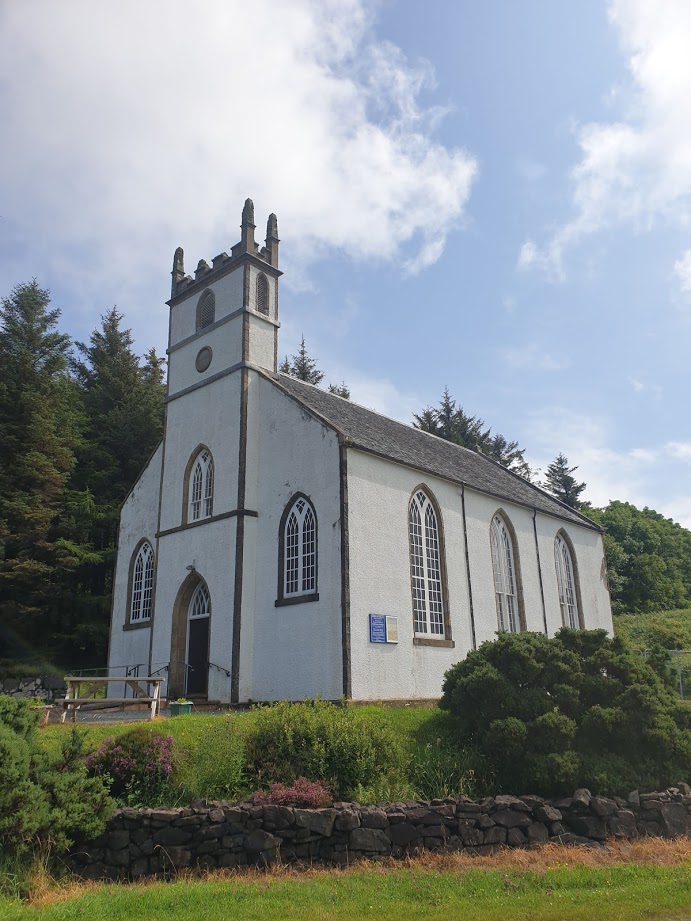
If like me, you enjoy a walk, there’s a really lovely circular walk called the Two Churches Walk. It only takes about an hour to do. You begin at the Duirinish Church of Scotland in the village.
Duirinish Church of Scotland
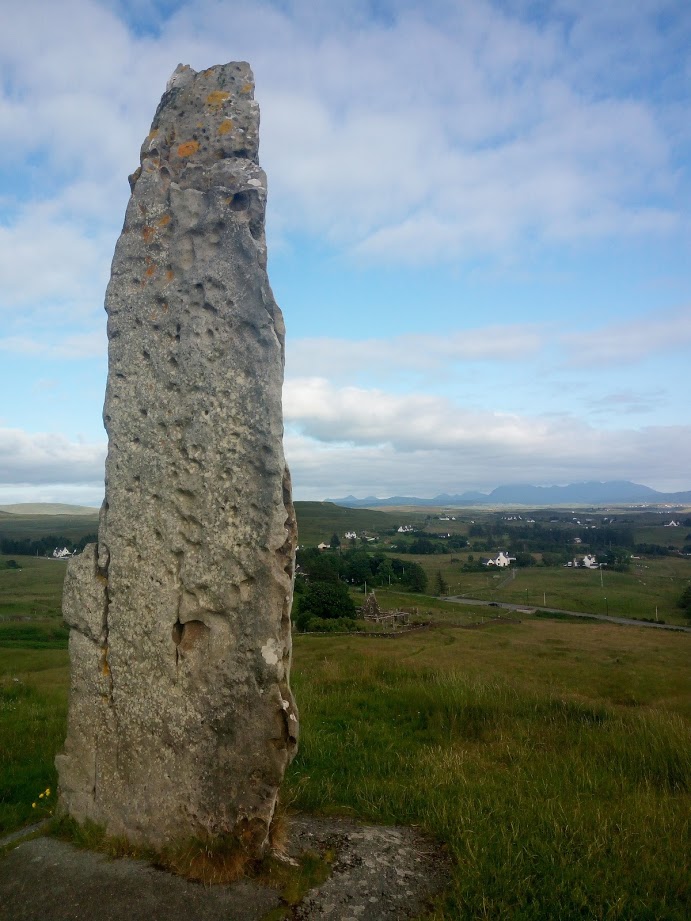
The path takes you through pretty woodland with plenty of babbling brooks and little waterfalls, up onto open moorland where you will find the Duirinish Millenium Stone. Standing at 15 feet (5 meters) high, you would be forgiven for thinking that it had been there for thousands of years. In fact it was carried up there using only hand power and ropes by the people of Dunvegan on midsummer’s day in the year 2000, to commemorate the new millennium.
The views from the stone are well worth the walk. Looking across Loch Dunvegan to Macleods Tables and the Cuillin Ridge in the distance.
The Duirinish Stone
Once you’ve had time to drink in the views, make your way down to the post- reformation ruins of St Mary’s Church, you can just make it out in the above photo.
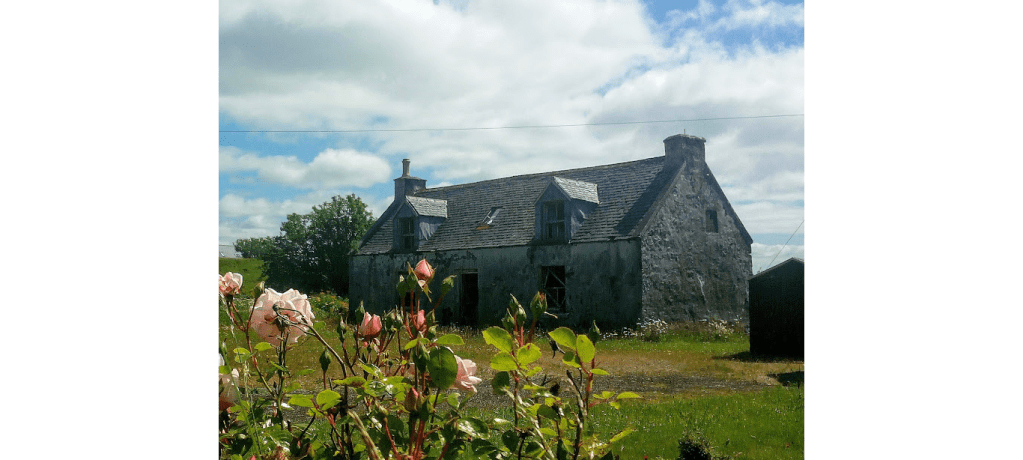
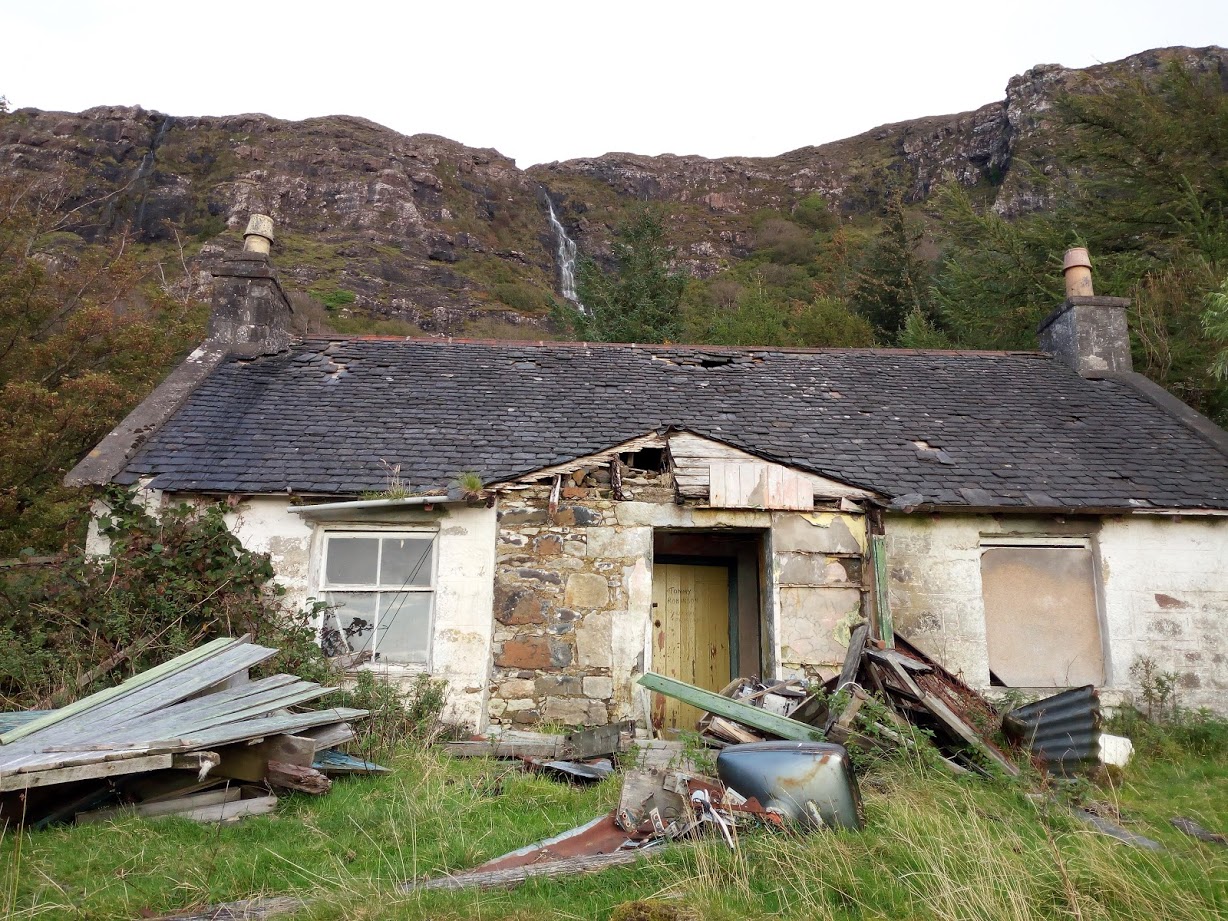
I passed this cottage on my way back to the village. great do-me-up
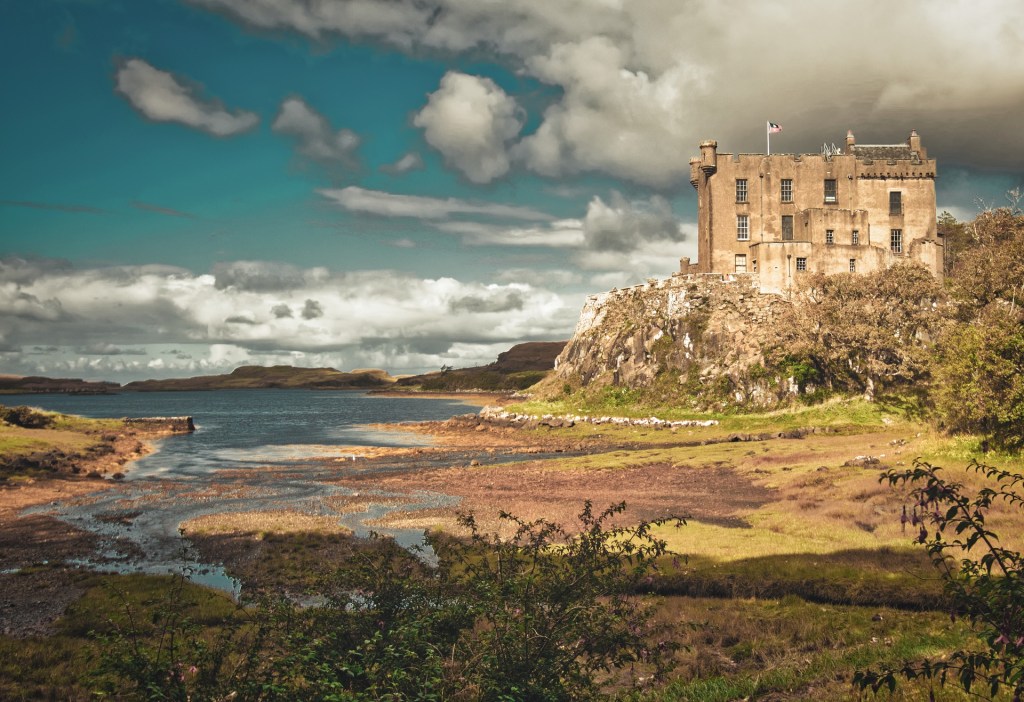
Dunvegan Castle & Garden’s
Dunvegan Castle. credit to Thomas H from Pixabay
Set in five acres of verdant garden, a jewel amidst Skye’s rugged heathland, is Dunvegan Castle and Gardens. Part of the vast 42,000 acre MacLeod estate, the MacLeods having occupied the castle for a continuous 800 years, testament to their tenacity.
Am Bratach Sith, (The Fairy Flag of Dunvegan) is prehaps the most treasured possesion of Clan MacLeod. When unfurled, it is reputed to guarantee the clan victory from the jaws of defeat. It is uncertain whether the flag was acquired on the clan’s crusades in the 4th century AD or if it was a gift from the fairy wife of a MacLeod chief.
The gardens are truly breathtaking, running right down to the shores edge. The exotic plants are fed by waterfalls and streams that then run into the loch.
Coral Beach
From the castle, you may continue along what becomes a singe track road with passing places, as far as the road goes, where you can park up and walk to Coral Beach.
We walked because we like to walk and because we had the luxury of sufficient time. If you drive though, it only takes about ten minutes, depending on how much reversing to passing places you end up having to do and then you may need to be patient before you can find a free parking space. It’s worth the trouble though and is a perfect spot for a picnic and a swim,so bring provisions and towels and bathing gear.
the track to Coral Beachlovely cottage en routelooking back towards Dunvegan Castle
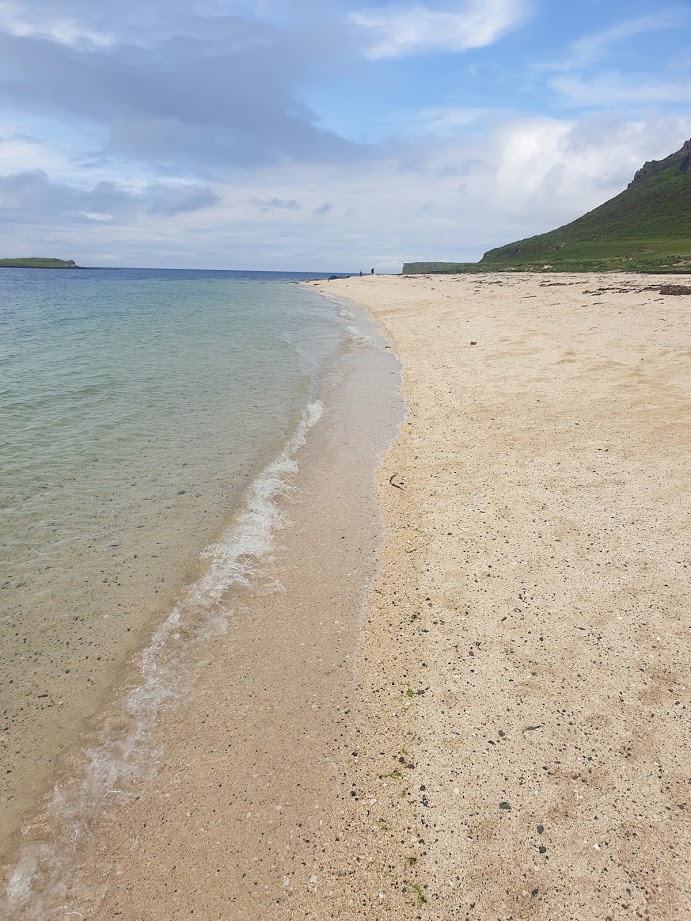
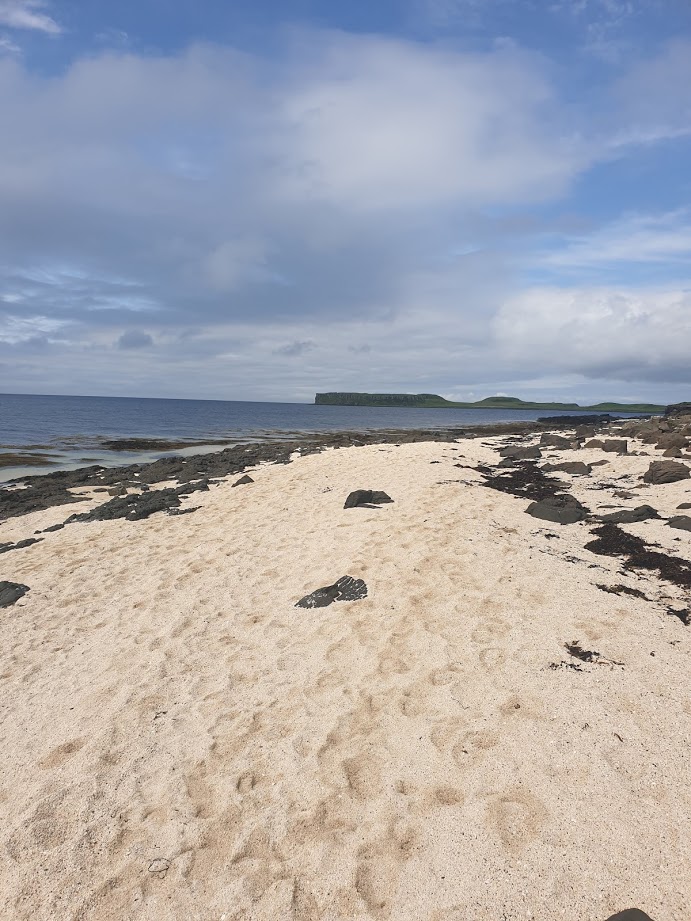
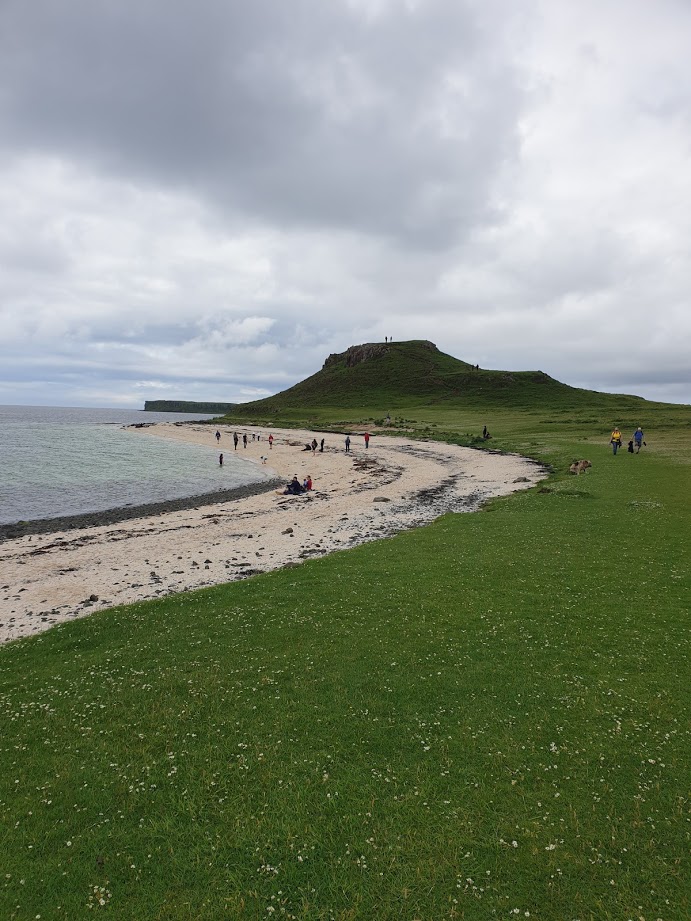
Skye is not known for it’s sandy beaches, but Coral Beach is an exception. The sand is not formed from coral at all, but the crushed, bleached skeleton’s of Red Coralline Seaweed. Out on the reef by the Island of Lampay, the Coralline grows at a rate of just 1mm per year. Lampay is a mere 150 metres off shore and it is possible to walk across at very low tide to explore. Always check tide times though or risk getting stranded!
plenty of folk enjoying the beach, but it didn’t feel crowded
Neist Point
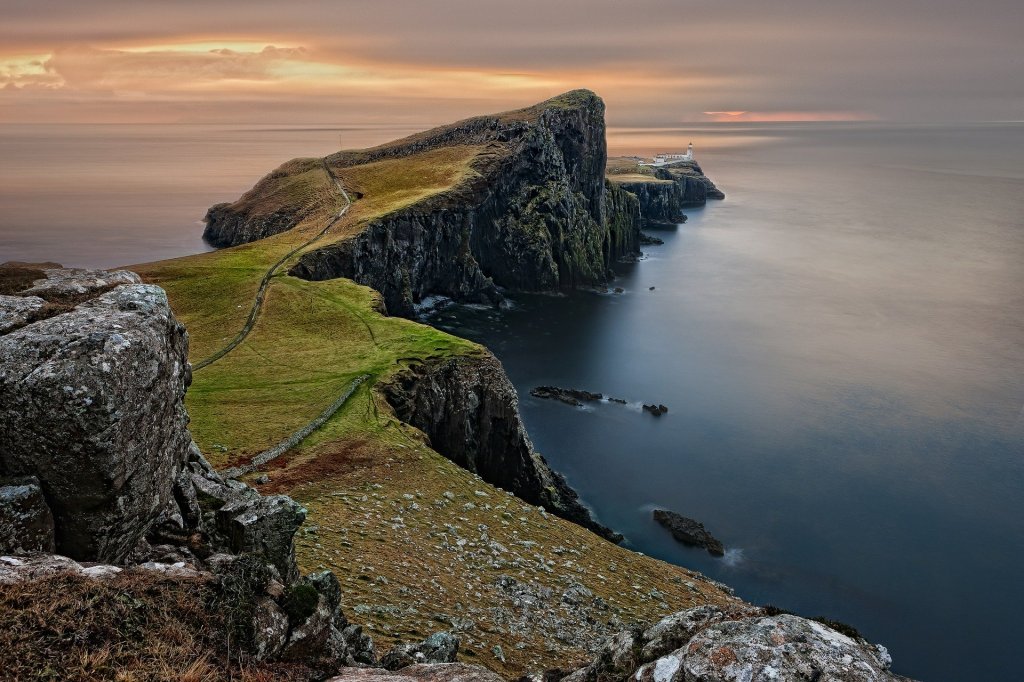
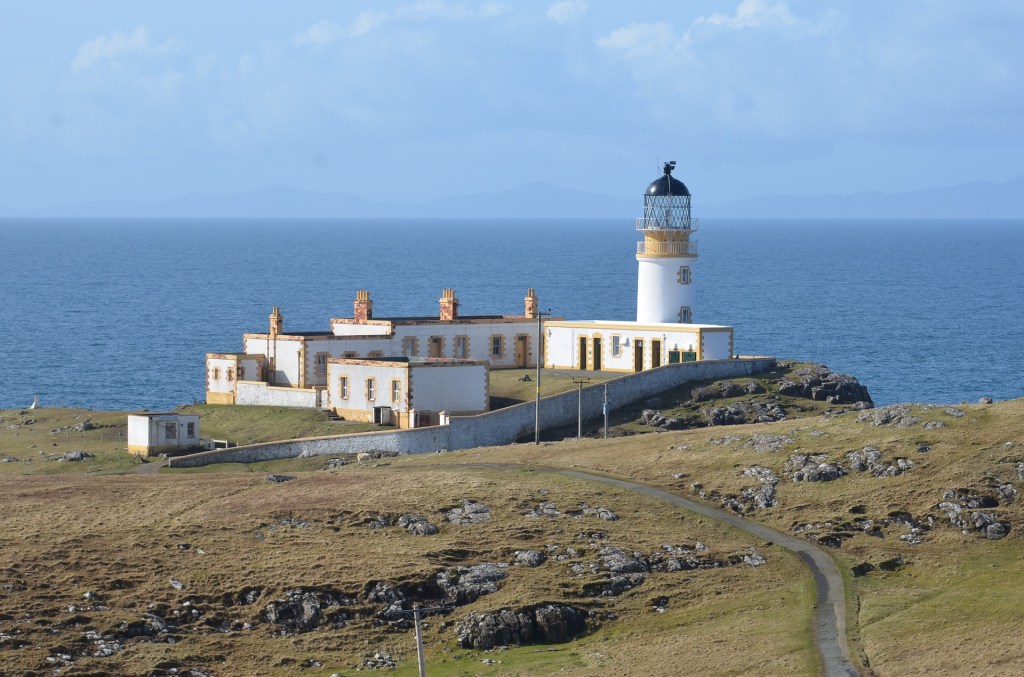
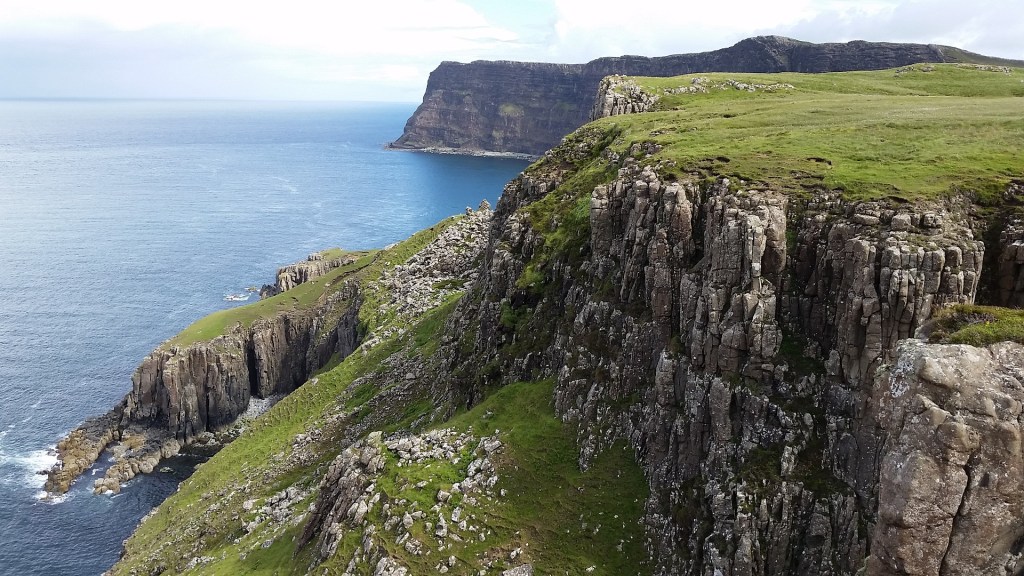
From Coral Beach, we head back to Dunvegan and then take the B884, another narrow road with passing places, west to Neist Point. In fact it’s the most westerly point on Skye and an amazing spot to sit and watch the sunset. It’s also a good place to watch out for whales, dolphins, porpoise and basking shark, it’s all a case of the right timing. If you are not lucky enough to see any of the above mentioned, you will see plenty of seabirds. Watch gannets with their six foot wing span as they make dramatic dives into the sea to catch fish. Puffins are regularly sighted here, although they don’t nest here. also black guillemots, razorbills and Great Skuas, more commonly known as “bonxies”.
If you are on Skye during the winter months in particular, you may be fortunate enough to see the Northern Lights or the Aurora Borealis. You won’t see them during the height of summer as the sun doesn’t sink low enough below the horizon for the sky to become dark enough. It’s only now some eighteen years later, I realise what a gift it was to see the “merrie dancers” when we lived on the east coast of Scotland. I remember driving home to Garmouth from Elgin, I could see an etherial light in the direction of home. It took me a moment to realise what it was that I was actually witnessing, at which point I ran to all of our neighbours in great excitement so that they could come out and watch them with me. Magic.
It is not advisable to walk along these cliffs in bad weather or poor visibility. Also if your dog is lacking in the brain cell department and likes to chase seagulls, keep him on the lead!
The walk from the car park down to the lighthouse takes around 40 minutes. The paths are excellent but steep in places. It has to be said too, that like so many stunning locations on Skye, Neist point is a victim of it’s own beauty and it can be very busy.
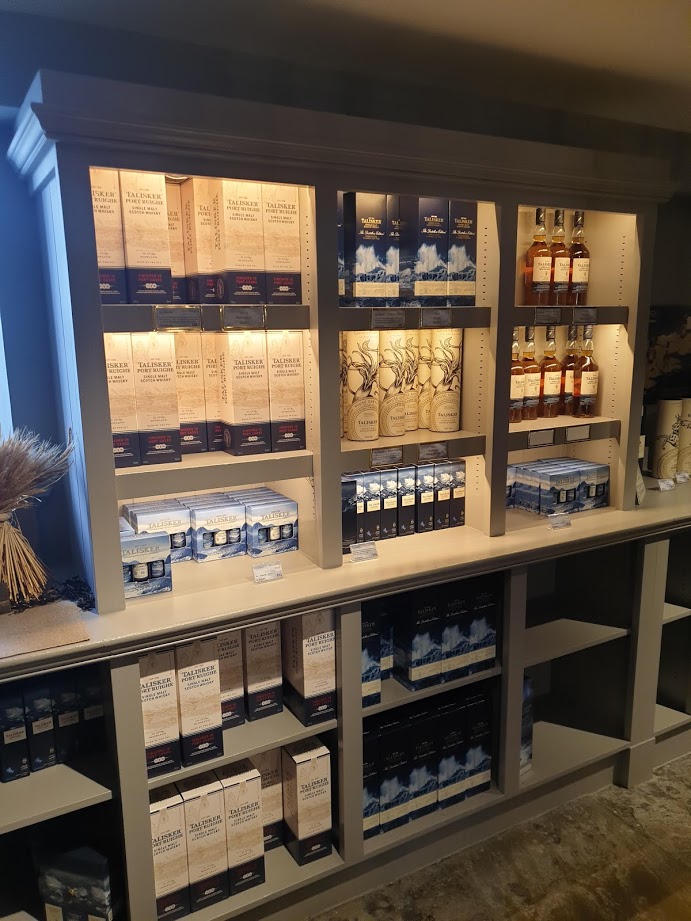
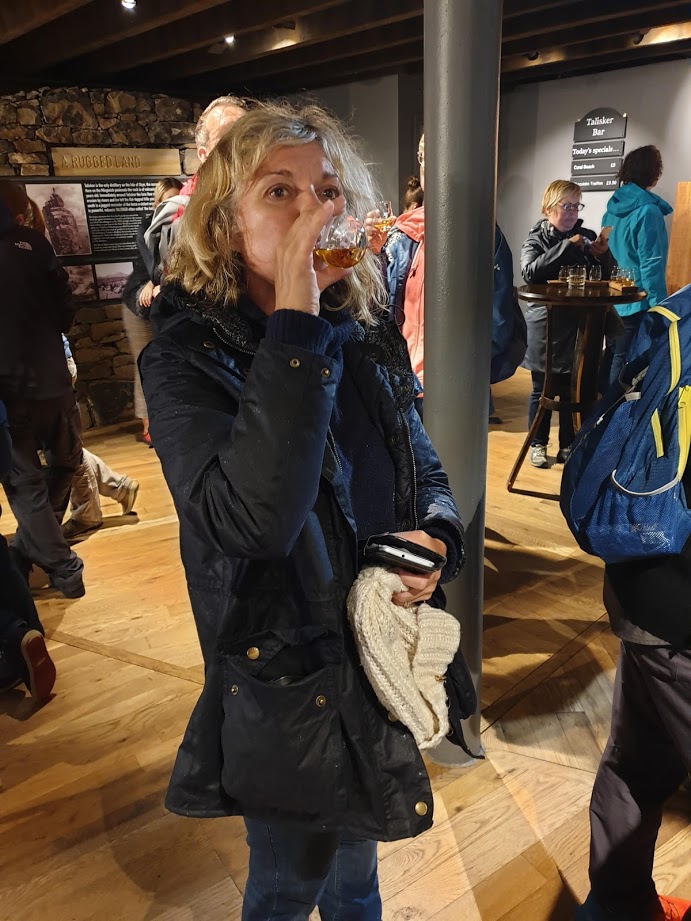
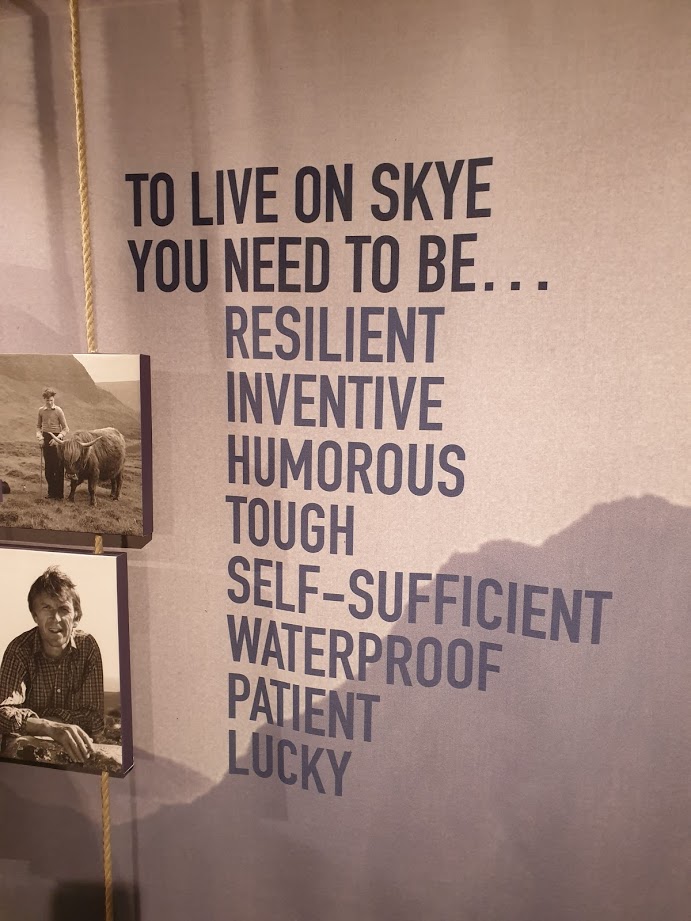
Talisker Distillery & some amazing seafood
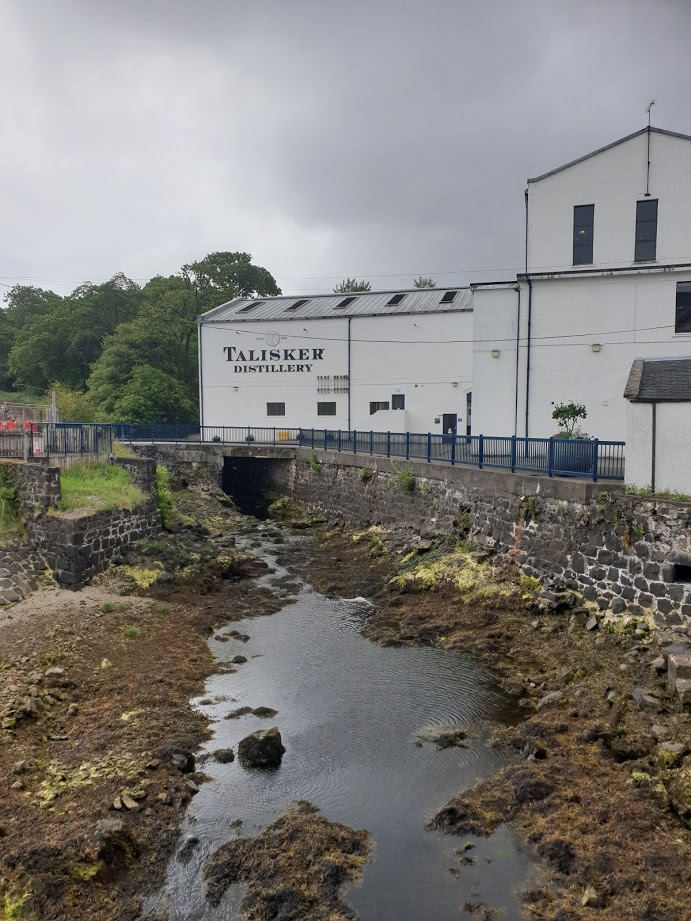
Driving back along the B884 to Dunvegan and then on a “proper road” the A863 whichs takes us south to Carbost and the Talisker Distillery. Set on the banks of Loch Harport, and only half an hours drive from Portree, sits this wonderful distillery.
Bad hair day. Should have left me hat on!
Remember that if you are driving you could only get away with a sip or two of whisky before risking being over the legal limit. Just one advantage of having your own driver guide is that this need not be a concern of yours.
An interesting spot of history relating to the Talisker Distillery, concerning a system known as “Truck”. To cut a long story short, the founder of the Talisker Distillery was a man of few or no scruples. Hugh MacAskill, having “cleared” as many as 300 people on behalf of wealthy landowner John MacLeod, went on to purchase Talisker House and then built what we know today as Talisker Distillery. Some islander’s, having been mercilessly evicted from their homes, by Hugh, to make way for sheep, sought employment at the distillery. Hugh and his brother then sought to tighten their steel grip on these folk, by paying them not with real money, but with their own privately struck coins. These tokens could then be used to purchase goods, at highly inflated prices, from the MacAskill store. Hard times. Two of these coins are held today in a safe at the distillery, representing a fascinating bit of social history.
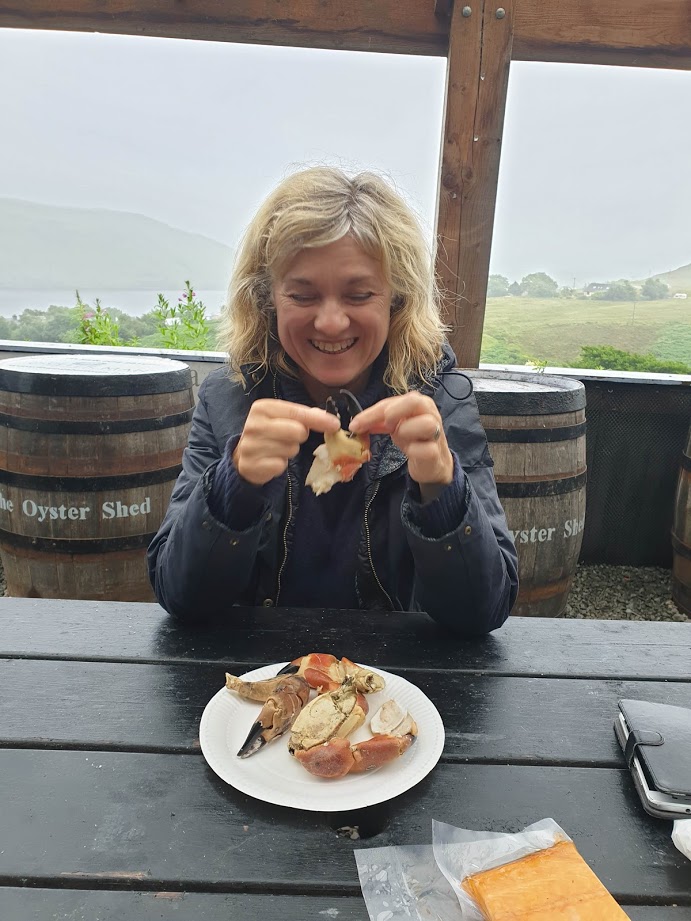
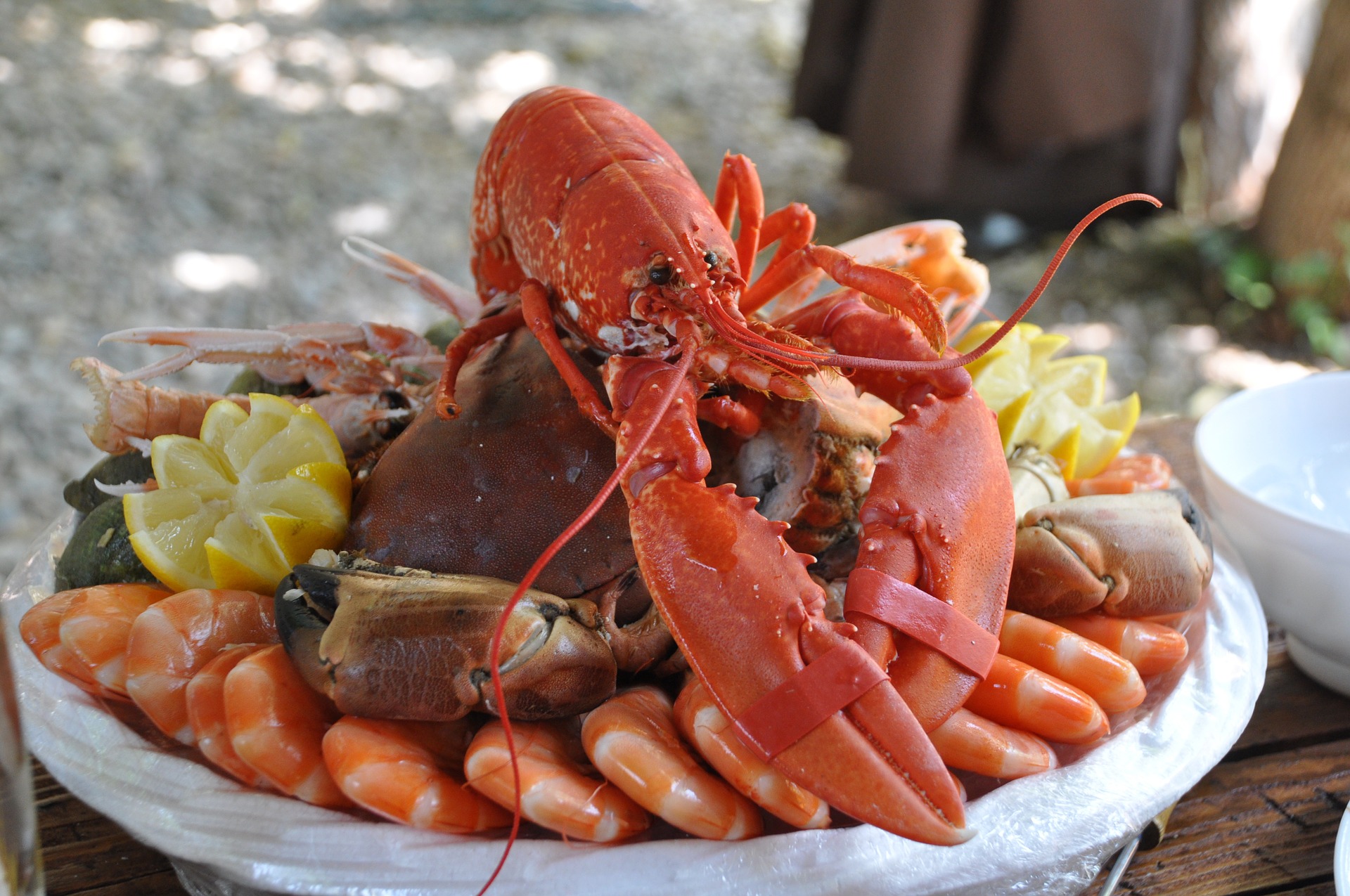
If you are hungry and you love fresh seafood, head up to the Oyster Shed, just two minutes round the bend and up the hill. It literally is a shed, selling the finest and freshest Scottish seafood. You can buy to take away, or go round to their picnic area. It has a roof but is otherwise open to the elements and there they will cook to order, plump scallops, langoustine, lobster, crab and of course fresh, raw rock oysters. So simple but utterly divine.
Mmmmmmmmmm
The Fairy Pools at Glenbrittle
It takes around one hour and twenty minutes to drive from Neist Point to Genbrittle, but once you are on the main A863 it is an easy enough drive with much beauty to admire along the way. There is now a proper car park run by the Forestry Commision which I believe costs £5. With visitor numbers as many as 1000 per day, facilities are desperately needed. Not only parking, in order to keep the road and passing places freely flowing for visitors and most importantly, residents trying to go about their daily lives and emergency vehicles, should the need arise. But also toilet facilities, as currently the only facilities are the woods, need I say more. Toilets are in the pipeline, but it’s a case of making sure that they will be able to cope with demand, so watch this space.
Well, even if you haven’t done everything that I’ve suggested, it will by now have been a long day, but hopefully a really wonderful one. So, we’ll head back to Portree, with a photo stop at Sligachan Old Bridge en route, just 30 minutes drive from the Fairy Pools.
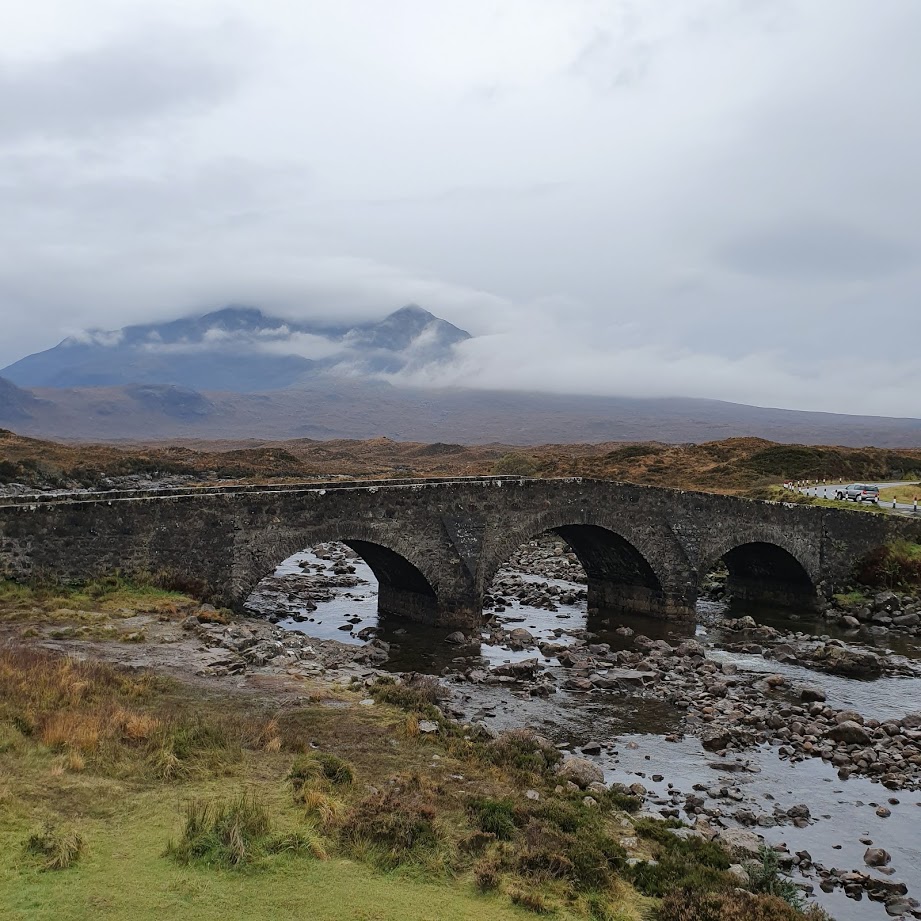
Sligachan Old Bridge
Legend has it, that if you wash your face in the enchanted fairie waters that run under the bridge you will gain you eternal beauty! If you’ve tried this and it worked please let me know in the comments below!
Built between 1810 and 1818 by Thomas Telford, the old bridge is now disused except as a beauty spot, with it’s beautiful mountain backdrop.
Sgurr-Nan Gillean, prehaps one of the Cuiliin’s most famous peaks, looms to the right with its crags and pinnacles dark and menacing. If you can see them that is and they are not covered in cloud!
From Sligachan Bridge, it’s only a 15 minute drive back to Portree, which is an ideal base for exploring the Island.
As I said, this day has only skimmed one quarter of the Isle of Skye, there is so much to see and do. In in my humble opinion, it is a good idea to split the island into three or four areas and concentrate on one area at a time, or, if you only have one day, choose very wisely what you really want to see.
A word of caution, if you are considering a trip to Skye this year, please be warned that good accommodation is already booking up fast, so if you haven’t already booked your hotel or B&B, make haste to do so now. Guests booking a tour with us will receive help and advice to do this.
Next weeks blog will be about the north east corner of Skye, the Trotternish peninsular. So feel free to subscribe to our blog and this will appear in your inbox as soon as I hit the ‘publish’ button.
Not a recipe as such, but a bit about some of our amazing produce & wolves! Wolves?Read on, it will make sense, I promise
Auchentullic Farm Shop, Loch Lomond
Having been lucky enough to live in Italy for three years, just outside Bella Napoli, the home of the Margherita pizza, we’ve developed a love of great pizza. I have spent a great deal of time pottering in the kitchen, trying and testing various pizza base recipes, with varying degrees of success in an attempting to recreate a classic at home that any Italian would be proud of.
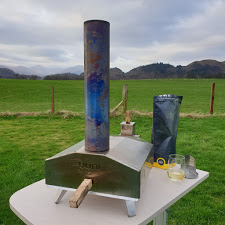
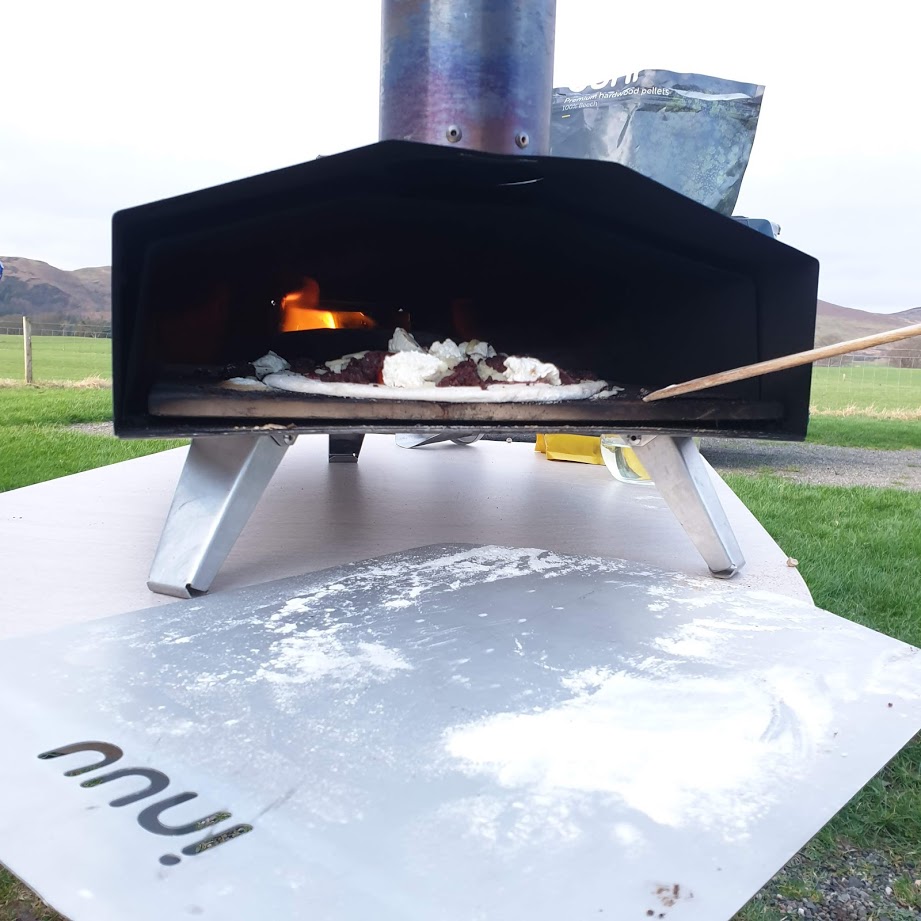
It was not really until I dove into the whole sour dough thing and invested in an Uuni portable pizza oven, that we really nailed it. My family are honest critiques, so I trust them that the Nicolson Pizza is pretty damn good.
So, we have two amazing sons, two Italian rescue dogs and our pet sour dough starter! Born over a year ago of a simple coupling of flour and water, we are proud parents of a living, breathing jar of miracle magic. I’m hoping it will be passed down through generations of Nicolson’s. It will be my legacy.
The ‘mother starter’full of natural yeast bubbling away
She, (the starter) require’s feeding and nurturing. Each time I feed her I have to discard a little, or give it away. I traded a couple of hundred grams once with The Glen Lyon Coffee Roasters in Aberfeldy, in return for a bag of freshly roasted coffee bean’s. I hope they’ve kept it going and made some great pizza. I certainly enjoyed their coffee.
So, anyway, onto the pizza. I decided that I wanted to have a pizza afternoon and use only Scottish ingredient’s bought locally.
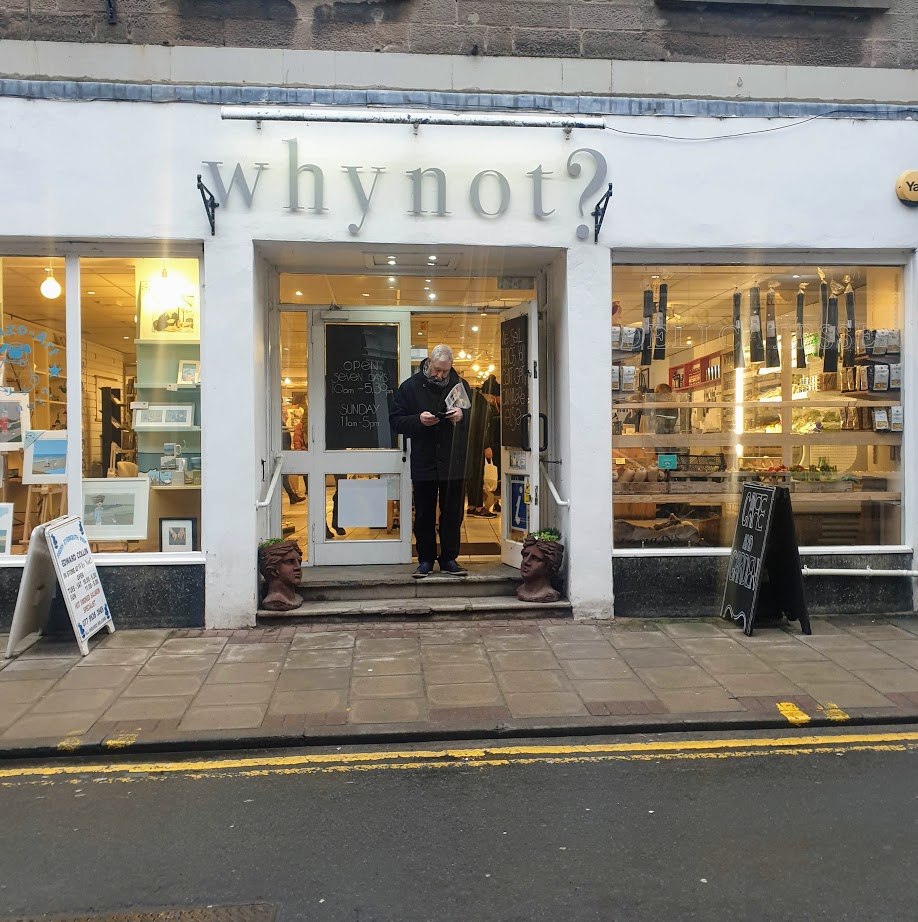
We popped into a great shop in North Berwick called the Why Not? It’s one shop with over twenty individual retailer’s under the one roof. It’s a brilliant opportunity for small producers to show case their hard work and for customers to purchase and enjoy real food.
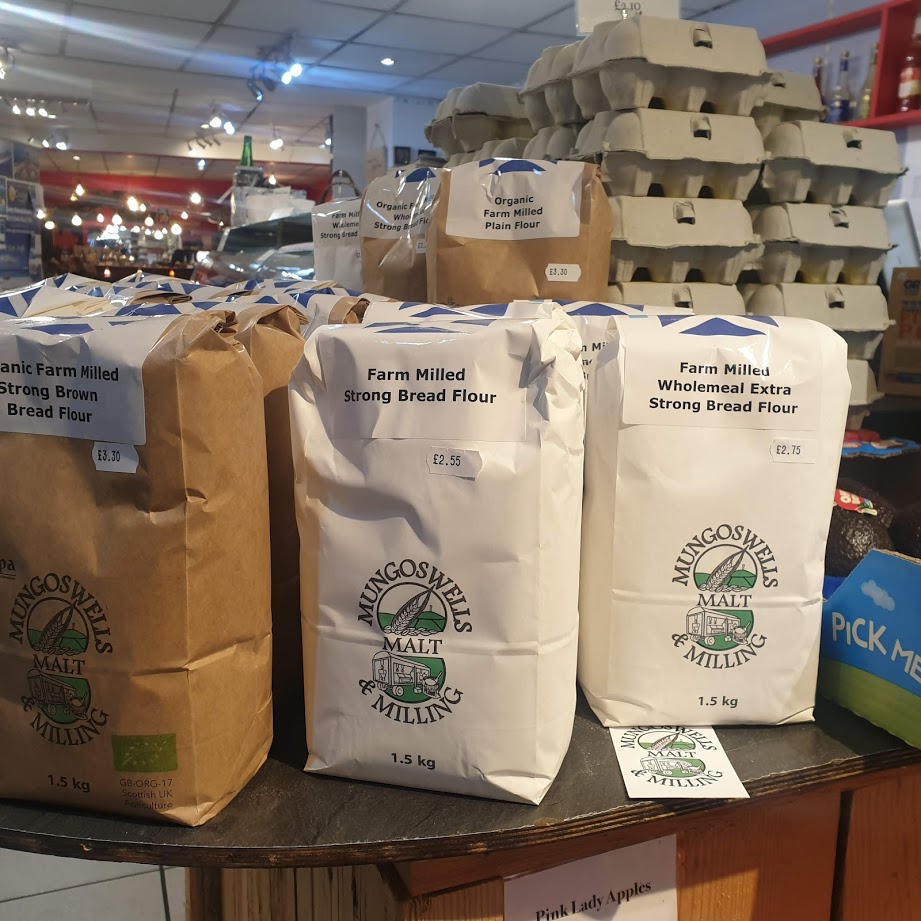
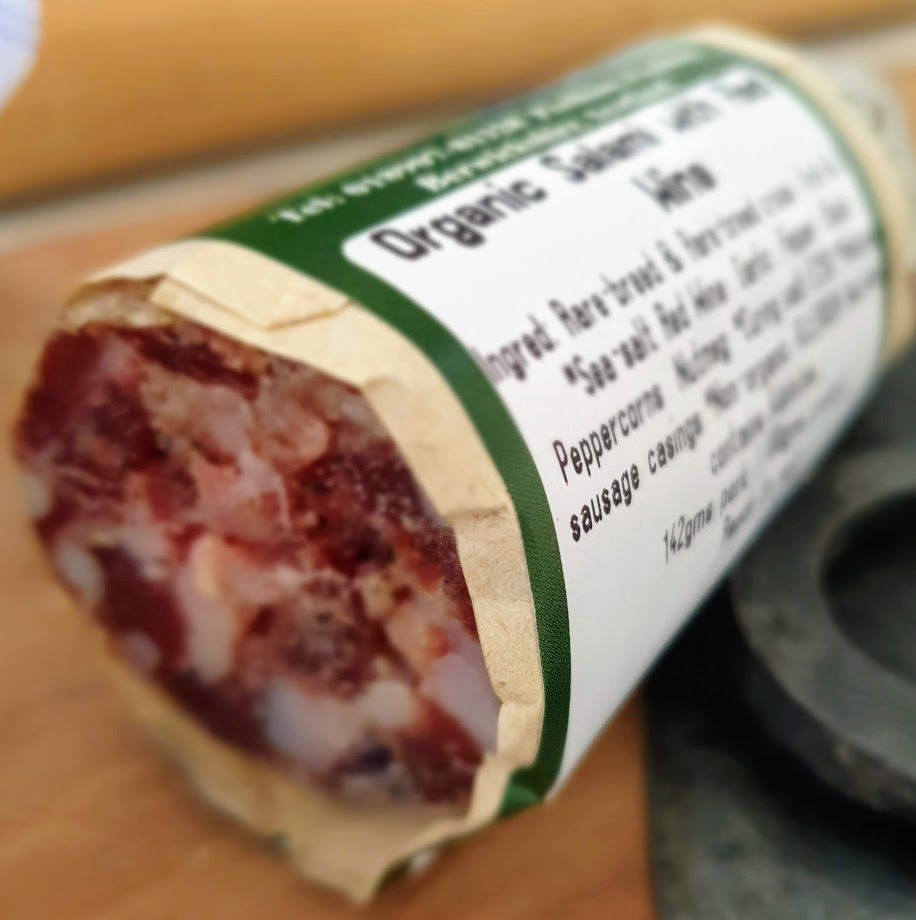
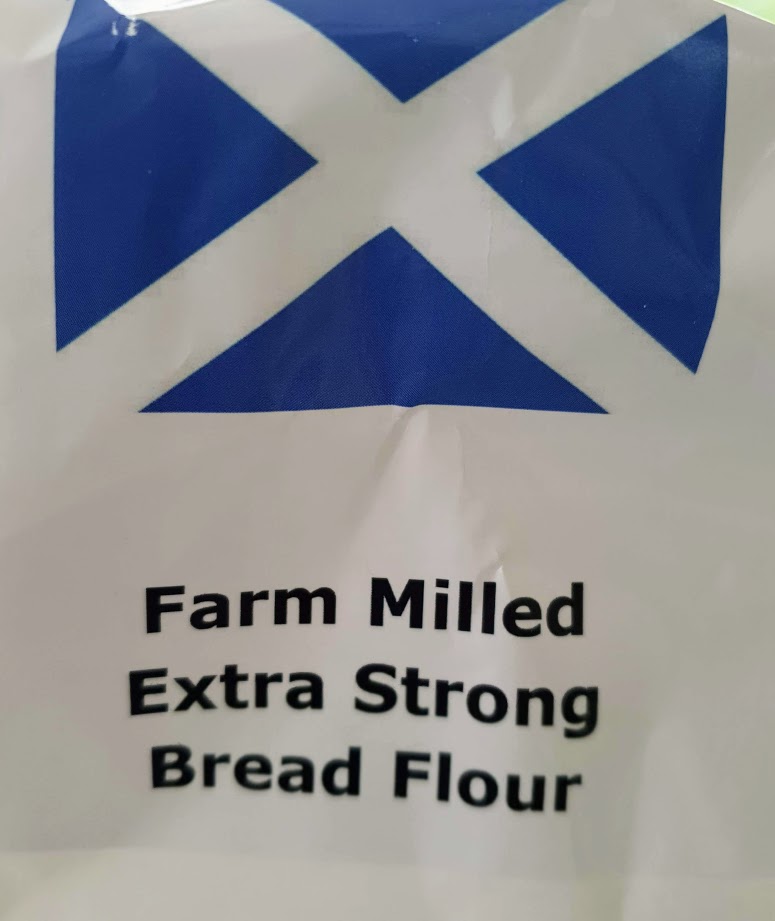
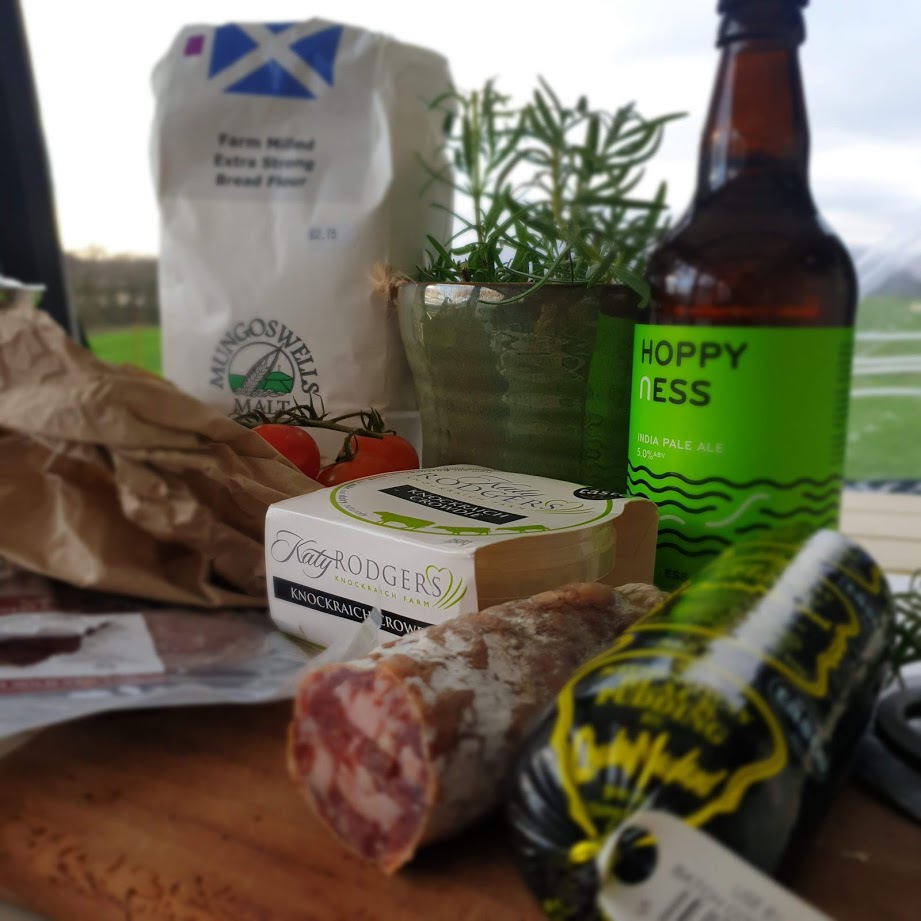
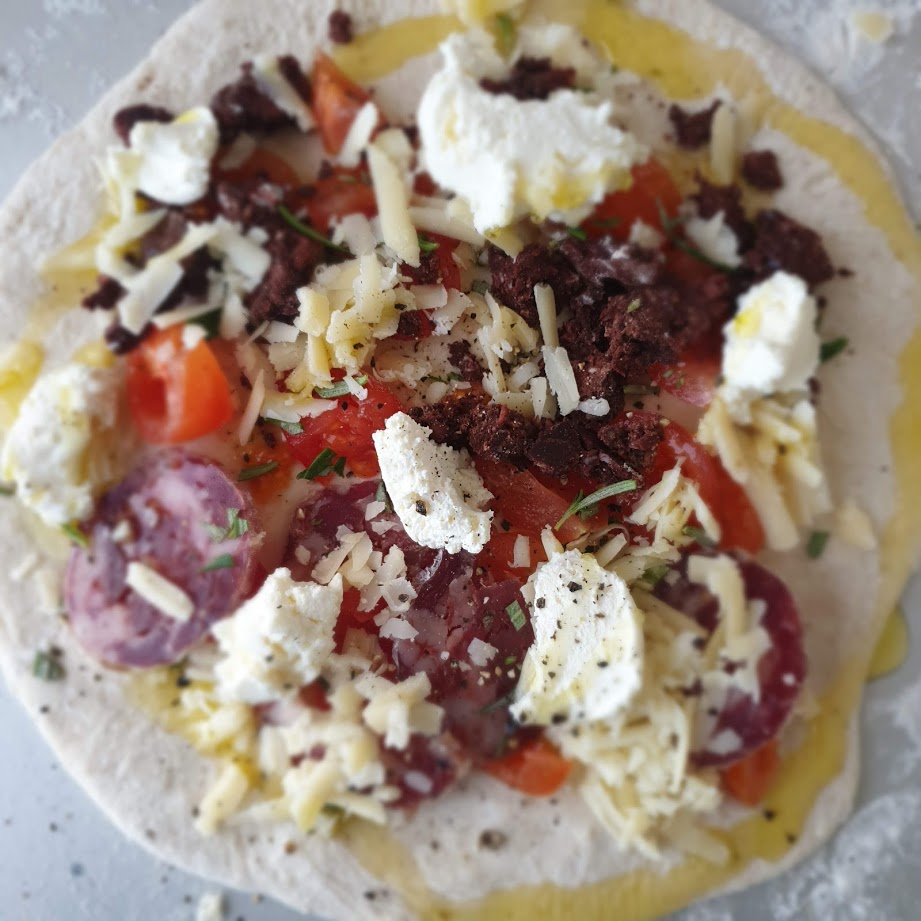
I came out of Why Not? with a bag of bread flour from Mungoswell’s Malt & Milling, a family run farm and mill in East Lothian; a hunk of tangy extra mature Mull Cheddar and a generous piece of organic salami from Peelham Farm in Berwickshire. Peelham Farm sells it own organic meat, and charcuterie made from their own organic free range pig’s. No nasty nitrates and preserved with simple sea salt.
The following day we headed off to Loch Lomond with our caravan for a very blustery weekend, thanks to Storm Ciara. So we hunted out a farm shop that we had never been to before and were so glad that we did. Auchentullic Farm Shop, on the west banks of Loch Lomond is a treasure trove of wonderful Scottish produce.Fifth generation farmers, they sell milk in the shop from their Fresian dairy herd and their own highland beef. They are also passionate about supporting other producers from all over Scotland, selling vegetables, dairy products, wine, beer, honey and meat, shortbread and ice-cream. There was even a cosy log burner, flames dancing, chairs covered in sheep skins from Skye Skin’s, pulled up close and looking very inviting.
I get very excited in this kind of shop and a bit carried away too if I’m not careful.
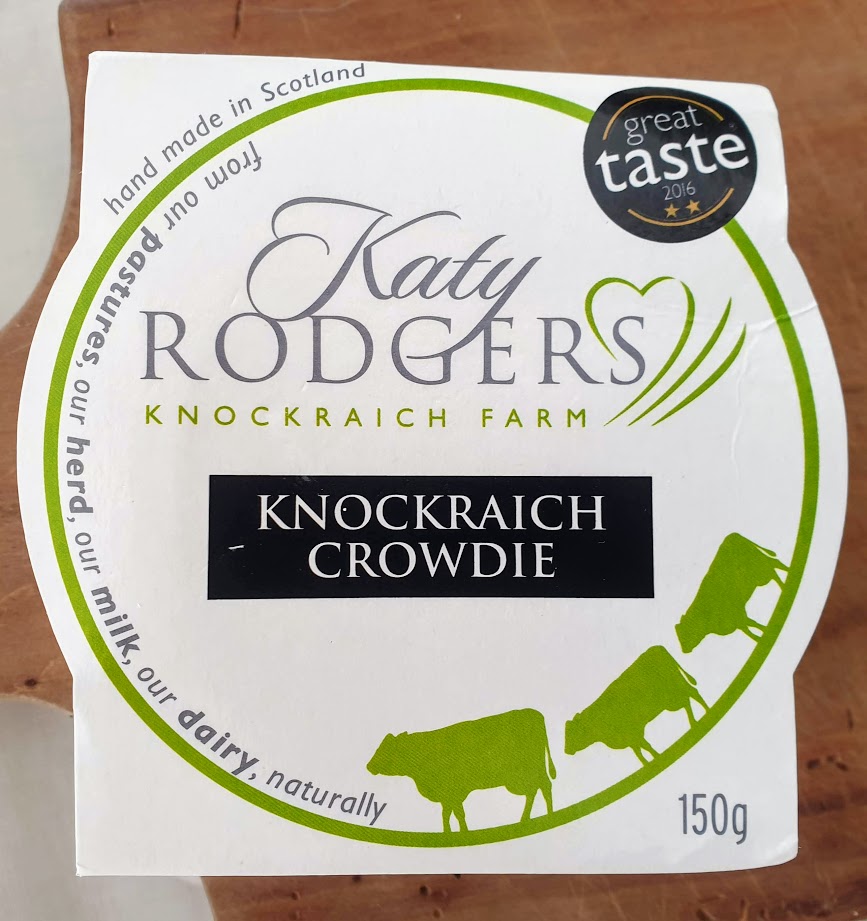
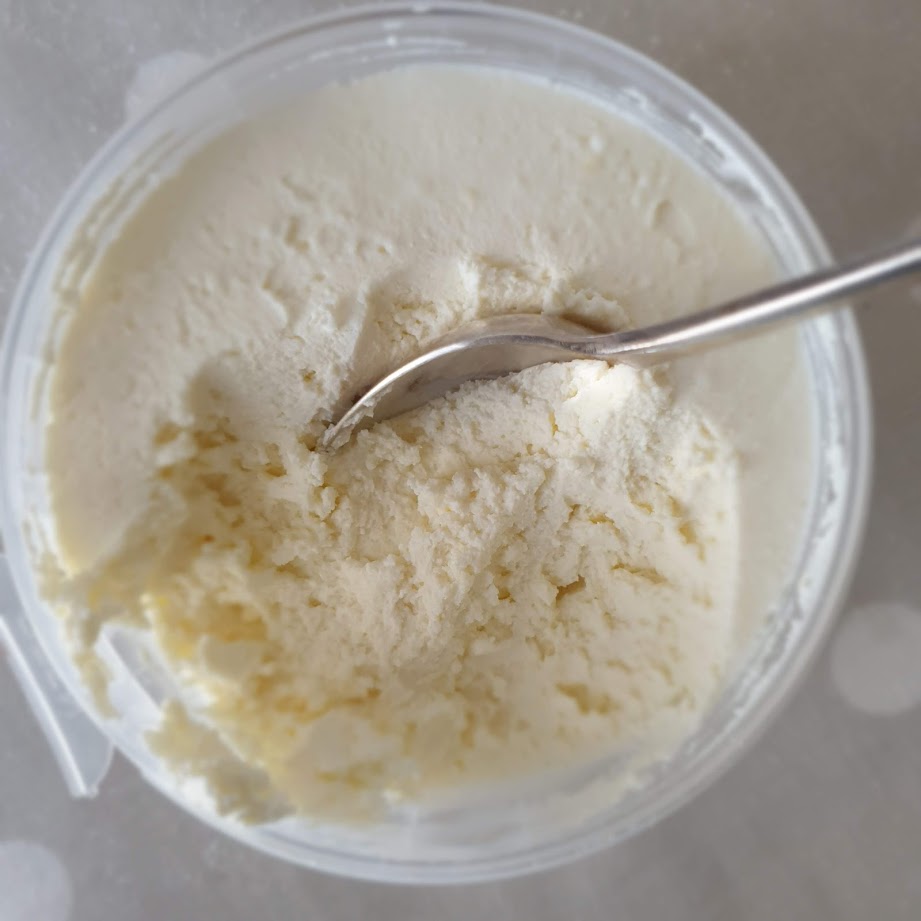
We bought some butter, yoghurt and crowdie, supplied by Katy Rodgers Knockraich Farm, somewhere else that I would love to visit. Crowdie is a soft, fresh Scottish cheese, said to have been introduced to Scotland by the Vikings in the eight century. I thought it might work well on the pizzas, along side the Mull cheddar that we bought in North Berwick.
soft & creamy & without all the liquid found in mozzarella that can give a pizza a soggy bottom. What do the Italian’s know about making pizza anyway? No soggy bottoms here! I could eat the whole tub on it’s own!
What else did we buy? Oh yes, Orkney black pudding. Now, I’m not a black pudding fan, nor of haggis, and yet they both always smell so good. I feel traitorous saying that out loud, I think that I’m just a bit squeamish. I can manage a little taste and it’s so good, that’s the ridiculous thing. I’m a butcher’s daughter, maybe Saturday’s helping my parent’s in their shop put me off a bit. Dad used to boil lumps of black pudding in the kettle for his lunch, resourceful of him I suppose. But then Mum would wonder why her cup of tea had a layer of grease floating on the surface!
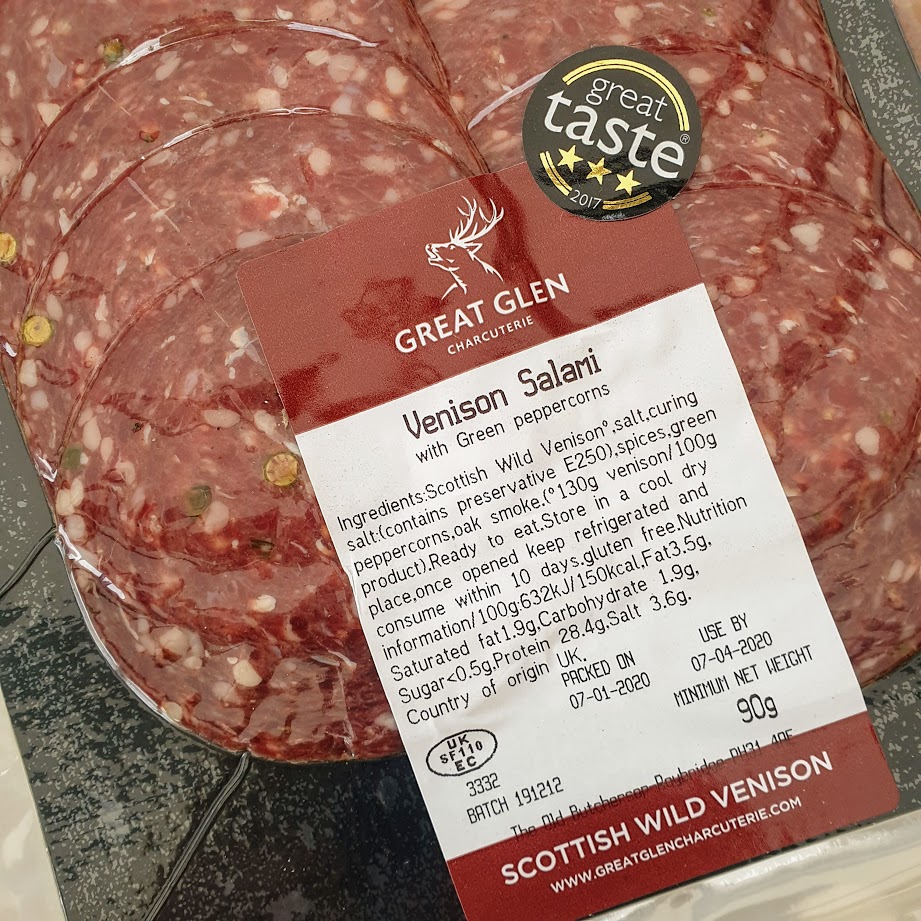
I digress, the black pudding would work well crumbled on pizza. Another meaty topping we bought was Venison Salami.
I feel as though I should apologise for the amount of meat I’m using. Just for the record though, our stance on meat. Our principles lye very firmly in balance, animal welfare and sustainability. Balance as in a balanced diet with not too much of any one food, except for cake maybe . We eat good quality meat only, making a little go a long way and not wasting a single oz. As well as fresh fish we love a vegetarian meal once or twice a week too. Animal welfare is hugely important to us. I’d rather make a vege curry than buy meat that is not of a high welfare standard. Sustainability is all of the above really , meat from small producers that has been reared with great respect and care for the animal and the environment and food miles are minimal.
Anyway, a slight tangent again, but this is where venison makes so much sense, and where the wolves come in.
Having lost all of it’s apex predators lynx, bears and wolves, Scotland is flush with red deer. Their only predator remaining is us, man. On the Isle of Jura for example, red deer out number humans by thirty to one. What is the problem with this? Well, along side sheep and our need for timber and land for cultivation, over the centuries Scotland’s landscape has been changed dramatically. With nothing to keep the deer from moving, and nothing keeping the population in check for a balanced eco system, the deer are merrily munching away at delicate tree saplings and native shrubs that in turn would, if allowed to flourish, support a whole host of insect, reptile, bird and mammal life.
At the moment, there is an annual cull of around 12% of the red deer population. In order for the eco system to be allowed to regenerate it is said that this figure needs to be more in the region of 80%.
Venison is low in fat, high in protein, it’s carbon foot print is negligible and there’s lot’s of it!
There is a growing number of conservationists who would love to rewild ares of Scotland. Part of this plan would mean the reintroduction of the grey wolf. One such notable advocate for this controversial scheme is Paul Lister owner of the Alladale Estate
Interesting video if you have time to watch it. I would love to stay at Alladale!
So that’s where the wolves could come in. It’s a highly controversial subject and I can totally understand people’s reticence, particularly that of farmer’s with live stock to care for. In the mean time, I’ll do my bit and buy some venison salami for our pizza.
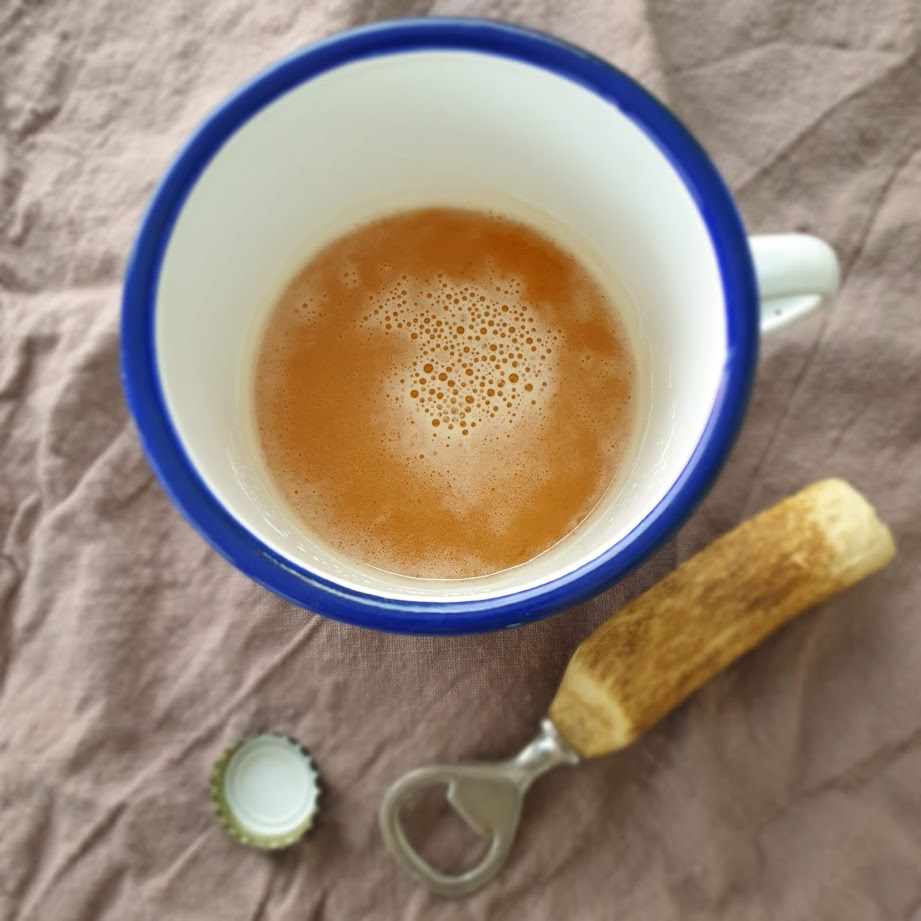
We also bought a couple of bottles of IPA from the Loch Ness Brewery, Hoppy Ness, the greatest gift that I possess.
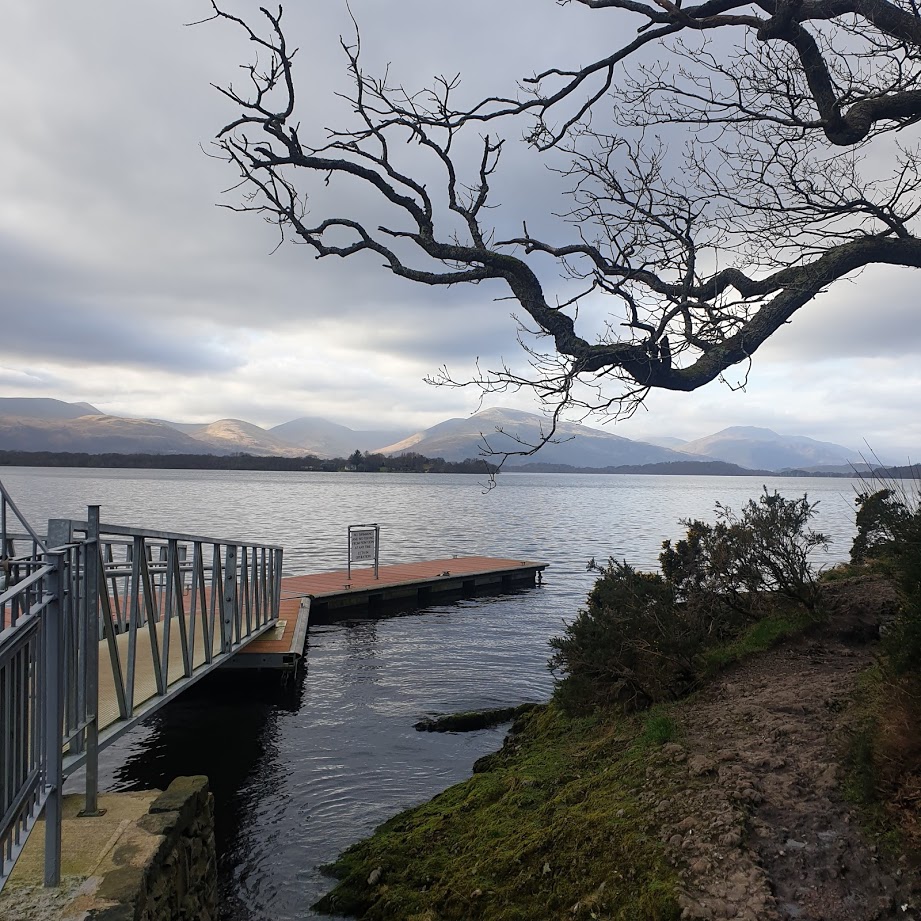
So, back to the caravan. I had made my sour dough yesterday and let it prove nice and slowly in the fridge over night. Allowing the natural yeast and flavour to develop. There’s no rushing a Nicolson pizza. In fact, whilst the dough was coming to room temperature, we went for a little wander along the bonnie banks of Loch Lomond.
Back from our walk and very hungry, Donald lights the pizza oven giving it plenty of time for the stone to get nice and hot. And poured a beer.
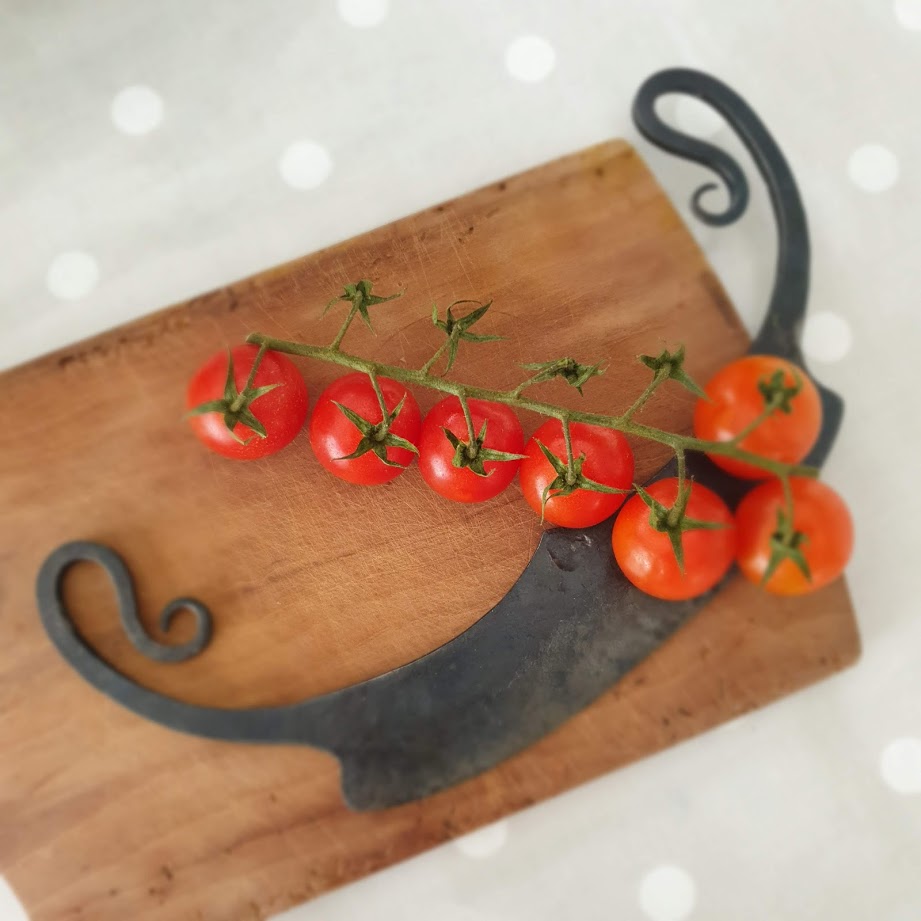
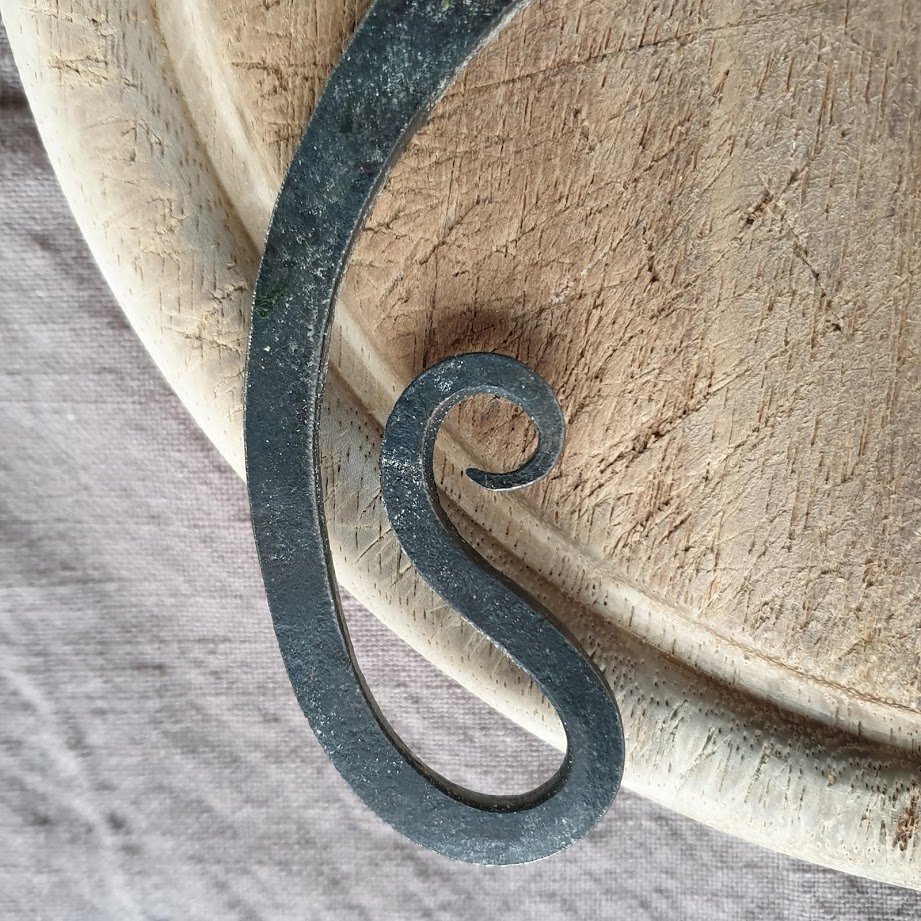
I assembled all of our beautiful ingredients, swigged some beer and got our beautiful hand forged pizza cutter at the ready.
Donald’s meat feast.
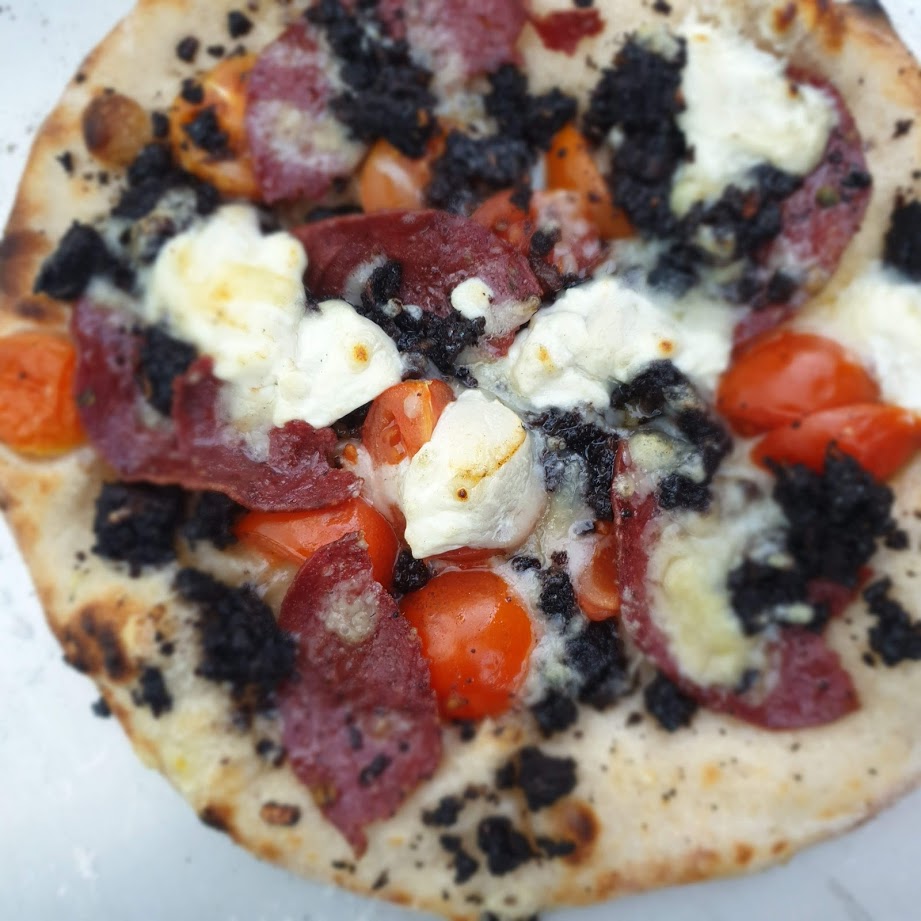
The base came out perfect, not too soft and not too hard but just right. The Orkney black pudding went all crispy, even I had to admit that it was pretty darned good and the crowdie melted and tinged with brown added an unctuous creamyness.
I love using our beautiful hand forged pizza cutter, or mezzalunar, literally translating as half moon. Like our pizzas themselves, it’s been lovingly made using a time honoured tradition out of recycled materials.
It will last our life time and for generations to follow too. You never know, our great, great, great grand children might be making bread and pizza with my sour dough starter and slicing their pizzas with Great Great Great Grandma Nicolsons mezzalunar.
Check out Tom’s work at his etsy shop and follow him on instagram to follow his journey as an artist blacksmith. By the way, I’m not getting paid to plug Tom’s work, I’m just a great fan.
So, I hope that you feel inspired and excited to taste some of Scotland’s incredible food. I’d love to know your thoughts on the reintroduction of wolves to the Scottish Highlands, if you have an opinion on the subject. I’d also be interested to hear where you are coming from in terms of eating meat, veganism or vegetarianism.
Next week I am planning to take you on a road trip to the Isle of Skye, so I hope that you will join me for that.
Warm Wishes & Happy Valentine’s Day to you & your loved ones
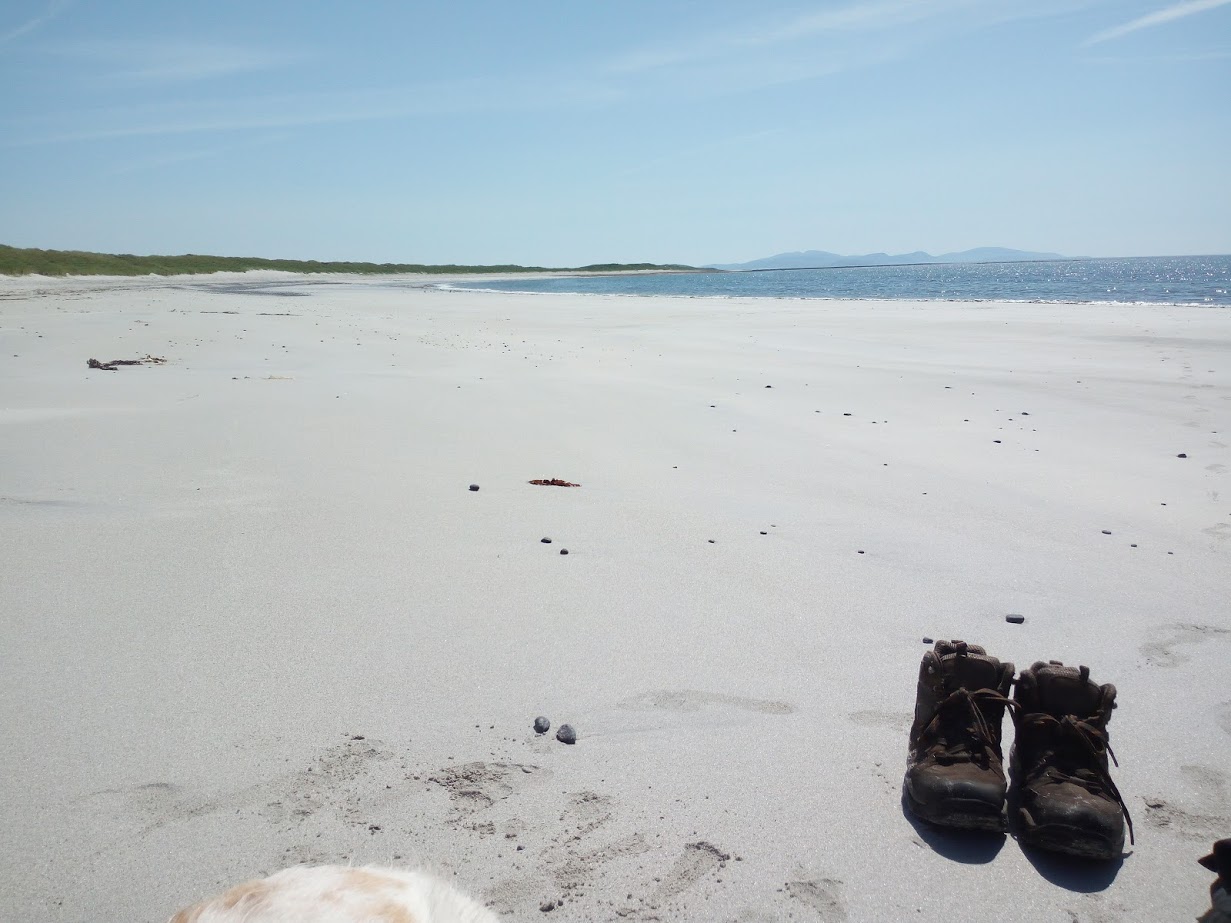
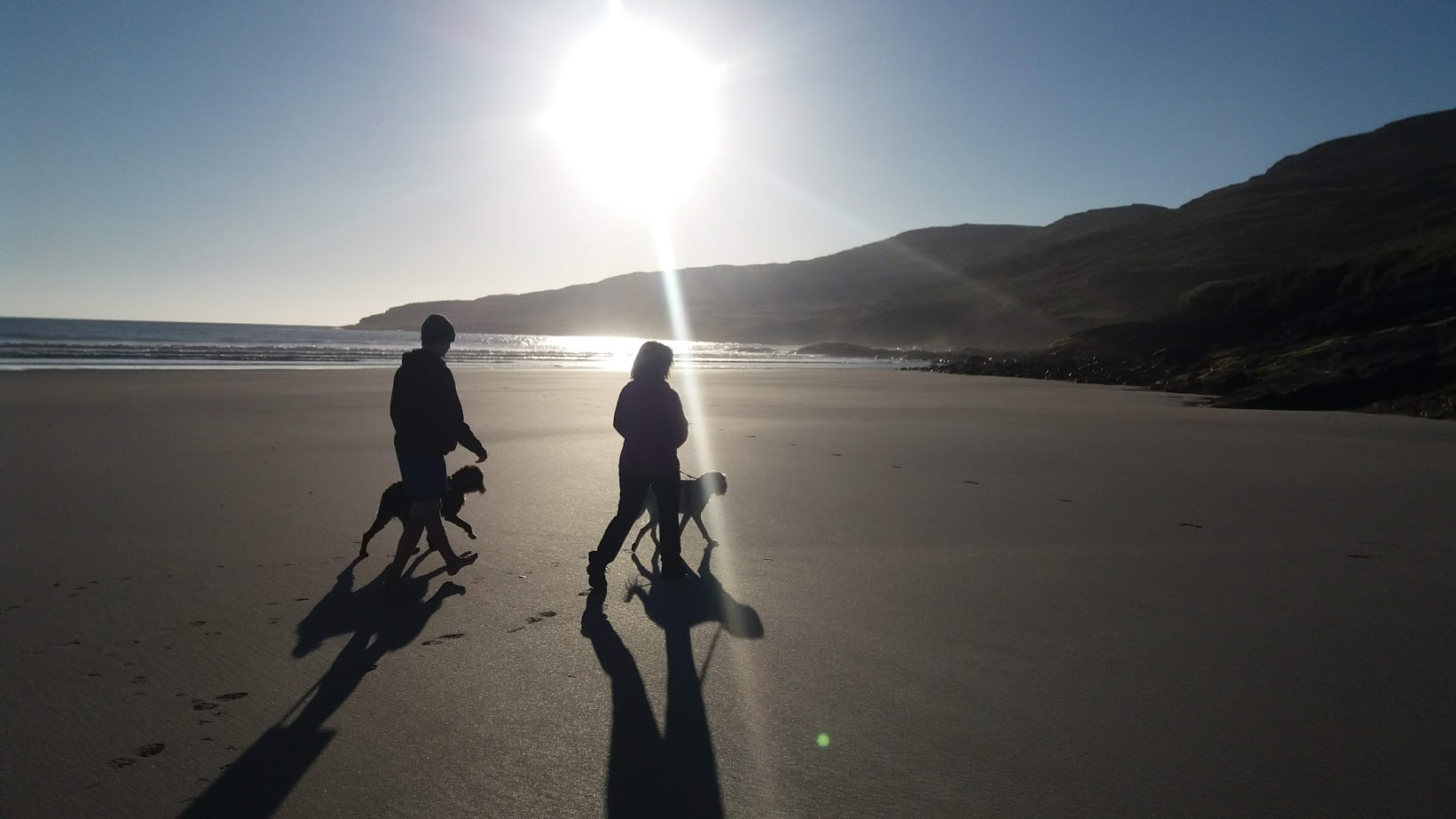
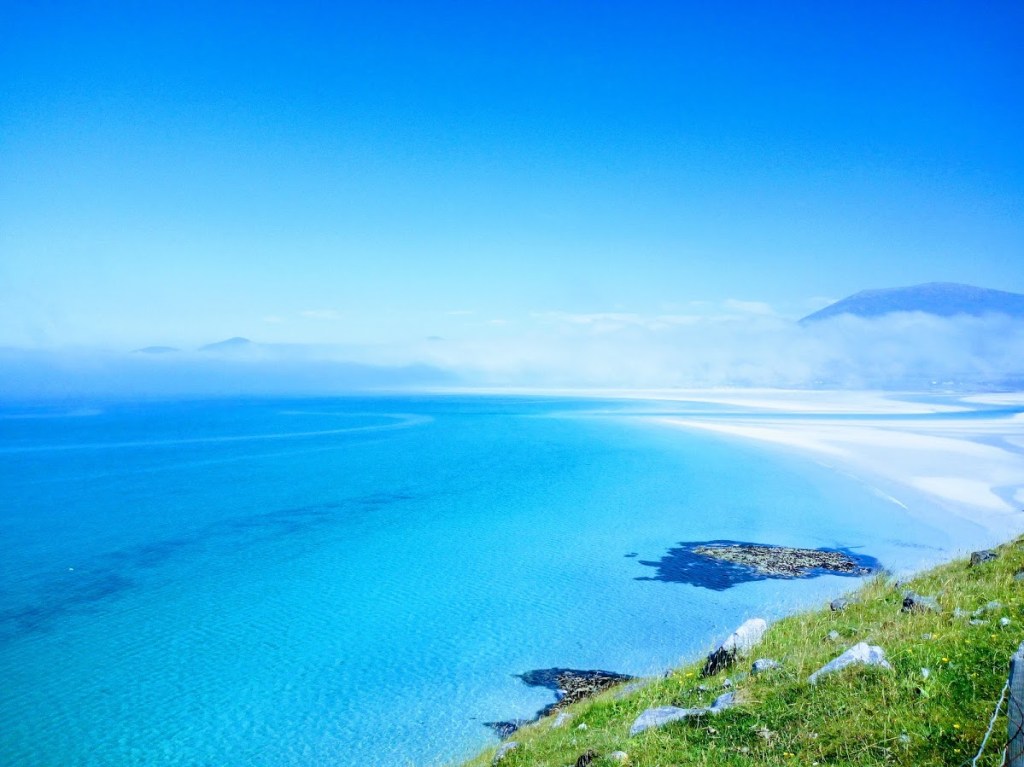
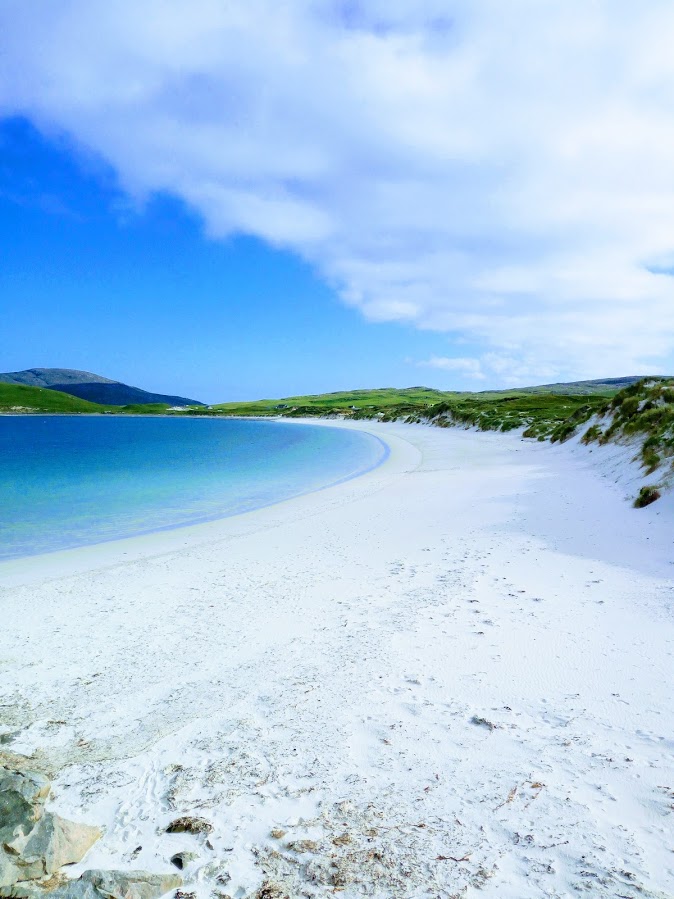
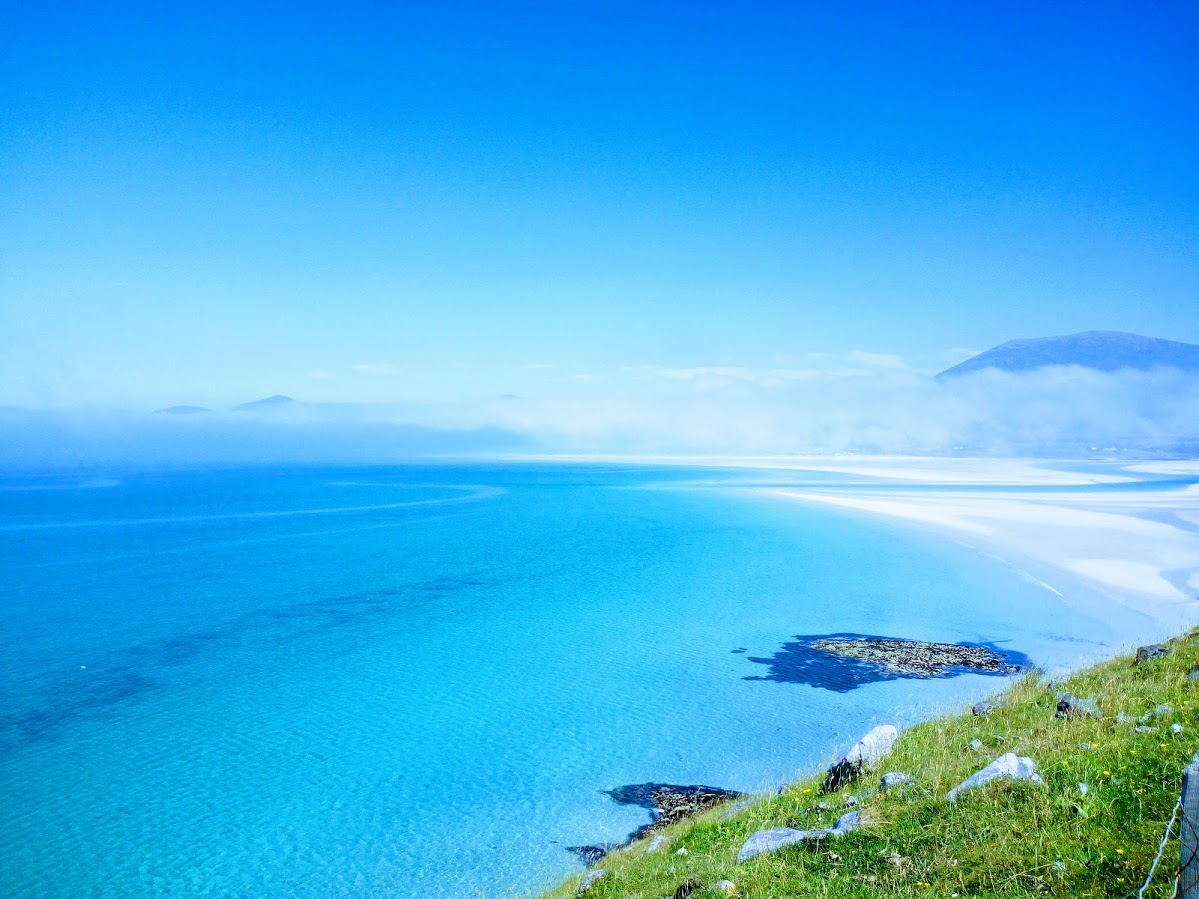
White sand’s, turquoise sea’s, blue skies. Was this really Scotland?
Words can not describe the beauty of the Outer Hebrides!
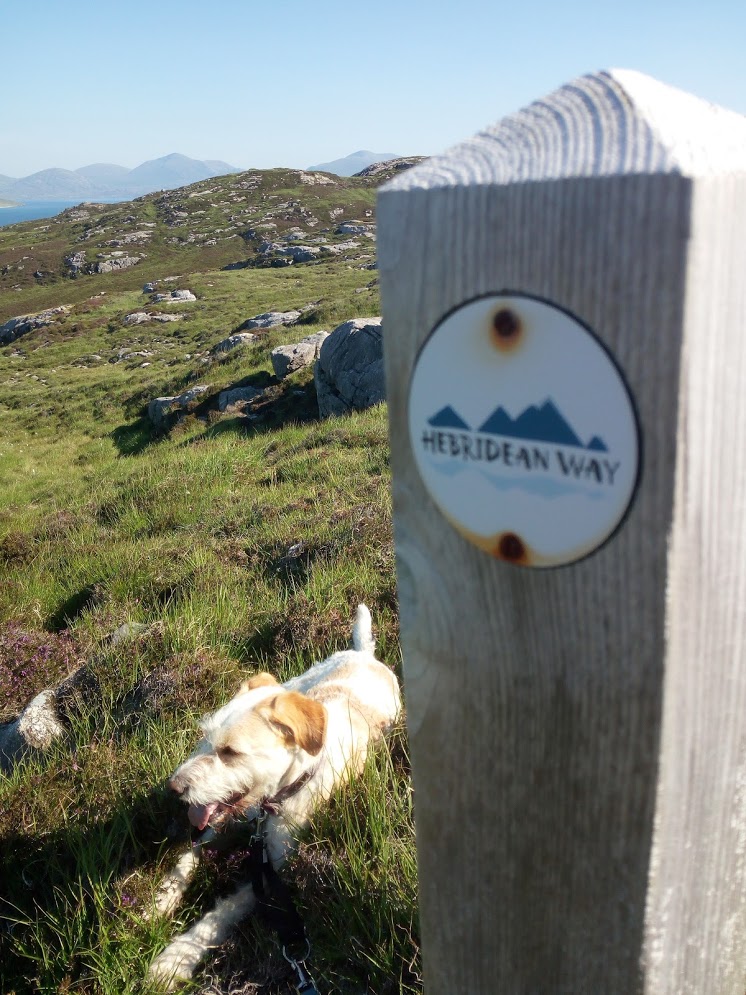
Having experienced the joy’s (and woe’s ) of a long distance hike with a good friend of mine, I decided that I wanted my family to reap the benefit’s for themselves. That slowing right down, getting away from it all, the simple act of just putting one foot in front of the other in order to get from A to B.
With the benefit of hind sight, we should have picked something on the mainland and something a bit shorter! However, I was flicking through a magazine one day and in it was an article about the Hebridean Way. It leapt out of the page and hit me in the chop’s. I thought to myself, wow, this place looks incredible, in for a penny in for a pound and all that, if we’re going to do this at all let’s make it worth while. The rest of the family just had to humour me.
I have to say at this point that we didn’t actually manage to hike the whole 155 miles. It was too damn hot! Who would have thought? Still, I am so glad that we went because this series of islands as far west as you can go within the United Kingdom, next stop North America, was a truly incredible place.
This isn’t an article about the Hebridean Way itself, nor is it about beautiful hotels or fabulous food as we experienced neither of these, having slept under canvas and nourished ourselves with sachets of bowel blocking rations that tasted the same regardless as to wether it was an all day breakfast, meatballs and pasta or chocolate pudding!
What I’m hoping it is is an insight to this wild, wind swept archipelago, it’s folk, it’s flora and fauna and a little bit of history.
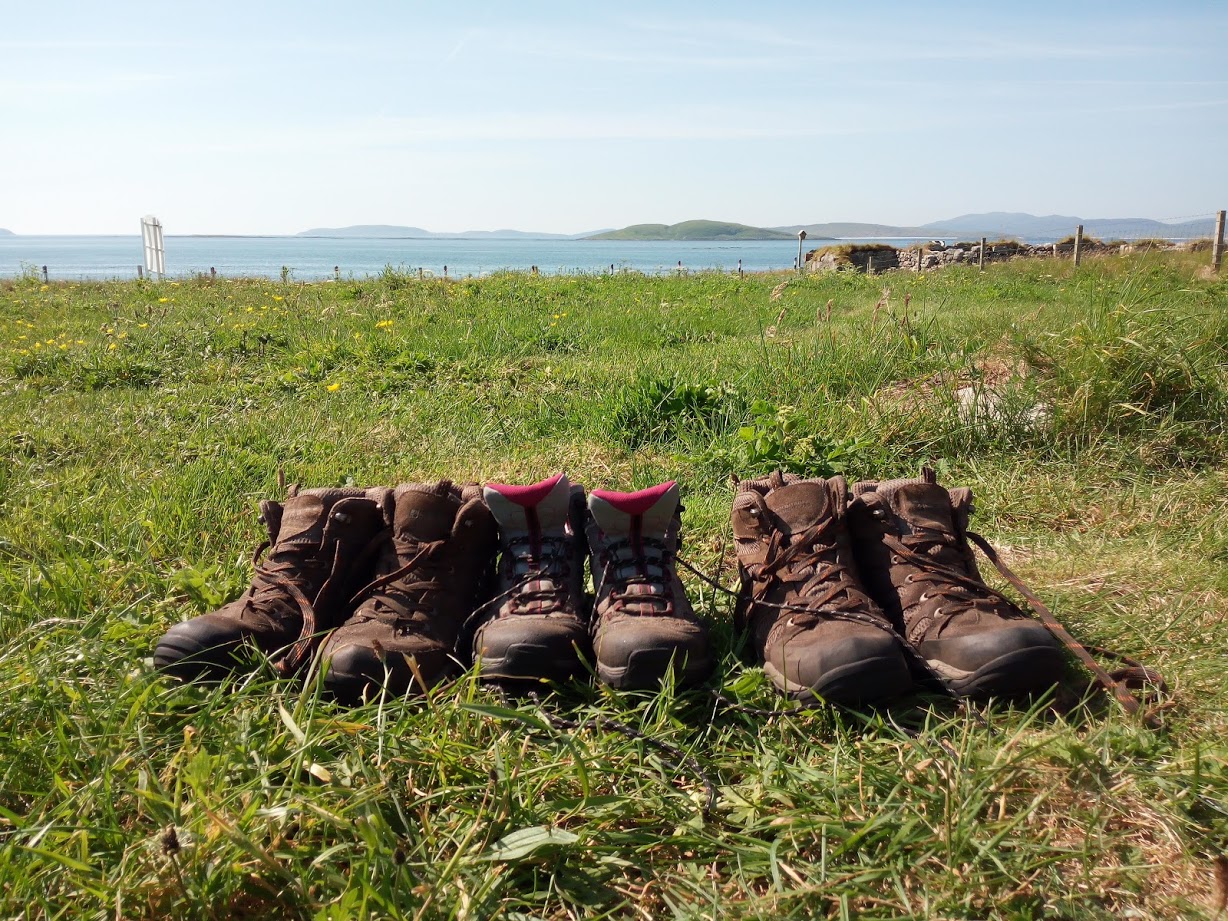
We camped the night before at a little camp site in Oban, over looking the tiny island of Kerrera. We felt a bit nervous, knowing that what we hoped to achieve was no small undertaking, especially with two dogs in tow and having to carry all their food as well as water, tents, our food etc. etc. We had trained hard though and were prepared to give it our all.
The next day, we enjoyed a delicious seafood lunch, what was to be our only vaguely foody experience of the trip, from a little seafood shack on the harbour. Crab sandwiches and hot smoked salmon rolls, shielding them from opportunistic, scavenging seagulls and dogs!
We had booked the 1330 ferry crossing from Oban to arrive in Castlebay on Barra at 1815, so a 4 hour and 15 minute journey crossing the Minch.
Looking back towards Oban with McCaig’s Tower on Battery Hill
It wasn’t long before Oban was a speck in the distance.
We were so lucky to be accompanied by a pod of dolphins, just thrilling to watch them speeding along, you really got the sense that they were having the time of their lives. A man with a camera complete with lense the size of Jodrell Bank had seen orca just a moment before. I have never seen them in the wild and I was gutted that I’d been so close yet so far away.
We pitched our tents in the machair over looking the sea and right beside the start post of the trail. By ten thirty pm it was still broad daylight. From my sleeping bag I could hear the tide gently kissing the shore and the sound of oyster catchers as they chatted to each other. Peeping outside, just to make sure I was really here, the sky was milky pale then pale coral with the palest of shell pink gently touching the sea and the tops of the surrounding hills.
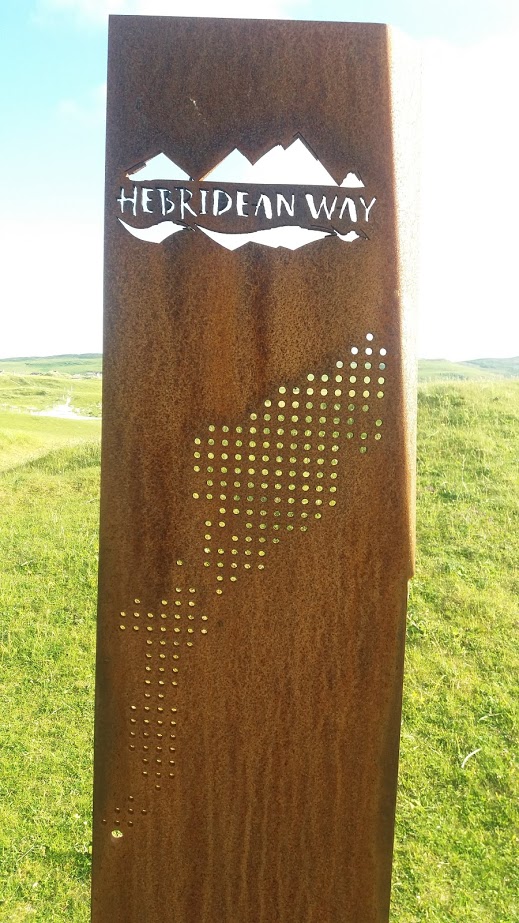
The beginning of the trail
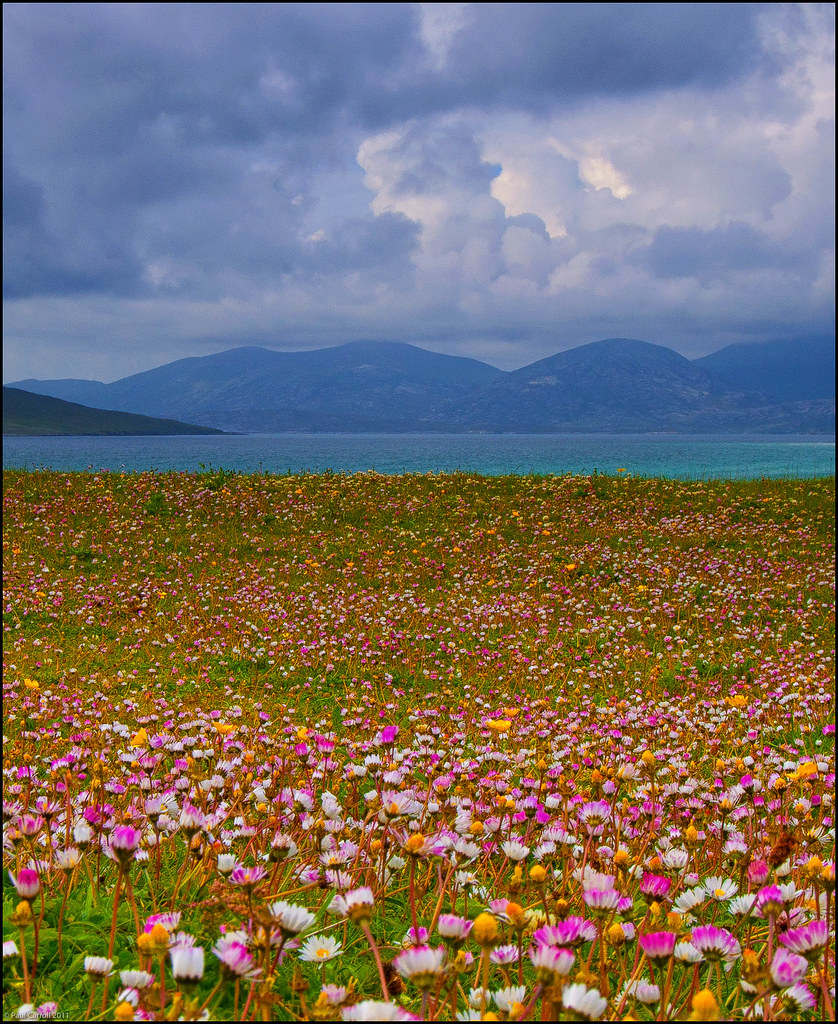
What is Machair? I hear you ask.
In May / June the first of the machair flowers start to bloom. here we see a carpet of daisies, buttercups and marsh marigolds. This particular scene is just along from the school car park at Seilibost. ISO200, 40mm,f18 at 1/100, Tripod Paul Carroll
Machair is a Gaelic word meaning ‘low lying grassy plain’. The best examples are to be found on north and south Uist, Harris and Lewis. It’s formed through a cocktail of elements; the low lying coast line, sand and shell fragment’s being deposited by the wind, the effect’s of strong wind’s, just the right amount of rainfall and the involvement of people and their grazing animals.
The variety of flora that this unique phenomena supports is incredible and the species that this in turn attracts is of real conservation value.
There is even a way marked route linking the best spots to drink in this magical array of wild flowers, best seen in May, June and July.
Wooden waymarker sign post for the Machair Way, a walking route at Bornish, Isle of South Uist photo credit to VisitScotland/Paul Tomkins
We witnessed so many wonderful wild flowers en route including early marsh orchids and white water lillies, shown above and yellow iris and fields of fluffy white cotton grass.
cotton grass
At the end of our first day of hiking, we set up camp on Barra, the second island of our journey. Spoilt only by the infamous Scottish midgie!
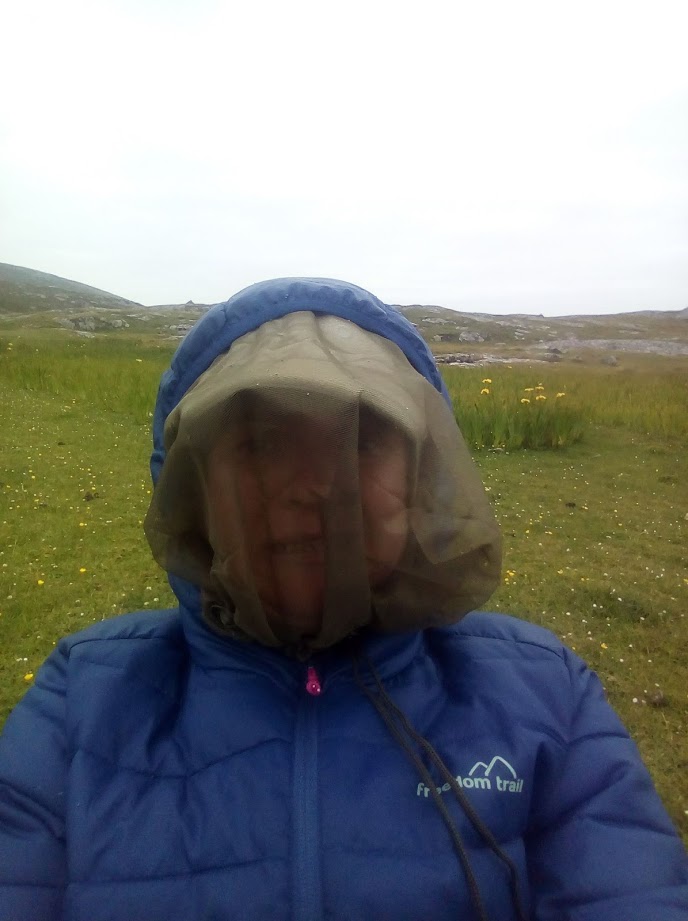
Culicoides impunctatus! More commonly known as the Scottish midgie or any expletive you care to think of!Try eating with one of these on! Yellow iris in the background.
I feel itchy just looking at these pictures and it’s funny looking through the guide book that we used, for sandwiched inbetween some of the pages are multiple little black squished dots!
To be fair, please do not let this deter you from visiting the Outer Hebrides. More often than not there is enough of a breeze to keep them from flying at all, then they must remain grounded in their damp peaty bogs, breeding and waiting for that gap in the breeze.
Gaelic is often spoken as the first language
Gaidhlig is a Celtic language, derived from Irish Gaelic. It’s been spoken in the Outer Hebrides for many centuries and these islands are one of the last remaining places where it is still spoken as a first language. Primary schools across Scotland are now teaching Gaelic in an attempt to revive the language, lest it be lost forever.
A bit about religion on the islands
The islands at the southern end of the chain are predominantly Catholic. The folk here tend to be more relaxed about observing their religion. Buses still run on Sundays for example and most shops and restaurants remain open. It’s a different story further north however. The mainly Presbyterian islands of Harris and Lewis are much stricter when it comes to the Sabbath. No buses run, shops and restaurants will be firmly closed, as will some bed and breakfasts, leisure centers, petrol (gas) stations and even ferries may not run. Again, don’t allow this to put you off, just plan your day accordingly, enjoy the peace and quiet, make sure you double check that your accommodation allows you to stay on a Sunday, that you have a tank full of gas and enjoy the day.
What about the Climate?
The climate is dominated by the Gulf Stream. Most of the weather on the Outer Hebrides began it’s journey in the Carribean. Obviously, by the time it has reached our shores, it has cooled down considerably. Having said that when we were there we could have been forgiven for thinking that we were on a Carribean island. It was only the absence of coconuts that gave the game away.
Wet blustery days are common throughout the year and high winds in the winter months. Winters are rarely extremely cold and summer is rarely particularly hot. Except for the summer that we were there. It was the heat that thwarted our attempts to complete our challenge.
Still travelling on foot, we didn’t quit too early, we hopped on the ferry from Ardmhor on Barra for a forty minute welcome sit down on the ferry to Eriskay.
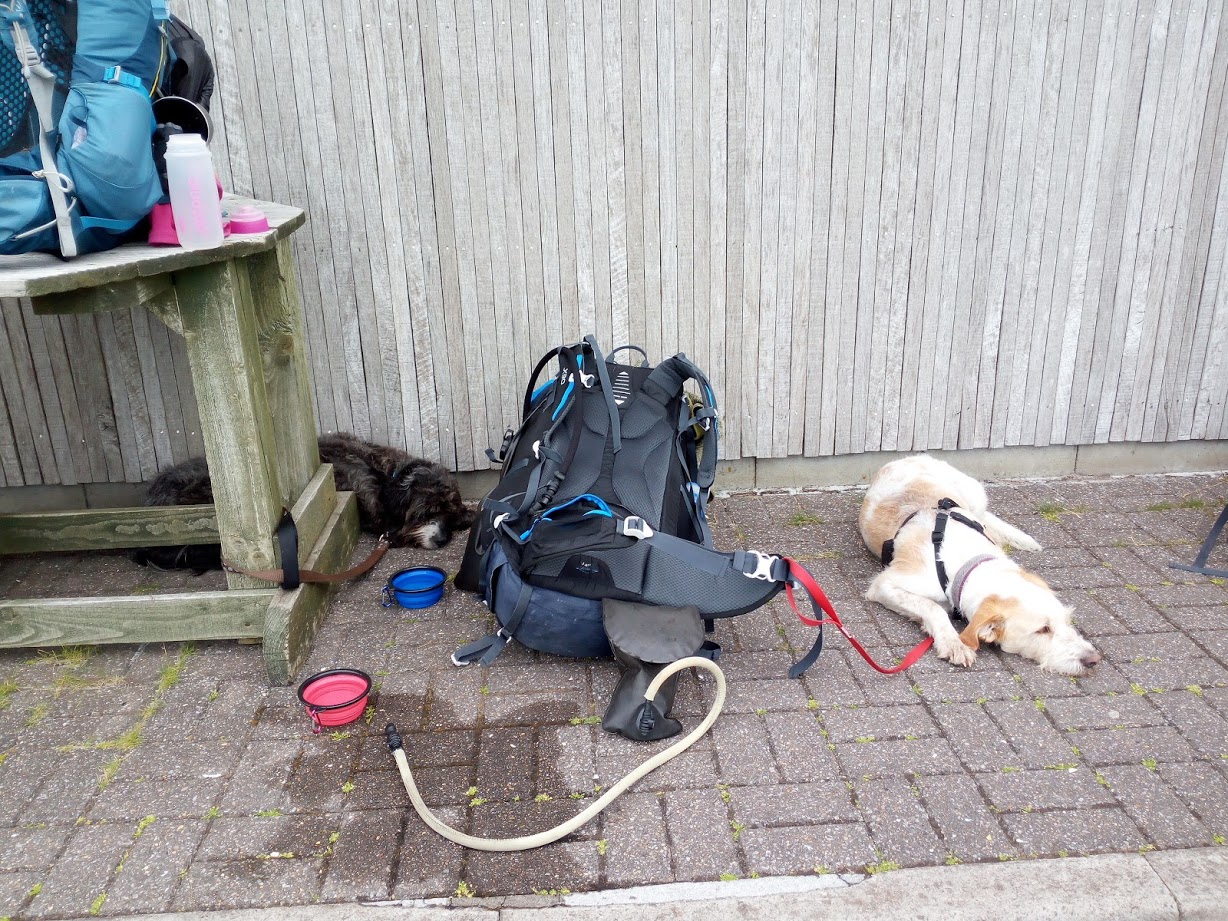
Two very tired dogs waiting for the ferry. I’d like to say that on the crossing we were leaping about the deck, excitedly looking out for wildlife. In reality though, we were stacking zzzz’s inside!
Bonnie Prince Charlie landed on Eriskay on the 3rd of August 1745
His boat landed on the west side of the island. The beach Coilleag a Phrionna (the Prince’s Cockleshell Strand). There now grow’s The Prince’s Flower, a variety of morning glory, not native to these part’s. It is said that seed’s fell from the Bonny Prince’s pocket as he removed his handkerchief. It can be found blooming just below the monument that mark’s his landing, half way along the beach.
Another notable event that occurred on Eriskay was on the 5th of February 1941, when the SS Politician struck rocks. As luck would have it for the locals at least, she was carrying crates of Scotch whisky, which they duly helped themselves to. This event was the inspiration for Compton Mackenzie’s book Whisky Galore which was later made into a movie.
We walked and walked and walked once we got off the ferry. Crossing the £9.4 million causeway across to South Uist.
causeway linking Eriskay and South Uist
A few struggles, especially me on the steep bit’s. Arran great at motivating me and encouraging me. What a boy. Dog’s exhausted.
from my diary
We spent that night at Kilbride Campsite, our tents overlooking the still, calm sea.
Late evening and still light
Great to have a good hot shower & wash my pant’s!
from my diary
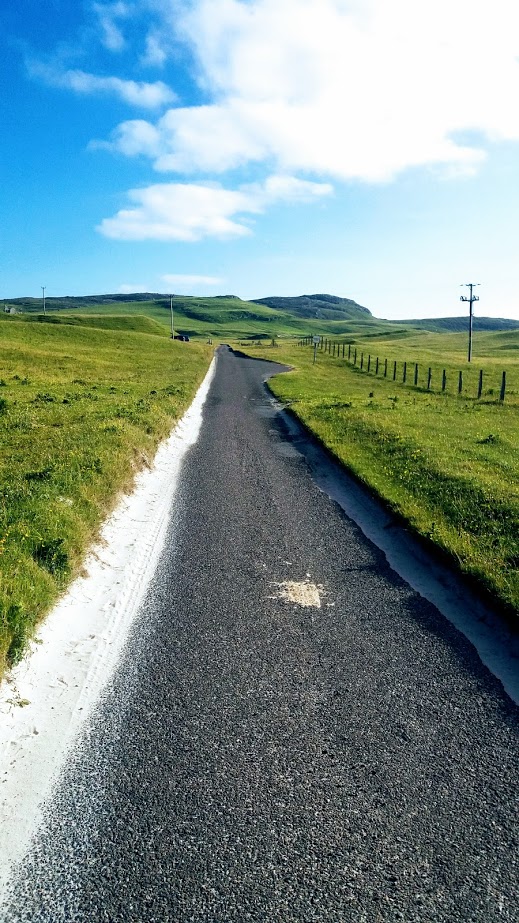
We walked along the west side of South Uist, along a stunning white sandy beach that stretched on for mile upon mile upon mile. The Atlantic Ocean to our left and Machair and working croft’s to our right.
We spent a few days resting at Horgabost Campsite. By this stage we had decided to chill out a bit, walk section’s as we felt like it and taking bus’s when we didn’t.
Well earned down time at Horgabost Township on Harris. I think that the land in the distance is an island called Taransay
The next stretch of walking, I did on my own with Olly Dog. It took us along the Coffin Route.
In stark contrast to earlier section’s of the journey, this was a steep, craggy, rocky stretch of track.
Why is the Coffin Route so called?
During the Highland clearances, which spanned over a period of one hundred year’s, from the mid 18th century until the mid 19th century, many families were forced from their home’s and croft’s to make way for more profitable sheep. Families from the Outer Hebrides who chose to remain on the islands they were born, in favour of traveling to the New World, were shunted from the fertile west across to the harsh rocky east coast. The scraped a living harvesting seaweed, fishing and growing what they could. They adapted.
Despite the hardship that these hardy folk must have faced, they survived. However, when they did die, it was far too rocky on the east to dig a hole for burial. So, coffin bearers shouldered their deceased in their coffins and carried them back to the west where it was possible to dig a hole deep enough to lay their loved one’s to rest. Able to return to their homes only in death.
It must have been an arduous journey, especially in the winter, no way marked trails like the one that I was following with just a day pack and my dog.
The Gearrannan Blackhouse Village
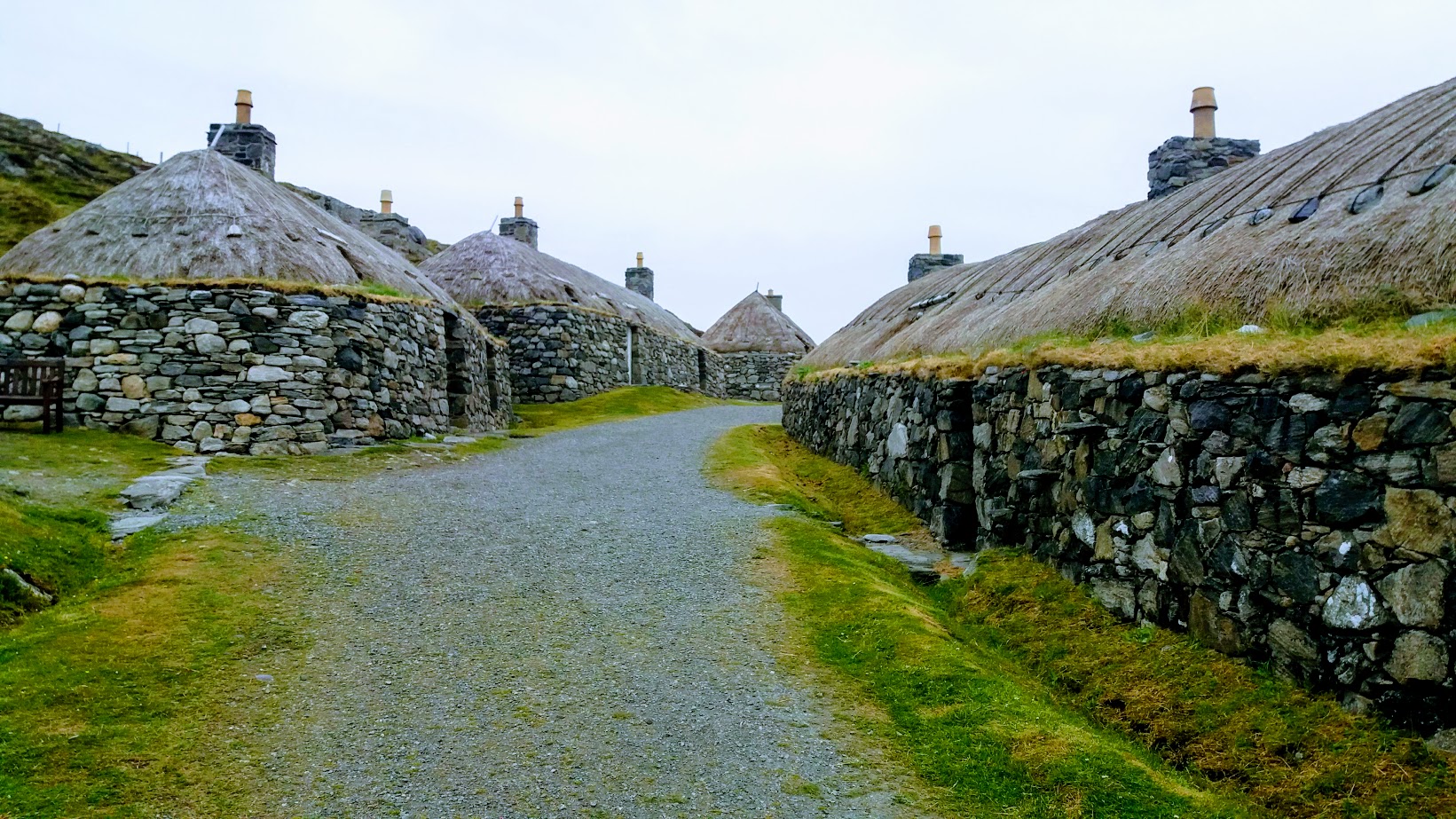
We visited this wonderful village on a Sunday, so the visitor center was closed, just bare this in mind if you are planning a trip here. It was still a fascinating place to wander around. The houses were occupied right up until the late 1970’s. The cottages are built low to the ground, hunkered down, cowering from the Atlantic winds that must batter this coast. Double stone walls must have provided good insulation too. It is possible to actually stay in the blackhouses, click here for details.
The Calanais Standing Stones
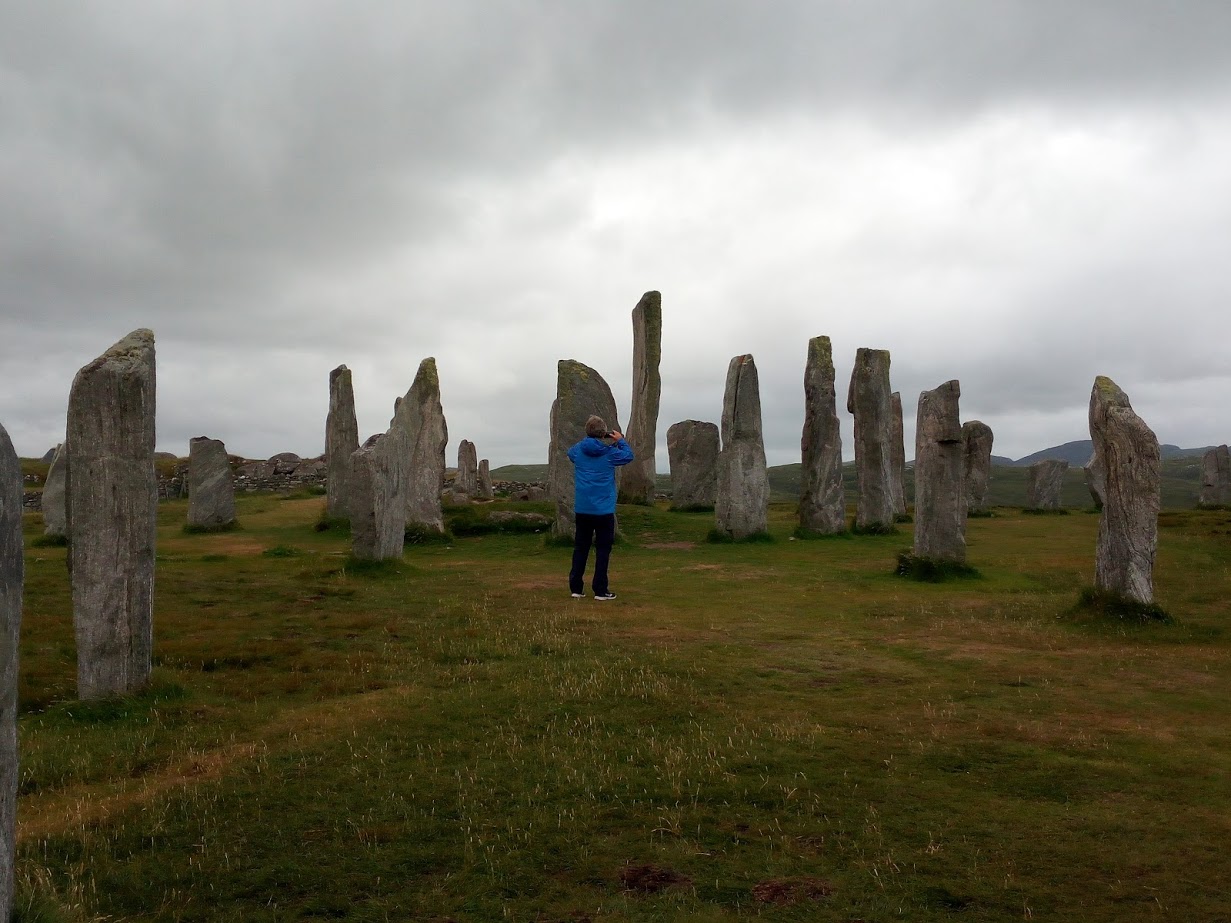
Twelve miles west of Stornoway, these standing stones are older than Stonehenge. Erected around 5000 years ago, in the late Neolithic era. The stones are arranged, I say that as if they are merely flowers, in a cruciform pattern with a central circle. How on Earth were they moved and positioned? It’s a staggering thought.
The exact purpose of the Callanish stones has been lost in time, but it is thought that the megalith’s acted as some sort of astronomical observatory or a celestial calendar.
Folklore would have us believe that they are actually petrified giants who would not convert to Christianity.
I feel as though I have barely scratched the surface of the Outer Hebrides. Part of Great Britain yet so far removed in many ways, not least of all it’s location, teetering on the edge of over two and a half thousand miles of Atlantic Ocean. A history so rich and a culture so unique. Tough, determined, adaptable folk as far removed from your stereotypical millennial as is humanly possible.
So, as I said, we didn’t manage to complete the full hike as planned, I still beat myself up about that, I hate quitting. It was an unusually hot summer and I think that we would have had a much better chance of success if we hadn’t taken the dogs with us.
Am I glad we went? You bet I am. Did we get to wind right down and experience a slow pace? Crikey yes, very slow. Will we go back? I’d love to. I’m torn between the idea of doing the walk again from beginning to end, all one hundred and fifty five miles crossing ten island’s linked by six causeways and two ferries; or just pootling along with the car, popping into galleries, tearooms and museums, walking as and when the urge takes us. Who know’s? Maybe we can do both, but with so much more of Scotland to explore and many more island’s on our bucket list, it’s all down to that magic ingredient TIME.
Have you ever been to the Western Isles? I would love to hear your stories below. Are you planning a trip there? If you have any questions at all comment below and I’ll do my best to answer them.
If you enjoyed this article, please click on the little star. Visit our website for more ideas and inspiration for you Scotland adventure.
A bit aboot the buttery, it’s origins and a recipe that you can try at home.
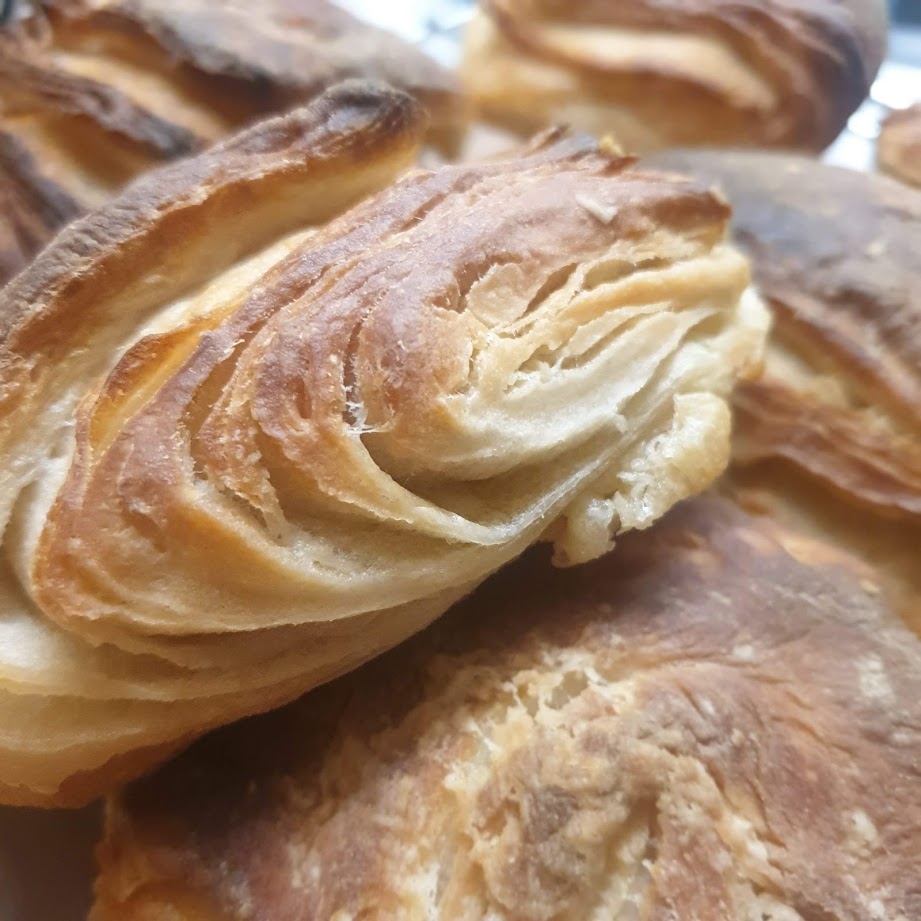
Not a bad first attempt at butteries, even if I do say so myself
So a few evenings ago, Donald and I had a few drams with friends to celebrate the New Year. Moira is originally from Aberdeenshire, although she’s lived all her married here in Edinburgh. A few measures in, the subject came round to food, and more specifically ‘butteries’ and the next day, I just couldn’t shake the thought of these moreish, calorie laden, heart clogging delights from my head.
So I decided to make some. I kind of assumed that I wouldn’t be able to buy them round theses parts. You probably can but I didn’t really look and thought it would be fun to make them myself.
I found a recipe in my Sue Lawrence ‘A Cooks Tour of Scotland’. As Sue says, bakers would originally make this enriched yeasted roll not with butter but with lard or beef dripping. She makes them with all butter though for what she considers to be a superior flavour. Undecided as to whether to go the traditional route or the all butter option, I decided to opt for half and half for the best of both worlds.
I needed to pop to the local Co-Op for a few ingredients, so I took Olly dog for his daily stretch en route.
We walked through the local woodland and I couldn’t help but spot some sure signs of spring as we walked, even though there are a good couple of months of winter yet.
I tied Olly outside and nipped into the shop to buy some lard and yeast I had the rest of the ingredients already.
A wee bit about these waist thickening delicious devils. As I’ve already mentioned, butteries are a regional bread roll, hailing from the north east and more specifically Aberdeen. Also known as a ‘rowie’, ‘rollie’ or ‘Aberdeenshire roll’, the first written mention of the buttery was in 1899, when an Arbroath street sellers bread basket was said to have contained ‘butteries’.
Auchmthie fishing village jut 3 miles northeast of Arbroath. Those baskets may have contained freshly bake butteries
The fishermen could be out at sea for long periods of time, so they needed a bread that would last for as long as possible. The addition of fat to an otherwise ordinary yeasted dough, alongside plenty of salt helped to achieve this, plus it provided the men with a good concentrated source of calories. So a treat for most modern day folk including myself.
The first time that I tasted these moreish treats was when we lived in Elgin, in the north east. I had several baking jobs myself during that time. One was at the Spey Bay Wildlife Centre, now called the Scottish Dolphin Centre, in the Moray Firth. I’d go in the evenings once Donald was home to look after the boys. I’d let myself in and spend hours baking for the cafe. Carrot cake, Victoria sandwich, gooey chocolate cake, cookies, honey and whisky cake, Ecclefechan tart to name but a few. Everything except for the scones, these were baked fresh each morning by the owner.
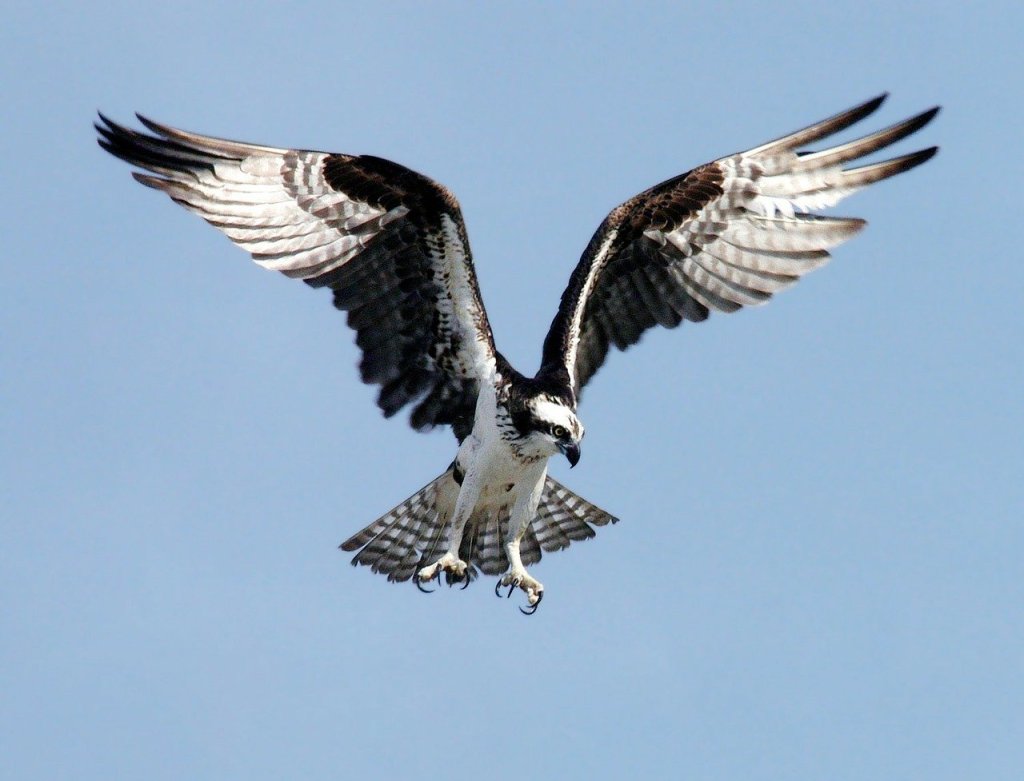
the awesome osprey. Not much escapes those incredible talons
What a setting. The little kitchen window looked up the River Spey, to just before it spilt into the Moray Firth. In the summer when the evenings were light I would often be distracted from my task by the sight of osprey, as they wheeled above the water hunting for salmon. I once witnessed the moment when the osprey dived and plucked the slippery writhing fish out of the water, gripping it with merciless talons, thus saving the poor fish the arduous trek up river to spawn!
A humble job in the most most magical of places.
Back at the ranch, it was now time to get baking.
Buttery Butteries
Recipe from ‘A Cooks Tour of Scotland’ by Sue Lawrence
Makes 16
600g/1 lb 5 oz strong white bread flour
7g sachet fast action/easy blend yeast
1 level teaspoon sugar
2 teaspoons salt
200g/7 oz butter or lard or half and half
1. Put the flour, yeast, sugar and salt into a large bowl. Add enough tepid water to combine to a dough, about 350ml/12 fl oz. Turn onto a board and knead for 7-8 minutes or until smooth. Try and resist the urge to add too much extra flour, the dough needs to be quite soft. I think I added too much. Place it in a large bowl, cover with a damp tea towel and leave it somewhere warm for a couple of hours until well risen.
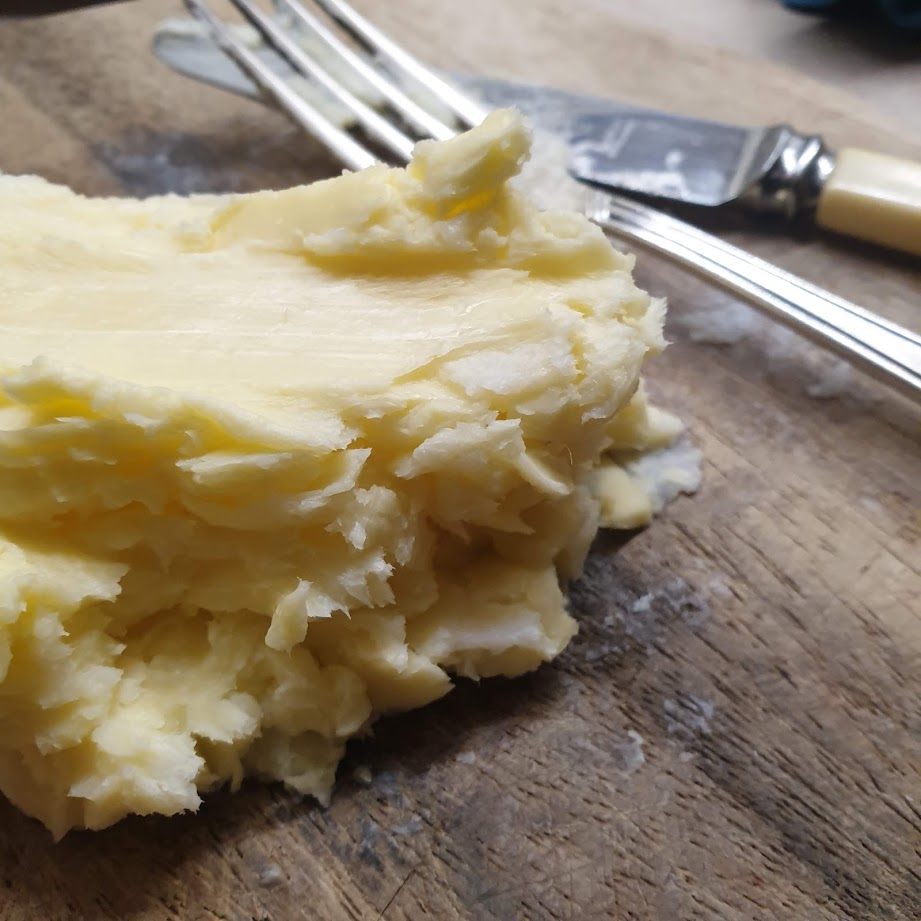
2. Mash the butter and lard together and divide it into 3 lumps.
one heart clogging lump of butter and lard
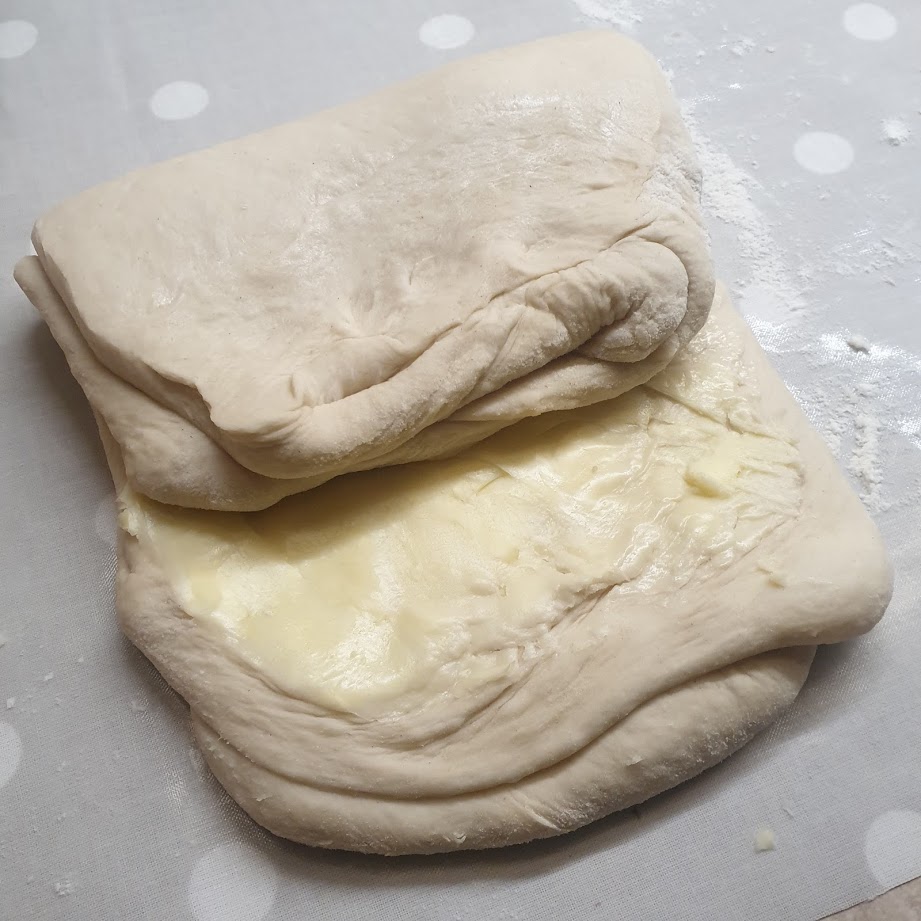
3. Punch the dough down and roll out with your palms to form a rectangle. Add one third of the butter to two thirds of the dough. Fold the fat free end of the dough into the middle and then the other buttery end onto that.
I’ve got heart burn just looking at this!
4. Roll out the dough again and add the 2nd third of fat, repeat the folding. Roll out a third time, add the last third of fat and fold again.
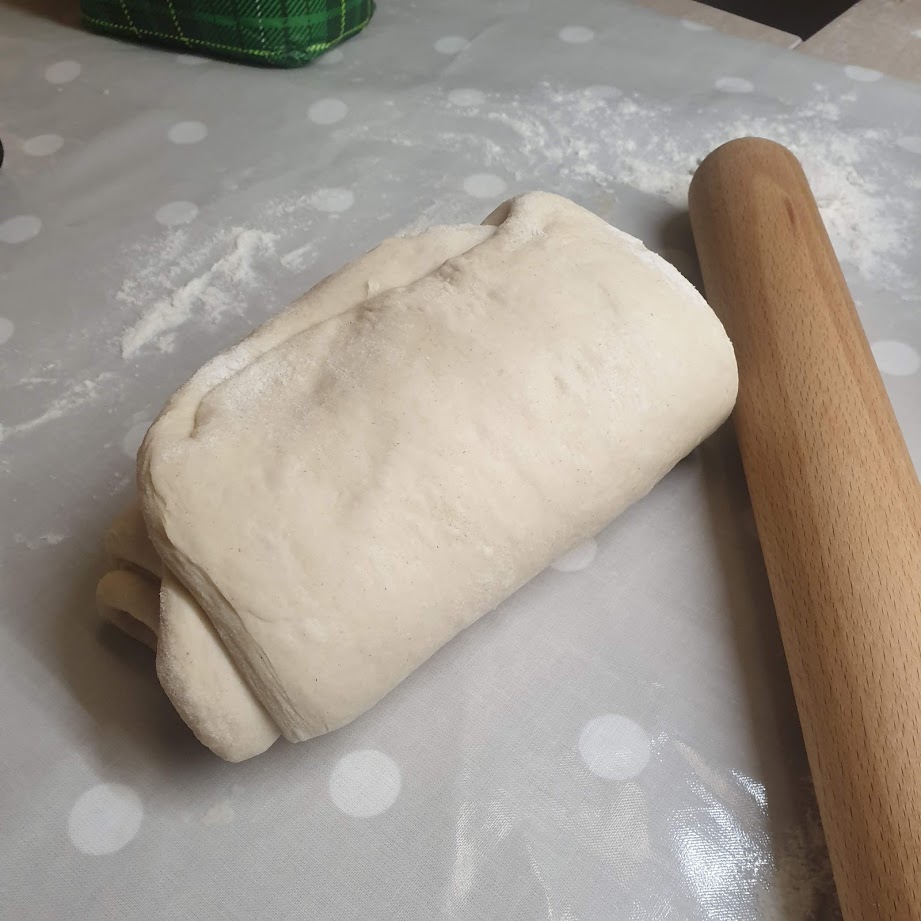
5. Now, by kneading and pushing, folding and turning, work the fat into the dough so its all incorporated.
lovely lardy layers
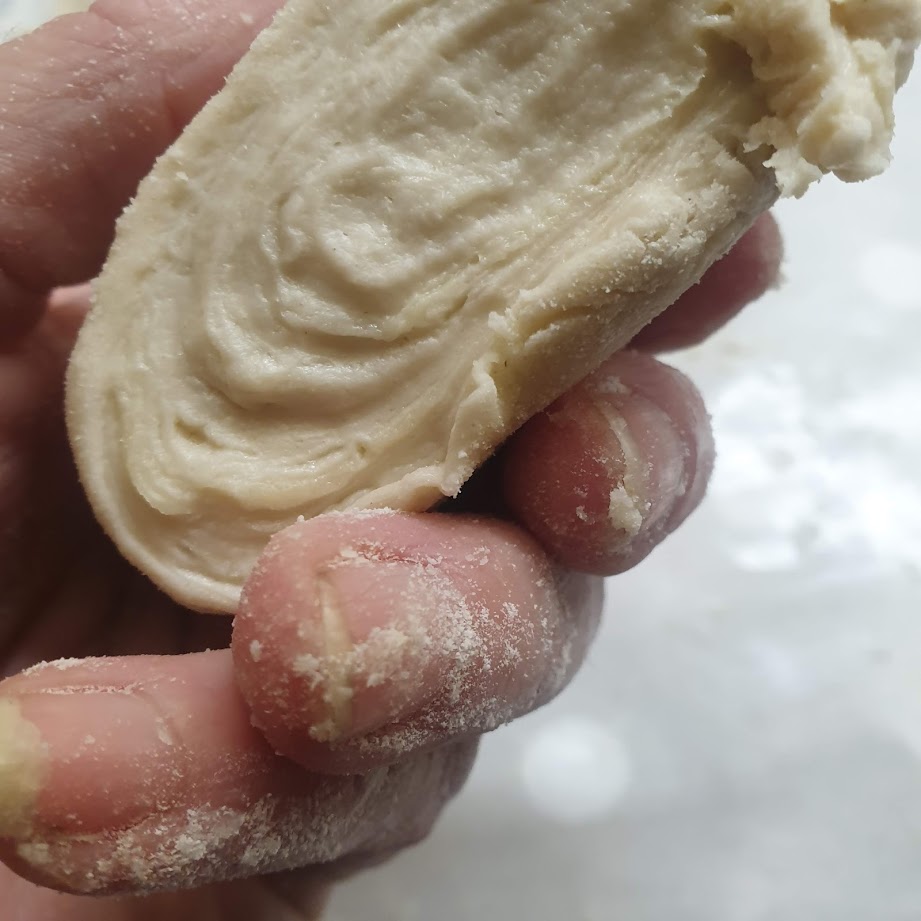
6. Cut the dough into 16 pieces and place them on a lightly floured baking sheet. Press each piece down with your fingers. I think mine were a bit too neat and not quite flat enough. The finished buttery should resemble a croissant that’s been flattened by a tractor!
7. Cover the butteries with oiled clingfilm and leave to prove somewhere warm for another 30 minutes or so. Meanwhile preheat the oven to 230°C/450°F/Gas 8 and have a cup of tea.
relax for half an hour whilst the butteries prove
Bake the butteries for about 20 minutes, or until crispy and golden. Remove to a wire rack to cool.
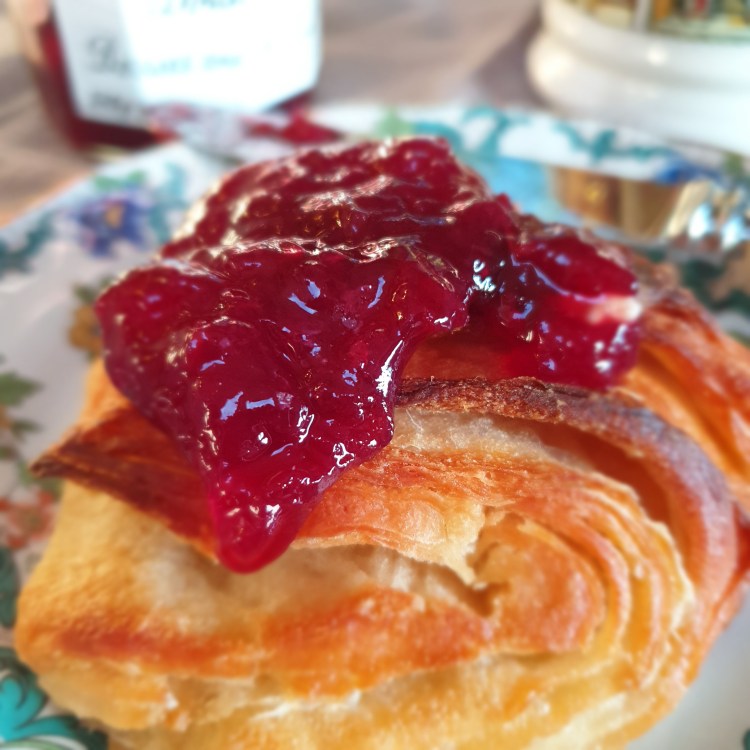
smother with jam or dunk into soup
I’m very pleased with how my first attempt at these turned out, although they should really be flatter, but other than that they were delicious.
As a side note, if you like whisky, the single malt that started this whole article was Scapa The Orcadian. An artisan single malt from the Orkney Islands. Smooth and honeyed.
Money, food, weather, what to pack, when to visit etc.etc
Summer on the Outer Hebrides
“What is the best time of year to visit Scotland?”
As with visiting anywhere, there are pro’s and con’s for every season. Scotlands seasons all have something wonderful to offer.
Spring time (March, April, May) brings new growth and life as the countryside bursts into life following the long Winter. Tree’s are coming into leaf, newborn lambs play, rivers and waterfalls are likely to be spectacular following snow melt. Businesses that were closed over Winter will be reopening full of vim and vigour for the coming tourist season. Temperatures will be on the up (more about that in a minute) a huge added benefit too is that popular tourist spots will not be as busy as in the height of the Summer season and accommodation will be less expensive.
AGAIN rejoicing Nature sees Her robe assume its vernal hues: Her leafy locks wave in the breeze, All freshly steeped in morning dews.”
Robert Burns in a song about Spring
Summer (June, July, August) is the height of the tourist season. In Scotland we enjoy long hours of sunlight giving maximum time each day to explore. If you were to venture as far north as the Shetland Isles for example, by midsummer it barely gets dark at all.
The disadvantages being crowded tourist hotspots (although these can be avoided in favour of lesser know but still beautiful places). Also, accommodation prices will be much higher than in other seasons.
“I love Summer in Scotland. It’s my favourite day of the year.”
unknown
But you just never know with the weather. Two Summer’s ago we went walking in the Outer Hebrides, we were attempting the Hebridean Way, a 156 mile hike from south to north covering 10 islands, wild camping en route. We were so concerned with making sure that we had enough layers and good waterproofs and in trying to get the weight of our back packs down, we decided sun screen was something that we probably didn’t need!! What a mistake. We didn’t manage to complete the hike due to the heat. We were burnt to frazzles and worried that the dogs would end up with heat exhaustion. My point being, we joke about our summers, but we do enjoy sunshine, so be prepared
Autumn (September, October, November) This is my personnel favourite season. I love the vibrant Fall colours, that smell of damp foresty earth, seeing migrating birds overhead and the deer start to come down off the hills. Things are starting to quieten down as children go back to school and accommodation prices are going down.
Winter (December, January, February) Think cosy pubs, crackling fires, snow, Christmas markets, twinkling fairy lights, Christmas, Hogmanay, Burns Night, welcoming hotels to coorie into, comfort food and merriment. Just remember that the days are much shorter than in the summer and you need to check before you visit any tourist attractions as some do close during the winter months. There is still plenty to see and do though so don’t be put off.
Hiking in Loch Lomond & the Trossachs National park
Another thing to bare in mind if you were thinking of staying on an island is that ferries can and do get cancelled in bad weather. Hundreds of visitors were stranded on the Isle of Arran earlier this year when high winds and rough sea’s forced the cancellation of the ferry service.
Obviously this depends on the time of the year that you will be visiting and what you will be doing. I’m going to assume that you will be general sight seeing with maybe a little hiking. You’ve heard it before but I’ll say it again. Layers is the rule of thumb when it comes to clothing. Especially in the winter, but any time of the year, the weather can alter from one minute to the next. Light base layers, that you can layer up or layer down and decent breathable waterproofs with a hood. Sensible shoes, trainers or sneakers, preferably waterproof.
Leave your umbrella at home. They are a pain in the neck in crowded cities and don’t cope well in the wind!
In the Summer you will need sunglasses, sunscreen and a good insect repellent in case of midgies. If you plan to spend much time outdoors a midgie face net is a good idea. More often than not there is enough of a breeze to keep them at bay but honestly, when they are out they are rotten! Smidge is a good tried and tested repellant. Avon’s skin so soft works for some people, but not me.
Woolly hat and gloves for the winter.
the problem is when it comes to eating!
Generally speaking the dress code here is fairly casual, but obviously if you are staying in five star luxury accommodation then smart attire for the evening will probably be in order.
July on the Isle of Skye!December blue skies on the Isle of Islay
As I’ve already said, the weather in Scotland can be unpredictable, you may experience all seasons in one day. Winter temperatures average from about 2 to 6 degrees Celsius (35F-43F) rising up to between 12 and 19 degrees Celsius (54F-66F) Scotland boasts a mostly temperate climate although it can get much colder, especially at higher altitudes and taking in the wind chill factor. It can get hotter in the summer too, these are just average temperatures as a guide.
There is no such thing as bad weather, just the wrong clothes!
Billy Connolly
“What is the currency in Scotland?”
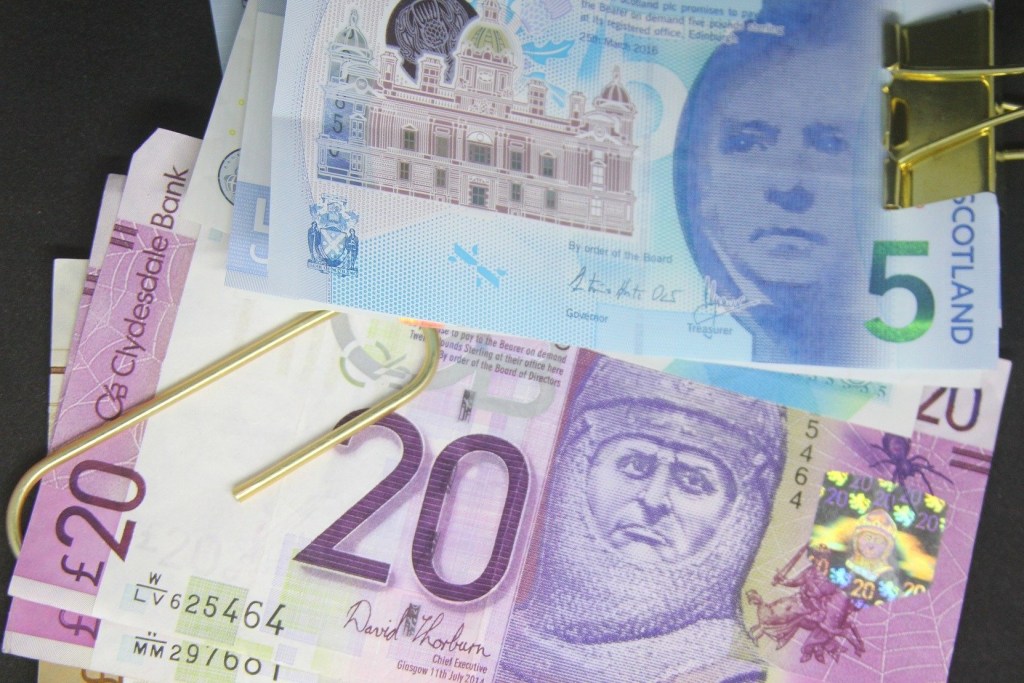
Pound Sterling. You can spend ‘English’ notes in Scotland and vica versa. Credit cards are also widely accepted.
“What should I try to eat and drink whilst I’m in Scotland?”
We have deservedly gained a world renowned reputation for our food. Our climate, farms, surrounding sea’s and rain provide us with a rich natural larder. Our fish and seafood is second to none as is our meat and game. Not to mention our wonderful whisky, craft gins and real ales are widely available and come highly recommended by me should you have a thirst. If you have a sweet tooth try Irn Bru a bright orange pop, Scottish tablet which is similar to fudge, deep fried mars bars (I have yet to try this myself).
Haggis is not for me, but Donald and both of our sons love it. Vegetarian versions are widely available and very tasty . In fact we cater very well for vegetarians and for people with food allergies too. My nephew has a life threatening peanut allergy and I was very impressed with the way he was catered for by all the restaurants we went to when he visited us in Edinburgh.
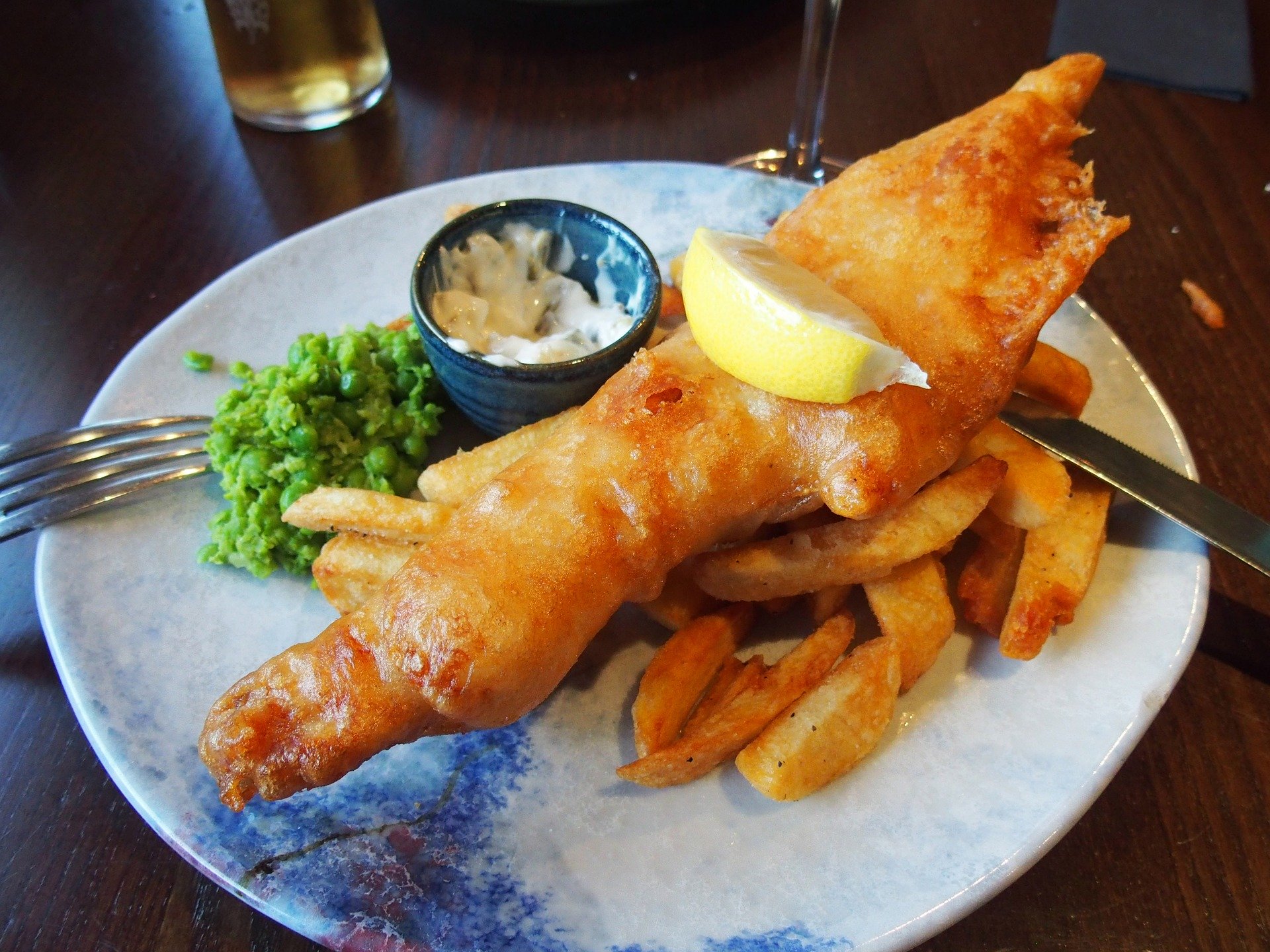
Fish and chips. Whats not to love, especially when eaten out of paper preferably sitting on a harbour wall, or if its raining in the car with a sea view.
We’re also very good at home baked cakes and scones, perfect with a nice cup of tea in the afternoon. Or any time for that matter.
We have many wonderful regional foods too, be sure to check out what is produced local to where you are visiting. For example, Aberdeenshire butteries, a melt in the mouth pastry which were historically made for fishermen sailing out of Aberdeen harbour. They were made full of fat so that they did’t go stale as quickly as bread and provided an excellent source of energy. Cullen Skink a soup from the town of Cullen in Moray made with smoked haddock, potatoes, onion and creamy milk, wonderful with crusty bread to dunk in.
A number of Scottish foods have been granted European protected status, these include Scotch beef, Scottish wild salmon, Arbroath smokies, Orkney beef, Shetland lamb, Stornoway black pudding, Orkney Scottish Island Cheddar. The list goes on, we have much to be proud of in the culinary department.
“How far in advance do you recommend to book?”
If you want accommodation like this…….
make sure that you are organised and book well in advance! Or else you’ll end up with the dregs. Especially during the height of the summer season and in particular popular areas such as the Isle of Skye.
“Can I drink the tap water?”
Absolutely YES. Our water is perfectly safe and tastes great. Bring a reusable water bottle, fill it in the morning before you go out and most cafes, restaurants etc. will be more than happy to refill it for you over the day. It’ll save you money and help to cut down on single use plastic.
“Do I need to tip?”
A 10% tip is appreciated when you have had good service in restaurants and taxis.
“Do I need to worry about ticks?”
You don’t need to worry, just take precautions to protect yourself against them. The NHS provide good advice, click here for everything you need to know.
“Can I travel around Scotland by public transport?”
Yes and no. Travel from city to city is relatively simple by bus or train, although our train service is expensive and not always super reliable. To get bus’s from towns and cities into more rural areas is possible to a degree but you could potentially spend most of your vacation staring out of a window. At least you are guaranteed great views.
A better option if you want to see more of Scotland and all her beautiful off the beaten path locations is to drive yourselves or book a private tour. Click here for some inspiration.
Typical Highland hold up
I hope that this article has been of some use to you, I am sure you must have a load more questions, but these are the most frequently asked. If you have any more, please ask below or email us through our website at Nicolson Tours.
Cosy hotels, Islay distilleries, good walks and fabulous food
Winter Sunshine on the pretty Lagavulin Distillery
Such a wonderful experience did we have on the Isle of Islay that I felt I had to share it with you. We enjoyed warm hostpitality, amazing food lovingly made with local ingredients, fresh sea air and whisky. Lots of whisky!
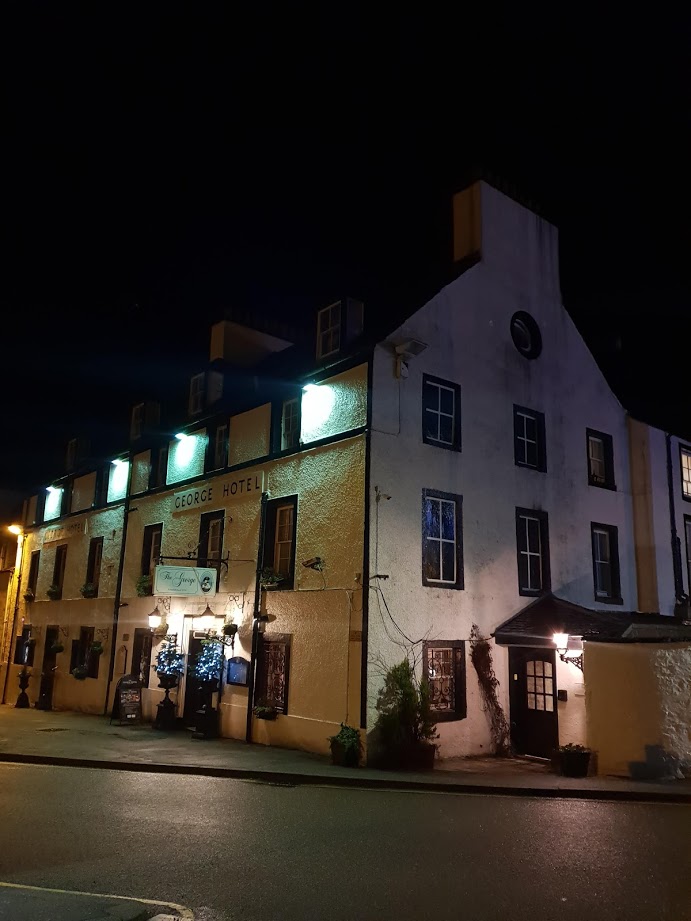
We left Edinburgh quite late in the evening and arrived at our over night destination The George Hotel in Inveraray. It was a dark, drizzly, murky evening but a warm welcome awaited us inside. Established in 1860, and simply oozing Scottish charm and character.
A Warm Welcome awaited us inside The George Hotel, Inveraray
The bar, with its exposed stone walls and welcome roaring fire was stocked to the hilt with a fine selection of whisky, craft gins and real ales. The low ceiling was festooned with twiggy branches adorned with coloured fairy lights. Moodily atmospheric and no doubt full of spirits of the past. If walls could speak!
Old Worn Flagstones & original 1770’s stone walls….if walls could speak!
We dumped our bags in our very comfortable room and headed straight back down stairs for dinner. I had chargrilled lightly smoked Loch Fyne Salmon, Loch Fyne being just down the road. Donald chose pan fried Scottish venison. Both delicious.
We had a great nights sleep, I would have loved to linger and enjoy a soak in our roll top bath and a relaxing breakfast but we had an early ferry to catch and the journey from Inveraray to the ferry terminal in Kennacraig takes a minimum 1 hour so we had to get a wriggle on and look forward to breakfast on board the Calmac ferry instead.
One of my favourite things in the world is travelling on an island bound ferry
We arrived in good time and just as day was breaking. It was a still, drizzly morning, not quite fog but not quite rain. The sort of stuff that gets you wet. Those who know me know how much I love driving onto a ferry, the engine noise the smell of diesel mingled with salty sea air and enticing aromas coming from the galley kitchen, a mixture of island folk going about their business and excited travelers.
The wind sock hung limp and two swans float along side the still docked ferry, perfect reflections in the water. The low lying hills and trees in receding layers of grey, monochrome but beautifully mysterious and serene. Filling me with a sense of calm. A curlews evocative cry stirs something in side me I cannot explain. It reminds me of our years living on Unst in the Shetlands, a wild remote place. Robert Burns could
“never hear the loud solitary whistle of a curlew in a summer’s noon without feeling an elevation of soul”
Any way, I really digress and we havn’t even made it onto Islay yet!
There is more of a breeze out in the Sound of Jura, having filled our boots with a hearty, full Scottish breakfast which should see us through until tea time tomorrow, we settle back to enjoy the two and a half hour crossing to Port Ellen at the south end of Islay.
Our first impression of Port Ellen was how much it reminded us of the Shetland Isles in terms of geography and it’s practical, functionality. We spilled off the ferry with everyone else and decided to give Oliver Dog a little leg stretch at the Port Ellen Lighthouse.
The Port Ellen Lighthouse was commissioned in 1832 by Walter Frederick Campbell in memory of Lady Eleanor Campbell
We wandered along the coastal path following the sign posts for the Singing Sands.
This way I think!
As we walked, a terrible odour hit me, it turned out to be a wild goat and her kid. By heck they reeked, it reminded me why I don’t like goats cheese! They bounded off sure footed across the rocky beach, leaving their fetid stench behind!
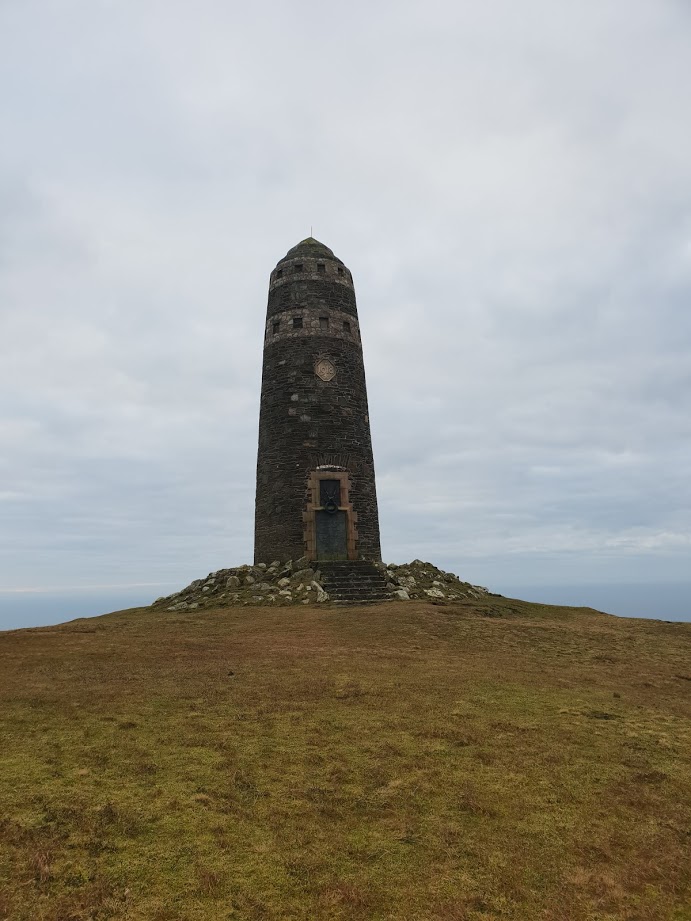
Much happier for a walk, we headed back to the car to make a bee line for the American Monument on the Oa, a rocky peninsula in the south west of the island.
We parked in the RSPB car park and made our way up to the monument, built by the American Red Cross to commemorate the loss of two troop ships in 1918, the Tuscania and the Otranto, torpedoed and sunk by a German U-boat. A truly impressive memorial to the many lives lost.
The American Monument
Back towards Port Ellen again and then along the coast in the other direction. We drove along a coast hugging lane. Birch trees edged the road, dripping in green lichen, a sure indication of fresh air. Rhododendron bushes buds still tightly shut but promising to provide beauty and colour in the coming spring. Crumbling stone walls thickly caked in moss. We passed by the Laphroig, Lagavulin and Ardbeg Distilleries and made plans to visit them tomorrow.
Our first night on Islay was to be spent in the Islay Hotel on Charlotte Street in Port Ellen. Olly Dog was made to feel most welcome and he was so well behaved considering he’s just a Naples street ragamuffin. The staff were all incredibly friendly and local to the Island which is something that I’m always glad about.
I’m so glad his paws were clean!
We left Olly to keep the bed warm and headed down stairs for dinner. Because it was out of season and mid week the restaurant was not open but we were more than happy to enjoy dinner in the Whisky Bar. As you would expect the bar was groaning under the weight of Islay malt whisky, not to mention Islay and Jura gins and real ales. Donald had Islay venison chilli and I had rack of Argyll lamb, both sooo good. A night cap was most definitely in order. Laphroaig, like Marmite, love it or hate it. We love it.
Please take 2 minutes to watch this, it’s so funny and describes Laphroaig better than I ever could
The next morning breakfast was served in the dining room over looking the harbour and a very fine breakfast it was too. Coincidentally we discovered via facebook that friends of ours from our time living in Naples were on Islay at the same time as us so we prolonged breakfast and had coffee with them before heading off for a day of distilleries.
A handy walking/cycling path links Laphroaig, Lagavulin and Ardbeg distilleries, great if no one is volunteering to drive and all with in easy staggering distance of Port Ellen. I was happy to drive though, it being a little too early in the day for me to partake!
I love Laphroaig’s #opinionswelcome campaign. The walls on the way into the distillery are lined with hilarious quotes such as ,
“Essence of Grandad by the fire in his stinky pullover tapping out his pipe. Pure contentment”
Before heading for our nights accommodation we thought we’d enjoy a stroll on the beach. Islay boasts numerous sandy beaches, we went to Machir Bay on the west coast, two kilometres of dunes and beach. It was late afternoon and there was not much daylight left so we had the whole beach to ourselves.
Tonight’s hotel was the cosy Bridgend Hotel just 20 minutes from Port Ellen. Faces a glow from the fresh sea air, we checked in.
The Bridgend Hotel, a more than welcome sight on a dark, cold night
We stepped into the warmth and were immediately welcomed by a very friendly member of staff who more than reinforced our impression that Islay folk are indeed an affable bunch. Inside simply oozed Scottish charm, but in an understated way.
What a fabulous meal we had, Islay scallops, venison from the local estate and my all time favourite dessert, bread and butter pudding. I think if I had to choose my last ever meal this just might be it, contending only with my Mum’s roast beef dinner! High praise indeed. There is a real emphasis on amazing local produce, even the vegetable come from the neighbouring Islay House community gardens.
We sat in the lounge afterwards nursing a whisky and just enjoying the fire with it’s flickering, hypnotic flames and homely smell of wood smoke.
chuck another log on Dear!
After an exceedingly comfortable night and another fabulous Scottish breakfast of porridge, followed by eggs, bacon, sausages, haggis, mushrooms, toast and copious amounts of tea, we checked out and set off for another day of exploring.
We visited the rest of the Islay distilleries, Bowemore, Bruichladdich, Kilchoman, Caol Ila, which I would love to talk about more but I’m conscious not to let this article compete in length with ‘War and Peace’! We also happened upon the Islay Woolen Mill and were so glad we stopped, owner Gordon Covell was so happy to give us an impromptu guided tour. The excellent range of top quality woven fabrics much coveted by Royalty and the Hollywood film industry alike.
After a really full day it was time to head for Islay House and our home for the night. Wow, what a fabulous find. It felt less like hotel and more like a (very wealthy) friend’s home. Once more we were not disappointed with the warmth of our host’s welcome and were very happy to accept a room upgrade. I sat and wrote my diary in the bar, enveloped in a comfy leather arm chair, bolstered with tweed cushions, sea views through the grand sash windows. I could really make myself quite at home here.
We had another great nights sleep. Breakfast was beautiful too. I had porridge with berries, cream and whisky followed by scrambled egg, avocado and bacon whilst Donald had his final fling with a full Scottish. We have been so spoilt.
Back on the ferry leaving from Port Askaig, mainland bound, I felt an overwhelming sense of sadness to be leaving this wild and beautiful place with it’s cheery friendly folk, it’s wonderful food and an abundance of our favourite whiskies.
So a big thank you to everyone who made our trip to Islay so special, we can’t wait to come back again.
Do you have a favorite Islay whisky? Is Islay somewhere you would like to include in your Scotland visit? Let me know your thought’s below.
Christmas is over, the house has been stripped of all signs of the festive season, the tree is shivering naked in the garden bar one bauble that I managed to miss. It’s grey, wet and windy outdoors and we need something to look forward to, something to plan to get us through the last half of winter. What better than to start thinking about a vacation?
I was looking through some photos from last Summer and thought I would share with you a particularly enjoyable day on the beautiful Isle of Raasay back in August. Hopefully it will it will chase away any Winter blues and inspire your vacation plans for this Summer.
The main purpose of our trip on that sunny August day was to visit the Isle of Raasay Distillery. Also as we had the dogs with us, a walk would be in order and hopefully we would find somewhere nice for coffee and cake, as no day out is complete without cake!
So, we parked the car at Sconser on the East coast of Skye and toddled down to the slipway to wait for the ferry to come in. Once the travellers coming from Raasay had all disembarked, it was our turn to board. We trundled down the gangplank, dogs eager to go, they knew not where but eager anyway, as were we. We were joined by no more than half a dozen vehicles and a handful of back packers, purchased our tickets from the ferry man for the meager sum of £4 each, return, and made our way straight up to the top deck, not wanting to miss the views.
For me there is something quite magical about boarding an island bound ferry. I love the sense of anticipation, I know that we were already on an island, having just left Skye, but she is a large island in comparison, with all the amenities one could possibly need, and a bridge making it relatively easy to come and go. We have lived on a remote island, Unst in the Shetlands, so I know that it’s not without its challenges, but island life does hold a special place in my heart and it’s always good to be on one, even if it is only for one day.
The sun shone warm on our faces, the sea sparkled like diamonds and a fair breeze blew away the cobwebs. We settled down, eager to set sail. The ferry took us via Loch Sligachan, famous for it’s king scallops, and across the Sound of Raasay to the south west corner of the Isle of Raasay, where the ferry terminal lies snuggled in the shelter of Churchton Bay.
Raasay, or ‘Deer Island’ as the Norse name translates into, lies in the Sound of Raasay, flanked by the north east coast of Skye to it’s west and the north west coast of mainland Scotland to it’s east. A bijou 24.1 square miles small, population 161, no public transport and no petrol station.
The gangplank was lowered onto the slip way with a grind of metal on concrete, cars off first on their merry ways, followed by foot and paw passengers. Upon arrival, the first building to greet us was the wonderfully welcoming looking Raasay House.
Raasay House with Temptation Hill behind
Steeped in history, today Raasay House provides cosy accommodation, ranging from budget friendly dormitory style to four star deluxe rooms. A snug lounge with wood burning stove and unbeatable views of the mighty Cuillins of Skye, a formidable, jagged backed range of mountains, would certainly make me hope for inclement weather if I was a guest there, so that I would have a good excuse to coorie in. It’s on my list of places to stay.
However, on this fine sunny day, we hotfoot it just a five minute walk to the Isle of Raasay Distillery. The islands first ever legal distillery began distilling in 2017. I imagine that there are some exciting tales of the islands illicit distilling days, which took place as recently as 1850, something I’d love to delve into. But back to today and very much above board , sharing the same stunning views as Raasay House, the face of this fine restoration, is in my humble opinion, a sympathetic blend of old and new. The ‘old’ being Borodale House, a pretty Victorian villa which has been tastefully restored and now provides luxury accommodation, an executive lounge and visitor centre.
Isle of Raasay Distillery
The ‘new’ being the state of the art distillery itself. With two gleaming copper stills visible through a large picture window and pale copper clad roof and frame housing the entrance.
We were very warmly welcomed by several members of staff, whom it was refreshing to note, were probably all in their early twenties, and local to boot, adding to the vibrancy and fresh contemporary feel of the whole business.
We tied Loki and Olly outside and left them very content to be fussed by the young lad who had been cutting the grass and was probably glad for a rest. By the time I came back out side, he had also provided them with a bowl of clean fresh water. It’s small acts like this that resonate with me.
You may or may not have noticed the ‘I’ in the ‘I came out’ of the distillery. It was soon decided that Donald would enjoy a distillery tour, very good value at £10 per person, which left me on doggy duty.
One might have considered mine the short straw, but on the contrary, I would benefit from fine views, cake and a clear head.
Upon the recommendation of the delightfully helpful young lady behind the welcome desk, the boys and I followed the path behind the distillery, noting en route, as luck would have it, what promised to be a fine stop for coffee and cake post hike.
A gem of a find, The Larch Box
The Forestry Commission path led us into Inverarish Forest. With four colour coded paths to choose from, I decided to follow the one which would lead us up Temptation Hill. The name alone intrigued me and the promise of breath taking views at the top.
A boozy, yeasty, malty aroma followed us half way up the hill, mingled with pine forest, earth and salty sea air.
So why Temptation? The story goes, of a mythical kelpie, who had devoured the local blacksmiths daughter. Hell bent on revenge, the berieved father tempted the beast onto the hill by means of a roasting sow, where he slew the beast. I never realised that kelpies were so vicious!
We were indeed rewarded with fine views across the Sound of Raasay to Skye and of North Bay and Churchton Bay. We didn’t see any kelpies, but maybe the highlight of the day, or certainly one of them was seeing a golden eagle, soaring in all it’s majesty above our heads. Incredible. The dogs were more interested in tearing around, noses to the ground, little heads exploding with exciting scents to follow helter scelter, willy nilly fizzing about like bubbles on a freshly poured glass of irn bru.
Awe inspiring, the Golden Eagle
Well sated in terms of both views and wildlife, we headed back down the hill, lured not by the smell of roasting sow, but of coffee and cake, a weakness of mine no doubt.
What is now a welcome pit stop for visitors and I’m sure locals alike, used to be a portacabin. It was used during the construction phase of the distillery, and then lay redundant. Now, a fine example of recycling and clever creativity, the humble empty container is fitted out with kitchen equipment and a coffee machine that probably cost more than the cabin itself. Clad on the outside with larch, presumably the inspiration behind the name, this little gem is now a wonderful place for passers by like me to enjoy the most delightful home bakes, toasties, homemade soup and quite possibly the best coffee I have tasted since living in Italy for three years and having been thoroughly spoilt for good coffee ever since. We enjoyed a wee ‘blether’ whilst I waited for my flat white, and the dogs happily dozed under a table in the shade. A huge thank you too to The Larch Box’s owner for letting me use her beautiful photos. The flowers are beautiful, such a pretty extra touch.
Almost too good to eat, these little fairy cakes tasted every bit as beautiful as they looked
His tour complete, Donald came to join us, looking very happy, not least of all because one of the wives didn’t like whisky and as her husband was driving, someone had to drink it!
The tour guide was a local, a university student at home for the summer. He was apparently extremely enthusiastic and knowledgeable and good fun. The group was made up of seven people hailing from the USA, Belgium, Switzerland and our very own Scotsman.So a nice intimate and diverse little group. They were given an insight into the history of the building and how the business began, saw the production process from start to finish. Then the tastings.
So new is the Raasay Distillery, their first malt will not be ready to bottle until 2020, not too long to wait now. So one of the tastings was of the aptly named ‘While We Wait ‘, made and bottled by R&B Distillers to Raasays recipe and designed to represent this years first expression. This was achieved by blending two expressions from one distillery, one peated and one unpeated, then finished in French oak Tuscan wine casks. Smoky, fruity, zesty and with an oaky, buttery finish. A tantalising taste of what’s to come. I highly recommend you check out the link to their website for further information.
“a welcome smokiness on first nosing, mixed with red berries, lemon & grassy notes”
So, as we sat on a bench beside the Larch Box and reflected over our few hours on this beautiful little island, steeped in history and tradition, and a sense of community, but also forward thinking and ready to embrace an exciting future full of promise, we realised that we had barely scratched the surface and that there was so much more we would like to return to discover.
As we ambled back to the ferry to hop on the 4pm crossing back to Skye, we decided that we couldn’t wait to come back, indulge in a night or two at Raasay House or Borodale House or both and see what the rest of the island has to offer. Much more I think.
Have you ever been to Raasay? Please share your experiences below.
If you havn’t visited this wonderful Island, is it some where you would like to add to your Scotland itinerary?